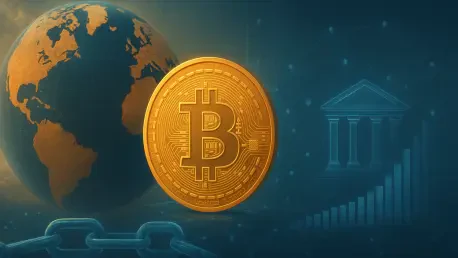

Base intends to tokenize major blue-chip stocks like Samsung Electronics to offer global investors around-the-clock access to assets currently restricted by local exchange hours. This initiative marks a definitive break from the fragmented market structures of the early twenty-first century, where capital was often trapped behind regional regulatory barriers and limited by the operational hours of centralized stock exchanges. In the current 2026 economic environment, the demand for instantaneous liquidity and borderless asset transfers has reached a tipping point, forcing a wholesale re-evaluation of how financial instruments are issued and managed. Base, a Layer 2 network incubated by Coinbase, has positioned itself as the primary vehicle for this migration, providing a robust, programmable foundation for the next generation of global finance. By leveraging decentralized ledgers, the network facilitates a seamless integration of trading, clearing, and settlement, functions that were previously handled by disparate and often incompatible legacy systems. This unified approach not only enhances the speed of transactions but also democratizes access to high-value equities, allowing a retail investor in South America or Southeast Asia to hold and trade shares of multinational giants with the same ease as a domestic institutional player. As the global financial landscape shifts toward this “on-chain” ecosystem, the limitations of traditional brokerage models are being replaced by a more inclusive and efficient technological standard.
Institutional Infrastructure and Compliance Standards
Bridging the Gap: Regulatory Integration and the B20 Standard
The introduction of the B20 standard has proven to be a watershed moment for institutional participation in the on-chain economy by addressing the primary concerns of global financial heavyweights. Historically, the main obstacle for massive entities like JPMorgan or American Express was the inherent tension between the permissionless nature of public blockchains and the strict regulatory requirements of global banking. The B20 framework effectively resolves this by allowing for “compliance-at-rest,” where specific legal conditions such as Know Your Customer (KYC) and Anti-Money Laundering (AML) checks are embedded directly into the asset’s smart contract. This means that a tokenized bond or share of stock cannot be transferred to a wallet that has not been pre-verified through the necessary channels, ensuring that every transaction remains within the bounds of international law. By providing these tools, Base has removed the necessity for every bank to build its own proprietary, siloed blockchain, instead allowing them to participate in a shared, liquid ecosystem that maintains the highest levels of security and accountability. This standardized approach to regulatory compliance has paved the way for a more efficient transfer of value, where the underlying technology handles the heavy lifting of verification in real-time, significantly reducing the administrative burden on institutional actors.
Streamlining Global Settlement: Moving Toward Capital Efficiency
Beyond simple compliance, the shift toward a dedicated operating stack for Base has enabled a level of scalability that was previously unattainable on general-purpose networks. This technological independence allows the network to process institutional-level transaction volumes without the congestion or high fees that characterized earlier iterations of decentralized finance. For major asset managers, this means the ability to manage vast portfolios of tokenized real-world assets with near-zero latency, facilitating complex strategies like automated rebalancing and multi-asset collateralization. The impact on capital efficiency is profound; in the traditional world, a stock sale might take two business days to settle, leaving capital idle and unproductive during the interim. On-chain, the exchange of the asset for payment happens simultaneously, a process known as atomic settlement. This eliminates counterparty risk and allows for the immediate redeployment of funds into other productive ventures. As more institutional players recognize these benefits, the migration of traditional wealth onto the Base network continues to accelerate, driven by the tangible economic advantages of speed, safety, and operational transparency. The ability to process loans and evaluate portfolios in seconds through decentralized protocols offers a level of efficiency that traditional banking systems cannot match.
Autonomous Actors: The Rise of Agentic Commerce
One of the most significant shifts in the digital landscape of 2026 is the emergence of AI agents as legitimate economic participants capable of executing financial transactions without human intervention. These autonomous systems are no longer merely tools for data analysis; they have become active buyers and sellers within the on-chain ecosystem. To facilitate this, Base has championed the x402 protocol, a specialized payment standard designed specifically for agent-to-agent and agent-to-machine commerce. This protocol enables the processing of micropayments at a scale and frequency that would be impossible for traditional banking networks to handle. For example, an AI agent tasked with optimizing a supply chain can now pay fractions of a cent for real-time weather data or logistics updates, settling those costs instantly on-chain. This creates a granular, pay-as-you-go economy where resources are allocated with surgical precision. The implications for the broader internet are vast, as this model challenges the dominance of the subscription-based economy and the pervasive use of advertising as a primary monetization strategy, replacing them with a more direct and efficient value exchange. This shift toward “agentic commerce” represents a fundamental change in how we perceive economic agency and financial utility in a machine-driven world.
Disrupting Digital Monetization: Micropayments and the x402 Protocol
In a world where AI agents are responsible for procuring everything from cloud computing power to raw manufacturing materials, the need for a programmable, 24/7 financial layer is paramount. The Base network provides exactly this, serving as a neutral ground where human and artificial intelligence can interact through the same financial primitives. Because these AI agents operate on logic-driven smart contracts, they can navigate complex financial markets with a level of speed and objectivity that human traders cannot match. They can scan thousands of liquidity pools to find the best possible price for a tokenized commodity or automatically move capital into higher-yielding on-chain lending protocols as market conditions change. This constant, high-frequency activity adds deep liquidity and stability to the network, further attracting institutional players who seek reliable and efficient markets. As these autonomous actors continue to proliferate, the distinction between the crypto world and the real economy begins to blur, as the same on-chain infrastructure supports both a human buying a coffee and an AI agent managing a multi-million dollar global logistics network. The integration of the x402 protocol ensures that these transactions remain cost-effective and scalable, allowing the machine-to-machine economy to grow without the friction of legacy payment systems.
Regional Expansion and Asset Tokenization
Strategic Focus: The South Korean Financial Sector
South Korea has emerged as a critical testing ground for the mass adoption of on-chain financial systems, driven by a population that is both technologically savvy and deeply engaged with financial markets. The demand for digital assets in the region is among the highest in the world, yet investors have traditionally faced hurdles when trying to access global equities or diversify their portfolios outside of domestic hours. Base’s strategy in this market involves the direct tokenization of national champions like Samsung Electronics and SK Hynix, effectively exporting these assets to the global stage while providing Korean investors with 24/7 access to their own markets. By collaborating with local super-apps such as Kakao and Line, Base is able to bypass the steep learning curve often associated with decentralized technology. These platforms, which already serve tens of millions of users for everything from messaging to banking, provide a familiar interface for the average person to interact with on-chain assets. This integration allows users to trade tokenized stocks or participate in decentralized lending protocols directly within the apps they already use daily, bringing the benefits of on-chain finance to the mainstream Korean public and bridging the gap between local retail demand and global liquidity.
Bridging Markets: Local Stablecoins and Super-Apps
The development of a South Korean won-denominated stablecoin is set to become a cornerstone of the regional on-chain economy, providing a stable medium of exchange for domestic participants. While regulatory discussions regarding the issuance of such assets are ongoing in 2026, the technical infrastructure provided by Base offers a clear path forward that satisfies government oversight through embedded compliance features. A won-based stablecoin would allow for seamless transitions between the traditional domestic economy and the global on-chain market, reducing the friction associated with foreign exchange and cross-border transfers. For South Korean merchants, this means the ability to accept payments from international customers with instant settlement and minimal fees, while for consumers, it provides a stable gateway to the broader world of decentralized finance. The potential for these localized stablecoins to act as a bridge is immense, especially as they can be programmed to automatically handle tax reporting or adhere to regional spending limits. As these regional integrations deepen, the Base network acts as a unifying layer that connects the vibrant South Korean financial sector to a global web of liquidity, proving that the future of finance is not just global, but also deeply localized and responsive to the needs of specific communities.
Scaling Asset Availability: Real-World Equities and the Tokenization Roadmap
The roadmap for scaling the availability of real-world assets on the Base network is characterized by an aggressive but methodical expansion of tokenized offerings to meet global demand. The initial phase of this strategy involves the daily listing of approximately ten new blue-chip stocks, with the goal of reaching hundreds of major global equities by the end of the current year. This is not merely about increasing the number of available tokens; it is about building a comprehensive marketplace where every significant asset class—from government bonds and corporate debt to real estate and private equity—can be traded with the same efficiency as a cryptocurrency. To support this growth, Base has fostered a deep ecosystem of institutional market makers and liquidity providers. These entities play a vital role in ensuring that even large-scale trades can be executed without significantly moving the market price, a concept known as minimizing slippage. By providing deep, consistent liquidity, Base makes it possible for pension funds, insurance companies, and sovereign wealth funds to move their massive portfolios on-chain, confident that they can enter and exit positions with the same ease they experience on traditional exchanges. This expansion is essential for creating a truly global and liquid market.
Market Depth: Liquidity and Institutional Volume Management
As the diversity of assets on Base grows, the network becomes more than just a place to trade; it becomes a platform for sophisticated financial engineering and capital management. For instance, an investor could use their tokenized Samsung shares as collateral to borrow a USD-denominated stablecoin, which they then use to invest in a tokenized real estate project—all within a single session and without ever needing to convert back into traditional fiat currency. This level of interoperability is a primary goal of modern finance, and it is made possible by the unified ledger architecture of the Base network. Moreover, as more assets come on-chain, the data generated by these transactions provides unprecedented transparency into market dynamics, allowing for better risk assessment and more informed decision-making. The goal is to move beyond the experimental phase of tokenization and into a period of mature, structural growth where the presence of thousands of tokenized equities is seen as a standard feature of the global financial system. This development provides investors with a level of choice and flexibility that was previously unimaginable, while ensuring that institutional-grade volumes can be handled with the security and efficiency required by the world’s largest financial players.
Future Outlook for On-Chain Finance
Immediate Hurdles: Regulatory and Market Constraints
Despite the clear technological advantages of the on-chain shift, the transition is not without its short-term challenges, particularly regarding the complex web of global regulations. In the 2026 landscape, different jurisdictions are moving at different speeds, creating a fragmented legal environment that can sometimes hinder the seamless flow of tokenized assets across borders. While the B20 standard provides the tools for compliance, the actual agreements between major governments and financial authorities are still being finalized in many regions. This regulatory lag often results in periods of market uncertainty, where institutional players may hesitate to fully commit their capital until the rules of the road are clearly defined and enforced. Furthermore, the industry continues to grapple with the “last mile” problem—the difficulty of moving funds between the legacy banking system and the on-chain world. While stablecoins have gone a long way in solving this, the reliance on traditional off-ramps and on-ramps remains a bottleneck that requires ongoing coordination with established financial institutions. These friction points serve as a reminder that the migration to a fully on-chain world requires both technical innovation and diplomatic patience to ensure long-term stability and legal certainty for all participants.
Long-Term Growth: The Structural Evolution of Value
The migration of financial systems to the Base network represented a fundamental shift in how the global economy functioned, moving away from the siloed models of the past. It was no longer accurate to describe these developments as mere blockchain projects; instead, they became the very plumbing of the international financial order. The introduction of the B20 standard successfully bridged the gap between institutional needs and decentralized innovation, allowing for a world where compliance and freedom were no longer mutually exclusive. As the network matured, the distinction between traditional finance and on-chain finance began to vanish, replaced by a single, unified infrastructure that prioritized efficiency, transparency, and accessibility. This transformation was driven by a collective recognition that legacy systems were no longer sufficient for the demands of a high-speed, data-driven world. Looking ahead, industry participants should prioritize the development of open-source standards and the ongoing education of both regulators and the public to ensure that the benefits of this transformation are shared broadly. By staying committed to the principles of openness and programmability, the global financial community can ensure that the on-chain revolution remains a force for positive structural change, creating a more equitable and efficient world for everyone.