
A lack of expertise among BSA staff and management contributed to the bank's inability to manage the scale of its transaction monitoring responsibilities effectively. This staggering regulatory failure culminated in a collective penalty of over $1.21 billion, as announced by the United States
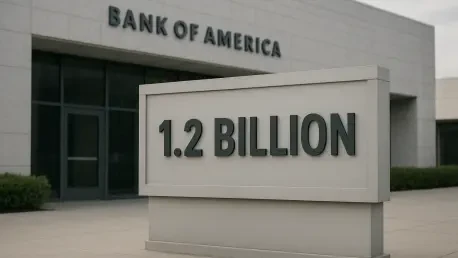
The U.S. Department of the Treasury recently finalized an unprecedented $1.2 billion enforcement action against Bank of America following a rigorous investigation into the institution’s internal operations. This substantial penalty emerged after joint efforts by the Financial Crimes Enforcement

The intersection of multi-billion dollar banking fines and stringent digital privacy laws signals a new era where institutional oversight is no longer optional. As global markets become more interconnected and digital footprints expand, the legal frameworks governing these sectors have grown

Navigating the complexities of the Philippine financial sector in 2026 requires more than a basic understanding of the Anti-Money Laundering Council’s registration portal. For many organizations, the act of obtaining a certificate is often viewed as the finish line, yet in reality, it is merely the

The Strategic Evolution: Why Intelligent Pricing Is Non-Negotiable The global transport industry is currently grappling with a level of volatility that renders traditional static pricing models completely obsolete. Wiremind, a French technology leader, recently announced a landmark €35 million

The once-unthinkable prospect of a global banking titan being paralyzed by its own internal spreadsheets has become the defining operational struggle for Citigroup as it enters the final months of a grueling transformation. While major competitors in the American financial sector are capitalizing
1 2 3 4 5 6 7 8 9 10 11 12 13 14 15 16 17 18 19 20 21 22 23 24 25 26 27 28 29 30 31 32 33 34 35 36 37 38 39 40 41 42 43 44 45 46 47