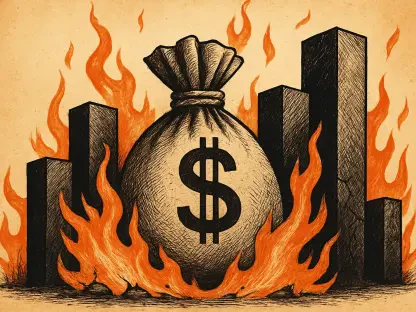

The very strategy that propelled hundreds of digital asset treasuries to unprecedented heights during this year’s market frenzy is now the anchor dragging them toward insolvency. A storm is gathering over the nascent sector of Digital Asset Treasuries (DATs), companies whose primary business model is the accumulation and holding of cryptocurrencies. Once celebrated as innovative vehicles for crypto exposure, these entities are now confronting a brutal reality check, with a stark industry forecast predicting a wave of failures by 2026. The shift from a roaring bull market to a period of sustained contraction has exposed a fundamental flaw in their design, forcing a desperate scramble to evolve or face extinction. This downturn has initiated a critical conversation about what it takes to build a sustainable enterprise in the volatile world of digital finance.
The Ticking Clock on Crypto’s Corporate Vaults
An alarming consensus is forming among industry executives: the majority of DATs that flourished this year are on a path to failure. The central question echoing in boardrooms is what happens when a company’s primary strategy—simply holding digital assets—becomes its greatest liability. The current market downturn has transformed these once-prized crypto holdings from assets into significant financial burdens, threatening the operational viability of the companies built around them.
The forecast for the coming year is particularly grim. Experts predict a large-scale market contraction that will wipe out a significant portion of these treasuries. The model that seemed foolproof during a period of relentless price appreciation is now revealing its fragility. Without a bull market to lift asset values, many DATs lack any other mechanism for generating revenue, creating a countdown clock to insolvency as they burn through cash reserves to cover operational expenses.
From Boom to Bust The Flawed Buy-and-Hold Premise
The initial appeal of the DAT model was its simplicity. During the market’s peak, passive crypto accumulation created a powerful illusion of a sustainable business. Companies that simply bought and held assets like Bitcoin, Ethereum, or various altcoins saw their balance sheets swell, attracting investors eager for a straightforward way to gain exposure to the crypto market’s upside without directly managing private keys or navigating complex exchanges.
However, the subsequent market downturn served as a harsh turning point. The prolonged price decline exposed the model’s fundamental weakness, transforming passive asset appreciation into a source of severe financial strain. What was once a source of strength became an immense liability, as the value of their core holdings plummeted. This shift has forced a painful reckoning, revealing that a business model predicated entirely on market speculation is unsustainable through natural economic cycles.
The Twin Threats of Internal Flaws and External Rivals
The crisis facing DATs stems from a combination of internal vulnerabilities and mounting external pressures. At its core, the passive “buy-and-hold” strategy is the primary internal flaw. In a volatile or declining market, this approach offers no downside protection. Companies find themselves in the untenable position of having to sell their core assets at a loss simply to cover basic operational costs, accelerating their own demise. A critical metric signaling this collapse is the inability to maintain the company’s market value above its net asset value (mNAV), a red flag for investors that the market has lost faith in the treasury’s long-term viability.
Simultaneously, a formidable external rival has emerged in the form of regulated, yield-bearing crypto Exchange-Traded Funds (ETFs). These financial products offer investors what many DATs cannot: a straightforward, regulated, and often more cost-effective way to gain price exposure to digital assets. As asset managers begin offering staking returns on their ETF products, the competitive disadvantage for DATs has magnified. Investors are logically abandoning DATs for these more secure and transparent alternatives, starving the treasuries of the capital they need to survive.
An Industry Consensus on Extinction and Evolution
Voices from within the industry confirm the severity of the situation. Altan Tutar, CEO of MoreMarkets, offers a stark prediction, stating that a wave of failures is imminent. He anticipates that DATs focused on more volatile altcoins will be the first to fall, followed closely by those holding major assets like Ethereum and Solana. The common thread, he suggests, is a business model too reliant on market sentiment.
This view is echoed by others who distinguish between genuine strategy and simple marketing. Ryan Chow of Solv Protocol notes that successful firms are those that treat their holdings as part of a comprehensive yield strategy, not just an accumulation narrative. He argues that companies using their treasury as a “marketing narrative” without a robust financial framework are destined for collapse. Adding to this, Vincent Chok, CEO of First Digital, emphasizes the new competitive benchmark set by ETFs. He asserts that for DATs to retain investor trust, they must match the institutional-grade standards of transparency and compliance now offered by traditional financial products.
The Survival Mandate A Pivot to Active Treasury Management
For the DATs that hope to endure this crisis, the path forward requires a fundamental reinvention. The survival mandate is clear: a pivot from passive speculation to active, structured financial management. This transition involves treating the company’s digital assets not as a static hoard but as a dynamic portfolio capable of generating sustainable value regardless of broader market direction. This means employing on-chain instruments and decentralized finance (DeFi) protocols to generate yield through activities like staking, lending, and liquidity provision.
Furthermore, active management involves strategically collateralizing assets to ensure liquidity, providing a crucial buffer during market drawdowns and preventing forced selling at inopportune times. This evolution also demands the adoption of the traditional finance playbook. To compete with regulated products like ETFs and rebuild investor confidence, DATs must integrate institutional-grade transparency, rigorous auditability, and unwavering compliance into their operations.
The challenges detailed throughout this analysis painted a picture of a sector at a critical crossroads. The era of passive accumulation had clearly ended, exposed by market volatility and the rise of more sophisticated financial products. It became evident that the simple model of buying and holding digital assets was no longer a viable long-term strategy. The industry’s own leaders had confirmed that without a strategic evolution toward active management, yield generation, and institutional standards, the majority of these treasuries faced an inevitable decline. The firms that survived this period were those that successfully transformed from speculative vehicles into disciplined financial entities.