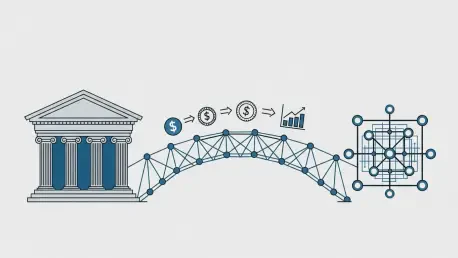

The Depository Trust & Clearing Corporation (DTCC), a cornerstone of the global financial system that custodies an astounding $100 trillion in assets and clears nearly $4 quadrillion in transactions annually, is now pioneering the integration of blockchain technology by tokenizing United States Treasury securities. This landmark initiative is being launched on the Canton Network, a permissioned blockchain meticulously engineered for the rigorous demands of institutional finance. This strategic move represents far more than a simple technological upgrade; it is a profound statement from one of the industry’s most critical incumbents, signaling a potential paradigm shift in how the world’s most foundational financial assets are managed, traded, and settled. By placing US Treasuries—the benchmark for global risk-free assets—onto a distributed ledger, the DTCC is not only exploring new efficiencies but is also setting a powerful precedent for the fusion of traditional financial infrastructure with the nascent, yet powerful, world of on-chain assets, a development that is being closely watched by every major financial institution across the globe.
A Watershed Moment for Institutional Adoption
Validating Blockchain for Traditional Finance
The selection of the Canton Network is a deliberate and telling choice, underscoring a broader institutional strategy that prioritizes security, compliance, and scalability over the open, permissionless ethos of public blockchains. Proponents of this approach, including prominent figures like Ari Redbord from the blockchain intelligence firm TRM Labs, view this as a powerful validation of blockchain’s utility within the highly regulated confines of traditional finance. Canton is specifically designed to mirror the operational and legal frameworks that govern existing capital markets, allowing institutions to leverage the benefits of blockchain—such as enhanced transparency and efficiency—without stepping outside established regulatory perimeters. This focus on a compliant-first architecture has enabled the project to move with remarkable speed, a pace that Redbord noted as unprecedented in his experience. The rapid progress of this initiative serves as a major vote of confidence, demonstrating that distributed ledger technology can be successfully adapted to meet the stringent requirements of a financial titan like the DTCC, thereby paving the way for wider acceptance and integration across the sector.
The Growing Wave of Real World Asset Tokenization
The DTCC’s initiative is not an isolated experiment but rather a high-profile development within a much larger, industry-wide movement toward the tokenization of real-world assets (RWAs). This trend is rapidly transforming from a niche concept into a multi-billion dollar industry as financial behemoths recognize the potential for unlocking liquidity, streamlining operations, and creating new investment products. Industry leaders such as BlackRock, State Street, and Deutsche Bank are all advancing their own tokenization projects, exploring everything from money market funds to private equity on the blockchain. This collective push from established players indicates a fundamental shift in how tangible and financial assets will be owned and transferred in the coming years. The DTCC’s decision to tokenize US Treasuries, one of the most liquid and trusted asset classes in the world, adds immense credibility to this burgeoning market. It acts as a powerful catalyst, likely to accelerate the adoption curve by demonstrating a viable, large-scale use case that other institutions can study and eventually emulate, further solidifying the bridge between traditional financial markets and the on-chain economy.
Navigating Controversy and the Regulatory Landscape
The Debate Over Decentralization
Despite the enthusiasm from institutional circles, the DTCC’s move has sparked considerable debate and criticism within the broader crypto community, which champions the disruptive potential of public, decentralized blockchains. A vocal segment, including legal experts like Gabriel Shapiro, argues that the true promise of tokenization lies in its ability to disintermediate and ultimately render entities like the DTCC obsolete. From this perspective, the use of a private, permissioned network like Canton—over which the DTCC maintains significant control and ownership—is seen not as innovation but as a reinforcement of the existing financial hierarchy. Critics contend that this approach merely digitizes the current centralized model, retaining the very intermediaries and power structures that decentralized finance aims to replace. This choice, Shapiro believes, fundamentally misunderstands the core value proposition of blockchain technology and will ultimately prove to be a strategic misstep, leaving the institution vulnerable to more genuinely disruptive solutions that emerge from open, permissionless ecosystems like Ethereum. The conflict highlights a deep philosophical divide over the future of finance: one of evolution within the current system versus a more radical, revolutionary overhaul.
A Favorable Regulatory Tail Wind
This landmark project is unfolding against the backdrop of an increasingly accommodative regulatory environment in Washington, a factor that has undoubtedly enabled its swift progress. The DTCC’s initiative received formal authorization from the Securities and Exchange Commission (SEC) just a week before its announcement, signaling a significant level of comfort from one of the nation’s top financial regulators. This approval is consistent with a broader, pro-innovation shift among regulatory bodies. For instance, the Commodity Futures Trading Commission (CFTC) has also initiated a digital assets pilot program to better understand and regulate the space. Furthermore, leadership at the SEC has publicly stated its commitment to overhauling and “future-proofing” crypto regulations to foster responsible innovation while protecting investors. The DTCC’s venture is therefore not operating in a regulatory vacuum but is instead aligned with a clear and supportive policy trajectory. This governmental backing provides a crucial layer of legitimacy and security, reducing the perceived risk for other major financial players and encouraging further exploration of blockchain technology within the established financial system.
A New Financial Architecture Took Shape
The tokenization of US Treasuries by the DTCC ultimately signaled a pivotal moment where the theoretical potential of blockchain met the immense scale of traditional finance. This development was not merely a technological trial but a strategic decision that carved out a distinct path for institutional adoption of distributed ledger technology. By choosing a permissioned network, the project prioritized regulatory compliance and operational control, setting a precedent that favored evolutionary integration over revolutionary disruption. This move clarified the emerging dichotomy in the digital asset space: one path defined by the open, decentralized ethos of public blockchains and another characterized by the secure, controlled ecosystems preferred by incumbent financial giants. The decision demonstrated that for the foreseeable future, the world’s most critical financial infrastructures would likely engage with blockchain on their own terms, adapting the technology to fit within existing frameworks rather than rebuilding them from the ground up.