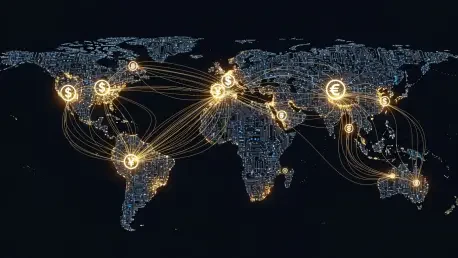

Global financial systems are no longer merely digitizing paper-based processes but are fundamentally rewriting the architecture of how value moves across the planet. This transition marks a departure from the initial wave of disruptive fintech, which often focused on flashy consumer interfaces, toward a more robust era of foundational infrastructure that supports global commerce. As of 2026, the emphasis has shifted to the creation of a deeply integrated ecosystem where digital payments, blockchain protocols, and automated data processing work in concert to eliminate traditional friction. This structural evolution addresses the persistent gaps in financial access by providing a transparent and efficient layer that serves both unbanked populations and massive multinational corporations. By moving beyond the experimental phase, the industry has successfully transformed digital tools into essential utilities that are as critical to modern society as electricity or telecommunications. These advancements reflect a shift from isolated apps to a unified global standard.
Overcoming International Barriers With Distributed Protocols
The deployment of blockchain technology has progressed from speculative asset trading to a necessary mechanism for dismantling the long-standing barriers that once hindered international capital movement. Historically, cross-border transactions were plagued by high costs, multi-day delays, and a lack of transparency, primarily due to the convoluted web of intermediary banks. Contemporary solutions have replaced these outdated methods with direct, peer-to-peer settlement layers that operate independently of local time zones or regional banking holidays. This change has provided the global market with a level of certainty that was previously unattainable, allowing businesses to execute trades with immediate finality. By leveraging smart contracts and distributed ledgers, financial institutions have managed to automate compliance checks and regulatory reporting within the transaction itself. This integration ensures that the movement of money is not only faster but also significantly more secure and auditable.
Beyond the technical aspects of speed and security, the focus of institutional fintech has turned toward the governance and reliability required for large-scale operations. Major financial hubs have increasingly adopted standardized protocols that allow different blockchain networks to communicate seamlessly, preventing the fragmentation that once threatened to silo digital value. This interoperability is essential for a global economy that depends on the free flow of liquidity across diverse jurisdictions. As these systems mature, they provide a stable foundation for a wide range of secondary financial services, including insurance and decentralized trade finance. The result is a more resilient network that can withstand regional economic shocks by maintaining constant, borderless access to liquidity. Businesses that once struggled with the complexities of foreign exchange and volatile settlement times now find themselves operating in a streamlined environment where the underlying technology handles the heavy lifting.
Modernizing Corporate Liquidity and Capital Access
Digital assets, particularly stablecoins pegged to major currencies, have effectively transitioned from the fringes of finance into the core operations of modern corporate treasuries. Large-scale organizations are no longer viewing these assets as volatile experiments but as practical instruments for managing cash flow and enhancing operational efficiency. By integrating digital currencies directly into existing enterprise resource planning systems, financial officers can move funds with a level of granularity and speed that traditional wire transfers cannot match. This institutionalization requires these tools to adhere to strict regulatory compliance and audit standards, which has led to the development of enterprise-grade custody solutions. These platforms provide the necessary security and transparency to satisfy both internal controllers and external regulators. Consequently, the use of digital assets has become a standard practice for multinational companies looking to optimize their working capital and reduce the costs of currency conversion.
The industry successfully democratized capital access by shifting toward real-time underwriting models that replaced rigid historical data with dynamic performance metrics. This transformation allowed small and medium-sized enterprises to secure funding based on their current digital sales and supply chain health rather than outdated tax filings. Financial leaders who adopted these data-centric strategies achieved a more resilient operational framework, as they were able to manage liquidity with unprecedented precision in a 24-hour market. To maintain this momentum, organizations prioritized the integration of these automated credit tools directly into their existing enterprise workflows. This proactive adoption ensured that capital remained a fluid utility that supported innovation rather than a bureaucratic obstacle. The transition concluded with a unified financial ecosystem where digital and traditional currencies coexisted within a governed and transparent framework. This structural shift effectively bridged the gap between technology and the daily needs of global commerce.