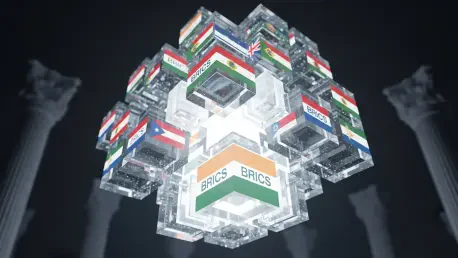

The intricate web of global finance, long centered around the US dollar, is facing a potentially monumental shift driven by a coalition of the world’s most significant emerging economies. In a move that could reshape international commerce, the Reserve Bank of India (RBI) has reportedly put forward a formal proposal for BRICS member nations to interconnect their respective Central Bank Digital Currencies (CBDCs). This ambitious initiative is designed to create an alternative financial infrastructure, aiming to diminish the bloc’s deep-seated reliance on the greenback for cross-border trade and financial settlements. The proposal signals a clear intent to forge a new path in the global economic order. As India prepares to host the BRICS summit in 2026, this motion is poised to become a central point of discussion, potentially accelerating the group’s long-standing goal of achieving greater monetary sovereignty.
A Strategic Push for Financial Autonomy
This proposal from India is not an isolated event but rather the next logical phase in a carefully orchestrated, multi-year strategy by the BRICS alliance to de-dollarize their economies. It builds directly upon previous efforts, most notably the 2024 announcement of a blockchain-based payment system intended to serve as a sovereign platform for trade settlements. By advocating for the integration of national digital currencies from Brazil, Russia, India, China, South Africa, and other member states, the RBI envisions a more seamless and efficient mechanism for conducting international transactions. Such a network would drastically simplify cross-border payments for both trade and tourism, creating a closed-loop system that operates independently of traditional, dollar-denominated financial intermediaries. This effort represents a significant step toward establishing a robust and autonomous financial architecture that serves the collective economic interests of the bloc.
The timing of India’s request to add this motion to the 2026 summit agenda is particularly noteworthy, coming at a moment of heightened global geopolitical tension. The RBI’s proposal is seen by many analysts as a proactive measure to insulate BRICS economies from the potential weaponization of the US dollar and the established international payments system. By creating a parallel settlement infrastructure based on CBDCs, member nations could gain a powerful tool to conduct trade and manage their finances with reduced exposure to external economic pressures or sanctions. This pursuit of monetary independence reflects a growing desire among emerging powers to build a more multipolar global financial system—one where alternative currencies and payment networks can coexist with and, ultimately, challenge the established order. The plan underscores a strategic pivot toward leveraging financial technology to achieve long-term geopolitical objectives.
Navigating Geopolitical and Economic Headwinds
The advancement of a unified BRICS digital currency framework is almost certain to provoke a strong response from the United States, which has historically resisted any significant challenges to the dollar’s status as the world’s premier reserve currency. The dollar’s dominance affords the U.S. considerable economic and geopolitical leverage, from lower borrowing costs to the ability to effectively implement international sanctions. Consequently, any coordinated effort that threatens to erode this position is viewed as a direct challenge to American influence. The historical context for this tension is clear: former U.S. President Donald Trump once threatened to impose a sweeping 10% tariff on all imports from BRICS countries if they pursued “drastic monetary shifts” that could undermine the dollar. This precedent highlights the potential for significant economic friction should the bloc decide to move forward with the CBDC integration plan, setting the stage for a new front in global economic competition.
The Future of Global Settlements
The proposal tabled by the Reserve Bank of India represents a pivotal moment in the ongoing evolution of international finance. It is not merely a technical suggestion but a profound statement of intent from the BRICS nations to actively reshape the global economic landscape. The initiative explores how a network of interconnected CBDCs could fundamentally alter the mechanics of cross-border commerce, offering a viable and efficient alternative to the dollar-centric systems that have prevailed for decades. The successful implementation of such a framework would pave the way for a more multipolar financial world, creating new corridors for trade and investment that operate entirely outside the orbit of traditional Western financial institutions. This ambitious plan forces a global conversation about the future architecture of international payments and the transformative role that sovereign digital currencies are poised to play in recalibrating economic power.