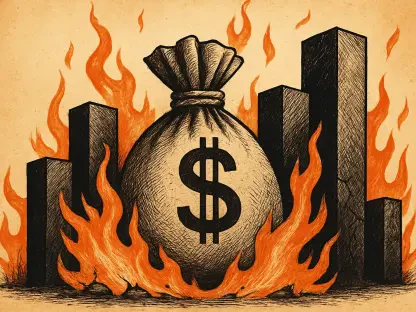

Permanently erasing a significant portion of a team’s own vested assets from existence is a bold move in any market, let alone the volatile world of decentralized finance. When the crypto trading platform Banana Gun incinerated nearly 50,000 of its team’s tokens, valued at approximately $350,000, it was more than a financial transaction; it was a deliberate and powerful statement. This action, designed to signal a long-term vision over short-term gain, forces the market to consider whether such costly displays of commitment are the new gold standard for building trust and ensuring a project’s longevity.
When a Crypto Team Sets $350,000 on Fire Should Investors Pay Attention
The act of a development team destroying its own newly vested tokens is a rare and potent signal in an ecosystem often characterized by quick profits. After completing a multi-month vesting schedule that followed a two-year cliff, the Banana Gun team faced a choice: liquidate a substantial financial windfall or double down on their project’s future. By choosing the latter, they directly addressed one of the most persistent concerns for investors—the potential for team-initiated sell-offs to depress token value. This calculated sacrifice immediately reduces the circulating supply and alleviates sell pressure.
In effect, this move transforms abstract promises of long-term dedication into a tangible, costly commitment. For investors accustomed to scrutinizing team incentives and vesting schedules, the burn provides an unambiguous piece of data. It suggests that the team’s financial success is inextricably linked to the platform’s sustained growth and the appreciation of the remaining tokens held by the community. Such a decision stands in stark contrast to the more common practice of teams quietly selling their vested assets, making it a noteworthy event in the project’s history.
The High Stakes of Trust in Decentralized Finance
In the decentralized finance landscape, trust is the most valuable and fragile asset. The industry’s history is littered with projects that faltered due to misaligned incentives or outright developer abandonment, leaving investors wary. Actions, therefore, speak far louder than roadmap promises or marketing rhetoric. Banana Gun’s token burn is a strategic maneuver designed to build a foundation of credibility that can withstand market turbulence and user skepticism. It serves as a public demonstration that the core contributors are prioritizing the ecosystem’s health over personal enrichment.
This emphasis on trust is critical for fostering a resilient community. When token holders believe a team is fully committed, they are more likely to remain invested, participate in governance, and contribute to the platform’s growth. The burn is not merely a deflationary mechanism; it is a foundational act of community-building. By aligning their financial fate with that of their users, the team creates a powerful narrative of shared purpose, which can be a significant competitive advantage in a crowded market.
Deconstructing the Banana Gun Playbook
The token burn, while significant, is just one component of a broader, multi-faceted strategy. It is a calculated sacrifice intended to magnify the impact of the project’s ongoing operational successes. This move gains its power by being coupled with consistent performance and a clear vision for future development, creating a narrative of a project that is both financially disciplined and technologically ambitious. Without underlying substance, such a gesture could be dismissed as mere theatrics.
This strategy is bolstered by the platform’s strong performance metrics. Banana Gun has reported consecutive weeks of profitability, demonstrating a robust business model that functions even during slower market periods. Moreover, the project continues its revenue-sharing program, distributing 40 percent of platform fees directly to token holders. This consistent return on investment for the community provides tangible proof of the platform’s value, reinforcing the idea that the team’s interests are aligned with those of its users.
The final piece of the playbook is a strategic technological shift toward more durable infrastructure. Following a successful expansion onto the Base network, which earned it recognition as “App of the Week,” the team has pivoted its focus. Instead of rolling out a series of minor features, development is now concentrated on larger-scale engineering upgrades designed to fortify the platform for the next market cycle. This deliberate, long-term approach to building signals a commitment to quality and scalability over short-term hype.
A Teams Rationale of Selling Never Felt Right
Behind this strategic decision lies a simple but powerful sentiment expressed by the team: selling the tokens “never felt right.” This rationale moves the conversation from pure financial calculus to one of principle and long-term conviction. It implies a belief in the project’s future value that is so strong, the immediate opportunity for a $350,000 payout was considered less valuable than the trust and market confidence that could be gained by forgoing it.
This public declaration serves to humanize the development team and strengthen their bond with the community. In a space where anonymity can sometimes foster mistrust, this transparency about their motivations is refreshing. It frames the decision not as a marketing stunt, but as an authentic expression of their dedication. By stating that they are committed to building through all market conditions, both bull and bear, they are setting expectations and reinforcing their image as a steadfast and reliable team.
A Framework for Longevity Combining Financial Signals with Technical Substance
Ultimately, Banana Gun’s strategy offers a compelling framework for achieving long-term relevance in the competitive crypto market. The token burn is the headline, but its true significance comes from its integration with a foundation of solid technical execution and a clear development roadmap. This combination of a strong financial signal with demonstrable platform substance creates a powerful, self-reinforcing loop of credibility and growth.
This approach acknowledges that investor confidence is built on two pillars: what a team says it will do and what it actually delivers. The burn powerfully addressed the former, while continued profitability, successful multichain expansion, and a focus on core infrastructure upgrades satisfy the latter. This dual focus is what distinguishes a potentially enduring project from one reliant on fleeting market trends.
The strategic decisions made by Banana Gun presented a clear model for cultivating trust. The team’s choice to burn vested tokens was not merely a financial transaction but a foundational act that demonstrated a deep alignment with its community. This gesture, combined with consistent platform performance and a forward-looking expansion onto Base, illustrated a comprehensive strategy aimed at long-term viability rather than short-term gain. The initiative set a notable precedent, showing how concrete financial sacrifices could translate into invaluable market credibility. The project’s success, from that point, depended on whether its technical execution could continue to match its ambitious promises.