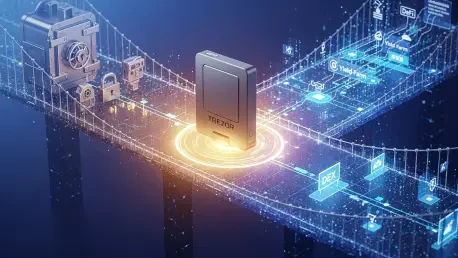

The digital asset landscape has undergone a radical transformation where the historical trade-off between absolute cold storage security and the high-velocity world of decentralized finance yield is finally dissolving. For years, investors were forced to choose between the safety of an offline hardware wallet and the lucrative but risky opportunities found within decentralized protocols. However, recent advancements in firmware architecture and software integration have allowed pioneers like Trezor to reimagine the role of the hardware wallet. No longer just a static vault for long-term holding, these devices now serve as secure gateways to complex financial ecosystems. This evolution addresses a critical pain point for both institutional and retail participants who demand the highest standards of key protection without sacrificing the ability to earn competitive returns on their holdings. By embedding direct interactions with staking pools into the interface, the barrier to entry has dropped significantly.
Security Architecture in Modern Decentralized Ecosystems
The core of this transition lies in the sophisticated way that Trezor Suite manages the signing of smart contract interactions without exposing the underlying private keys to an internet-connected environment. When a user decides to participate in a liquidity pool or a governance vote, the device acts as a firewall, requiring physical confirmation for every transaction. This prevents the common blind signing risks that have historically plagued hot wallets and browser extensions. By providing a clear, human-readable summary of the contract permissions directly on the device screen, users can verify exactly what permissions they are granting to a decentralized application. This transparency is crucial in an era where phishing attacks and malicious contract upgrades have become more technically advanced. Furthermore, the integration of curated DeFi providers ensures that users are interacting with vetted protocols, reducing the risk of rug pulls or poorly coded smart contracts.
Beyond simple transaction signing, the hardware manufacturer has expanded its focus toward the growing demand for native staking within the wallet’s own ecosystem. By partnering with established validators and liquid staking platforms like Lido or Rocket Pool, the interface allows users to earn rewards on assets like Ethereum or Solana directly from the safety of their cold storage. This eliminates the need to transfer funds to centralized exchanges or third-party custody solutions, which often introduce unnecessary counterparty risk. The implementation of these features utilizes the device’s secure element or open-source firmware to manage the delegation process with minimal friction. Users benefit from the compounding effects of staking while maintaining full control over their private keys at all times. This move towards native staking signifies a shift in market expectations, where the hardware wallet is expected to be a comprehensive wealth management tool for the modern digital era.
Strategic Evolution and Practical Next Steps
Interoperability remains one of the most significant challenges for users navigating the fragmented world of decentralized finance, especially when juggling multiple blockchains simultaneously. Trezor has addressed this by enhancing its support for cross-chain swaps and bridging services that are integrated directly into the firmware’s companion app. This allows for a seamless transition between different ecosystems, such as moving from Bitcoin to decentralized stablecoin protocols on Layer 2 networks, without ever leaving the secure environment. The technical achievement here is the synchronization of diverse cryptographic standards within a single interface that maintains the integrity of the seed phrase. Such integrations are not merely a convenience but a strategic necessity for maintaining financial sovereignty in a world where market conditions change rapidly. By reducing the number of steps required to execute a complex trade, the risk of human error or interception is drastically lowered and improved for all.
The emergence of integrated security solutions provided a clear path forward for those who previously hesitated to enter the decentralized market due to safety concerns. Users who adopted these hybrid models found that they could effectively mitigate the risks of exchange collapses and wallet drains while still capturing the growth of emerging financial protocols. The historical success of these integrations demonstrated that rigorous security does not have to be an obstacle to financial agility. To capitalize on these advancements, investors sought to diversify their storage methods by using multi-signature setups and hardware-backed identities. Maintaining a disciplined approach to firmware updates and protocol research remained the most effective defense against evolving threats. Future strategies should prioritize the use of devices that offer native support for diverse networks to avoid the vulnerabilities associated with third-party extensions. By focusing on hardware-centric interactions, the community built a more resilient infrastructure.