
The collision of political influence and digital finance reached a fever pitch as the World Liberty Financial project attempted to capitalize on the fervor surrounding one of the most recognizable brands in American history. Launched with a vision to revolutionize decentralized finance, the venture quickly became the centerpiece of what market analysts dubbed the “Trump Trade,” drawing in a diverse array of investors ranging from seasoned blockchain enthusiasts to fervent political supporters. This initial phase of adoption was characterized by a speculative momentum that temporarily defied traditional market logic, as the association with a prominent political dynasty provided a unique form of perceived social proof that many believed would insulate the asset from the typical volatility of the cryptocurrency sector. However, the reliance on brand recognition over technical architecture has proven to be a double-edged sword, as the project now finds itself navigating a landscape where political sentiment is no longer enough to sustain institutional or retail interest in a increasingly crowded marketplace.
The venture initially aimed to serve as a high-tech bridge between the rigid structures of traditional finance and the flexible, high-yield potential of blockchain ecosystems by leveraging a household name to lower the barrier to entry for the uninitiated. This ambitious goal sought to democratize access to sophisticated financial tools, but recent performance indicators suggest that the project has struggled significantly to move beyond its identity as a political novelty. As the initial excitement surrounding the launch began to dissipate throughout early 2026, the underlying fundamentals of the protocol came under intense scrutiny from both regulators and independent auditors. This shift in perspective among the investing public has led to a noticeable cooling of the market, as many participants have begun to prioritize established, utility-driven assets over those that rely heavily on the fluctuating popularity of public figures. The widening gap between the project’s lofty marketing rhetoric and its actual on-chain performance has created a challenging environment for its continued expansion.
Market Performance and Investor Reality
Tracking the Significant Decline: Token Value Trends
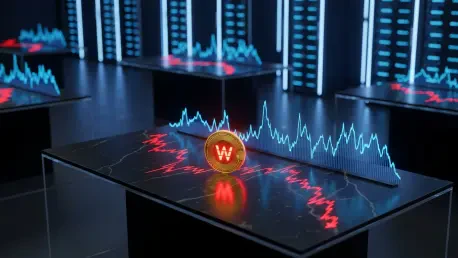
The financial trajectory of the WLFI token has been characterized by extreme volatility and a persistent downward trend that has left market observers questioning its long-term viability. After reaching a peak valuation of approximately $0.331 during the heightened speculative atmosphere of late 2025, the token price experienced a catastrophic collapse, plummeting to nearly $0.055 by the middle of 2026. This represents a staggering loss of more than 80 percent of its market value in a remarkably short timeframe, a correction that has outpaced the general downturn seen in other decentralized finance protocols. The initial surge was largely driven by the expectation that political momentum would translate directly into sustained buying pressure, but as the project transitioned from a concept to an operational asset, the market began to demand more than just brand association. The absence of a robust burn mechanism or a clear revenue-sharing model further exacerbated the sell-off as traders sought liquidity elsewhere.
The crash was not a gradual erosion of value but rather a series of sharp, traumatic drops that often followed major announcements or the conclusion of public events. Within the first several days of its debut on public exchanges, the token lost its initial premium as early participants and opportunistic traders sought to lock in gains, triggering a cascade of liquidations that the protocol’s liquidity pools were ill-equipped to handle. This rapid devaluation has created a self-reinforcing cycle of bearish sentiment, where every attempt at a price recovery is met with significant resistance from underwater holders looking for an exit. Furthermore, the broader shift in the cryptocurrency landscape toward assets with tangible institutional backing has left WLFI in a vulnerable position. The project now faces the monumental task of rebuilding trust in a market that has become increasingly cynical regarding the long-term prospects of tokens that do not possess a unique technical advantage or a clearly defined economic purpose beyond their initial hype.
Financial Consequences: The Impact on Retail Participants
Public investors have unfortunately borne the brunt of this financial collapse, with estimated realized and unrealized losses across the community reaching into the hundreds of millions of dollars. A significant portion of these retail participants were individuals who entered the market based on their alignment with the project’s political branding, often without fully grasping the complex risks inherent in early-stage decentralized finance ventures. These investors now find themselves in a precarious situation, as the decline in token value has significantly eroded their capital, while the lack of buy-side interest makes it difficult to liquidate positions without incurring further slippage. The emotional and financial toll on these participants has led to a growing sense of disillusionment within the project’s official social channels, as many feel that the promises made during the promotional phase have failed to materialize in the current economic climate.
Adding to the frustration of smaller investors is the reality that many feel trapped in their positions due to the stringent transfer restrictions and lock-up schedules that were implemented at the protocol’s inception. While these mechanisms were originally presented as a way to ensure the long-term stability of the project and prevent immediate dumping by large holders, they have instead left many retail traders holding assets that are worth only a fraction of their initial purchase price with no clear path to recovery. There is a palpable disparity between the experiences of the average supporter and the institutional partners who may have secured more favorable terms during the early private phases of the project. This perceived inequality has fueled accusations of a lack of transparency, as the community struggles to understand why the price remains suppressed despite continued promotional efforts. The resulting atmosphere of skepticism has made it increasingly difficult for the project to attract new capital, as potential buyers are wary of entering a market where so many existing holders are desperate to sell.
Internal Governance and Legal Hurdles
Structural Red Flags: Centralization and Transparency Issues
Critics and blockchain analysts have consistently raised serious red flags regarding the internal structure of World Liberty Financial, specifically focusing on its highly centralized governance model. While the core philosophy of decentralized finance is built upon the premise of community control and the elimination of central authorities, investigative reports suggest that the Trump family maintains a disproportionate level of power over the protocol’s fundamental operations. This arrangement has led many industry experts to believe that the governance rights supposedly granted to token holders are largely symbolic, serving more as a marketing tool than a functional mechanism for democratic decision-making. The ability of a small group of insiders to unilaterally make changes to the protocol’s code or financial parameters contradicts the ethos of the broader blockchain movement, creating a significant barrier for users who value the permissionless nature of traditional DeFi platforms.
Transparency regarding the project’s financial foundations has also been a major point of contention, particularly concerning the specifics of its early private sales and the allocation of raised capital. While World Liberty Financial reportedly secured a significant amount of funding before its public listing, detailed information on the expenditure of these funds and the compensation packages for key advisors remains scarce. This lack of clear communication has created a vacuum of information that is often filled by rumors and speculation, further destabilizing the token’s market performance. Investors are particularly concerned about the potential for future “supply dumps,” as large quantities of tokens held by founders and early backers are scheduled to be unlocked in the coming months. Without a clear and verifiable roadmap for how these releases will be managed, the market remains on high alert, fearing that any sudden increase in circulating supply will lead to another round of aggressive selling and price suppression.
The Legal Confrontation: World Liberty Financial versus Justin Sun
One of the most damaging developments for the reputation of World Liberty Financial has been the highly publicized legal dispute with Tron founder Justin Sun, a figure who was initially seen as a key strategic ally for the project. Sun, who holds a significant stake in the protocol, filed a comprehensive lawsuit alleging that his tokens were unfairly frozen and that his governance rights were stripped away without due process. According to the court filings, Sun claims that the protocol includes “backdoor” mechanisms that allow the core development team to exercise absolute control over individual wallets, a feature that, if true, would represent a fundamental breach of trust in the world of decentralized finance. The lawsuit asserts that these actions were taken as a means of consolidating power within a narrow circle of insiders, effectively disenfranchising one of the project’s most prominent and influential early backers.
The project’s leadership has responded to these allegations by filing a defamation lawsuit of its own, arguing that Sun’s claims are a calculated attempt to damage the brand and manipulate the market for his own benefit. Regardless of which side eventually prevails in a court of law, the public nature of this infighting has caused immeasurable harm to the project’s credibility and has spooked both current and potential investors. The conflict reinforces a negative narrative that the project is more focused on internal power struggles and political maneuvering than on building a functional financial product. For many observers, the dispute serves as a stark reminder that even high-profile partners are not immune to the risks associated with a centralized leadership structure. This legal entanglement has also diverted significant resources and attention away from the technical development of the platform, leaving many to wonder if the project can survive the combined pressure of market volatility and ongoing litigation.
Regulatory Outlook and Future Strategy
Legislative Pressures: Ethical Scrutiny in the Nation’s Capital
The unique intersection of political influence and private business enterprise has drawn the intense focus of lawmakers in Washington D.C., leading to a surge in regulatory scrutiny that threatens the project’s long-term viability. The introduction of the CLARITY Act, a piece of legislation that includes specific ethics provisions for public officials and their families involved in the management of digital assets, is seen by many as a direct response to the rise of celebrity-backed crypto ventures. This legislative environment has created a climate of uncertainty for World Liberty Financial, as any progress on the bill is often viewed by traders as a signal to reduce their exposure to the WLFI token. The potential for the project to be caught in a web of federal compliance requirements and ethics investigations has added a layer of complexity that traditional cryptocurrency projects rarely have to navigate, making it a high-risk asset in the eyes of institutional compliance officers.
This “project-specific risk” means that the success or failure of the venture is now inextricably linked to the legal and political fortunes of its namesake family, creating a volatile dynamic where non-financial news can have a devastating impact on the token’s price. Any negative regulatory development or unfavorable headline involving the family in the capital tends to manifest as an immediate and sharp drop in the market value of WLFI, regardless of the project’s actual technical progress. This dependency on external political factors has made the asset particularly difficult to value using traditional financial metrics, as the risk premium associated with its political ties remains high. As the regulatory landscape for digital assets continues to evolve, the project finds itself at a crossroads, needing to prove that it can operate within a strict ethical framework while still delivering the returns that its investors have come to expect in an increasingly regulated and transparent global market.
Strategic Realignment: The Transition to the USD1 Stablecoin
In an effort to counter the prevailing bearish sentiment and provide a tangible use case for its ecosystem, the development team has begun a significant pivot toward a utility-based recovery strategy centered on the USD1 stablecoin. Proponents of this shift argue that introducing a fully backed stablecoin, held in reserve with reputable third-party custodians, could provide the protocol with a level of legitimacy and stability that it currently lacks. The strategy involves integrating the USD1 asset into a variety of lending and borrowing systems across multiple blockchain networks, theoretically creating a consistent demand for the underlying protocol. By moving away from a purely speculative model and toward a functional financial tool, the project hopes to attract a more stable class of users who are looking for reliable yield-generating opportunities rather than short-term price appreciation based on political headlines.
The execution of this multichain expansion is not without its own set of significant technical and competitive risks, as the stablecoin market is already dominated by well-established players with deep liquidity and long-standing reputations. For World Liberty Financial to succeed in this space, it must offer genuine financial advantages that go beyond its existing brand recognition, such as lower transaction fees or higher integration levels within the emerging DeFi stack. The transition also requires a massive overhaul of the project’s technical infrastructure to ensure compatibility with different blockchain standards, a task that has historically proven difficult for even the most experienced development teams. If the project can successfully shed its identity as a “political meme coin” and emerge as a legitimate provider of financial services, it may find a sustainable path forward; however, the market remains skeptical of whether celebrity influence can truly be converted into long-term technical utility.
Future Outlook: Navigating the Path to Institutional Recovery
The future of the venture eventually depended on its ability to transcend the initial controversies that defined its early history and provide measurable value to a global user base. Analysts suggested that for the protocol to achieve long-term stability, the leadership team needed to prioritize technical transparency and community-led governance over the centralized control that characterized its first phase of operation. This transition involved implementing verifiable proof-of-reserve systems for the USD1 stablecoin and establishing a clear, independent board to oversee the project’s ethical compliance and financial health. By focusing on these core pillars of trust, the project had the opportunity to attract institutional capital that had previously remained on the sidelines due to concerns over regulatory uncertainty and the high-profile legal battles that plagued the project throughout early 2026.
As the project moved forward, the focus shifted toward expanding its multichain presence and fostering partnerships with other established decentralized finance protocols. Successful integration into broader lending markets and decentralized exchanges was seen as a critical step in proving that the WLFI ecosystem could function as a legitimate financial tool rather than just a vehicle for speculative investment. Investors and industry observers alike watched closely as the next round of token unlocks approached, looking for signs that the project could manage its circulating supply without causing further market distress. Ultimately, the survival of World Liberty Financial rested on its capacity to evolve from a project driven by headlines into a robust, utility-oriented platform that could withstand the rigors of a maturing digital asset market, providing a final lesson on the complexities of merging high-stakes politics with the decentralized economy.