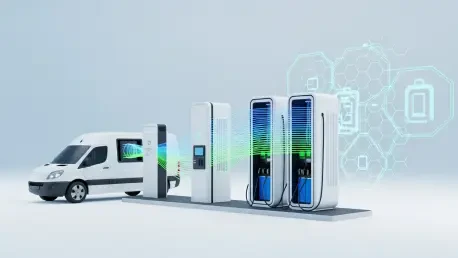

In a significant move that blurs the lines between the physical and digital economies, technology firm U Power Limited is spearheading an innovative initiative to tokenize its real-world electric vehicle (EV) infrastructure. The company is transforming its network of AI-powered battery-swapping stations into digital assets on the blockchain, creating a novel framework for managing and investing in the rapidly expanding clean energy sector. This convergence of tangible hardware with decentralized technology represents a potential paradigm shift, aiming to enhance transparency, streamline operations, and democratize access to energy infrastructure investments. By representing physical assets as digital tokens, the project seeks to build a more flexible and intelligent energy grid that aligns traditional industry with the principles of the modern digital economy.
A New Paradigm for Energy Asset Management
The foundational concept of this initiative involves the creation of “digital twins” for the company’s tangible equipment, allowing for a transparent and modernized approach to the management of critical energy assets. In a strategic collaboration with the infrastructure platform PicWe, U Power has successfully deployed these tokenized assets on the BNB Chain, a move designed to leverage the inherent security and transparency of blockchain technology. This process of representing real-world assets (RWAs) digitally is not merely a technical exercise; it is a strategic maneuver intended to bolster operational integrity and ensure compliance with stringent regulatory standards. By placing the operational data and ownership representation of its battery-swapping stations on an immutable ledger, U Power is establishing a new standard for accountability in the energy sector, providing stakeholders with an unprecedented level of insight into the performance and governance of its physical network. This approach modernizes asset management and redefines the relationship between infrastructure providers and their investors.
At the core of this digital transformation is U Power’s proprietary UOTTA™ modular technology, which serves as the technological backbone for tracking and verifying the performance of each battery station. This advanced system digitally monitors key metrics, including revenue generation, energy consumption, and operational efficiency, feeding this data securely to the blockchain. The integration provides investors with a clear, direct, and verifiable view of business performance, removing ambiguities and fostering a greater degree of trust. This Web3-centric model aims to fundamentally alter how individuals and institutions interact with energy infrastructure, transitioning them from passive consumers to engaged participants. U Power posits that this fusion of Artificial Intelligence, which optimizes the battery-swapping process, with physical hardware and blockchain technology is the definitive future of the energy industry. It paves the way for a smarter, more resilient network that seamlessly bridges the gap between legacy infrastructure and the burgeoning digital economy, creating new opportunities for investment and engagement.
Strategic Global Rollout and Investment
The initial deployment of this groundbreaking tokenization program is currently underway in Southern Europe, a region strategically chosen for its growing demand for commercial EV solutions. U Power is establishing a robust network of battery-swapping stations specifically targeting commercial fleets, such as delivery vans and taxis, which depend on minimal downtime and rapid turnarounds. For these high-utilization vehicles, the ability to swap a depleted battery for a fully charged one in minutes offers a compelling advantage over the lengthy recharging times associated with standard EV infrastructure. This European expansion is substantially supported by a key financial partnership with FTT Holding Company LLC, an American technology investment firm. The firm has committed to investing up to $50 million in a joint venture dedicated to building out the network, a capital injection that validates the business model and accelerates the deployment of this next-generation infrastructure across the continent. This targeted approach ensures that the technology addresses a clear and pressing market need from the outset.
Following the successful implementation and validation of its model in Southern Europe, U Power has laid out an ambitious roadmap for global expansion. The company plans to replicate its tokenization program across its other key markets, which include the rapidly developing economies of Southeast Asia, the financial hub of Hong Kong, and burgeoning markets in South America. This global strategy is designed to leverage the scalability of its blockchain-based asset management system, allowing for rapid and efficient deployment in diverse regulatory and economic environments. By extending its Web3 approach worldwide, U Power aims to create a globally interconnected yet locally responsive energy network. This vision goes beyond simply building more charging stations; it is about constructing a sophisticated, intelligent, and flexible ecosystem where investors, operators, and consumers can interact with energy assets in a more direct and efficient manner, ultimately fostering a more sustainable and digitally integrated global transportation system.
A New Chapter in Infrastructure Investment
The successful tokenization of physical EV infrastructure represented a pivotal moment, fundamentally altering the traditional models of asset ownership and investment. This initiative demonstrated a viable pathway for merging tangible, revenue-generating hardware with the fluidity and transparency of digital assets, creating a new asset class accessible to a broader range of investors. The project moved beyond theoretical concepts and provided a real-world application of how blockchain could enhance the management and financing of critical infrastructure. By offering verifiable, real-time performance data and fractional ownership opportunities, the model cultivated a more direct and transparent relationship between the asset and the investor, which ultimately set a new benchmark for corporate governance and stakeholder engagement in the energy sector.