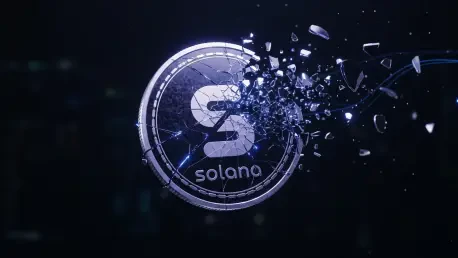

The allure of participating in the meteoric rise of artificial intelligence has recently collided with the rigid legal frameworks governing private corporate equity, leaving many investors in a state of financial shock. The promise was intoxicating: own a fraction of OpenAI or Anthropic before they ever hit the public market, all with the click of a button on the Solana blockchain. For many retail investors, this represented the ultimate democratization of venture capital, turning the exclusive world of pre-IPO equity into a liquid, digital asset. However, that dream evaporated almost overnight as the tokens tracking these AI leaders plummeted, proving that in the world of high-stakes finance, a smart contract is only as strong as the legal reality it claims to represent.
The Illusion: Owning a Piece of the AI Giants
This recent volatility underscored the fragility of indirect ownership models in the decentralized finance space. Many participants entered these positions believing that blockchain technology could bypass traditional gatekeepers, yet they found themselves holding digital certificates that lacked underlying legal standing. The excitement surrounding generative AI drove valuations to speculative heights, but the technical execution of these tokens failed to bridge the gap between digital scarcity and actual share ownership.
As these tokens lost value, the realization dawned that digital representation does not equal legal possession. The initial hype focused heavily on the potential for massive returns, mirroring the growth of the AI industry itself. However, when the structural integrity of the tokens was questioned, the lack of a direct link to the actual equity caused a rapid revaluation. This disconnect between the blockchain ledger and the corporate cap table turned a promising investment vehicle into a cautionary tale of overreach.
The Intersection: DeFi Ambition and Corporate Gatekeeping
To understand why these tokens fell, one must look at the rise of Pre-IPO Special Purpose Vehicles on decentralized platforms like PreStocks. These platforms sought to capitalize on the massive hype surrounding generative AI by offering indirect economic exposure to private shares. As the Solana ecosystem flourished, these tokens became a focal point for investors looking to hedge against traditional market limitations. The collapse serves as a pivotal case study in the friction between blockchain innovation and the ironclad bylaws of multi-billion dollar corporations.
The ambition to move fast and break things encountered an immovable object in the form of corporate governance. While Solana offered the speed and low costs necessary for a liquid market, it could not provide the legal authority required to transfer restricted securities. This friction created a vacuum where speculation flourished in the absence of institutional support. Ultimately, the lack of coordination between the DeFi platforms and the AI companies themselves ensured that the tokens remained on the periphery of the real financial system.
Unpacking the Catalysts: The Market Downturn
The collapse was not a random market fluctuation but a direct result of fundamental structural and legal failures. The primary domino fell when the companies being tokenized issued scathing public rebukes. Both OpenAI and Anthropic clarified that their corporate bylaws strictly forbid the transfer of private shares without explicit board approval. Anthropic labeled such schemes as potentially fraudulent, asserting that these specific vehicles held no legal standing. This formal invalidation stripped the tokens of their value, as investors realized the parent companies refused to recognize them.
Beyond the legal threats, the financial math behind these tokens was increasingly precarious. While the tokens traded based on an implied valuation of over $1 trillion for the AI firms, the actual liquidity pools on the chain were remarkably thin. For instance, the Anthropic token pool held only approximately $351,000 in liquidity. This meant that any significant attempt by investors to cash out would cause the price to crater, as there was simply not enough capital to support the exit of early speculators. Furthermore, the absence of independent audits or third-party attestation regarding the underlying equity left the market vulnerable to a crisis of confidence.
Expert Perspectives: A Reality Check for Tokenized Equity
Industry analysts suggest that this collapse represents a necessary, albeit painful, maturation of the Real World Asset sector. Legal experts emphasize that while blockchain can track ownership, it cannot override the right of first refusal or transfer restrictions embedded in private company charters. This reality check has highlighted a growing consensus that tokenizing private equity requires more than just a pool of liquidity on Solana; it requires a level of institutional cooperation that most startups are not yet willing to grant.
The broader market now views these events as a boundary-setting moment for decentralized finance. Moving forward, the focus is shifting from simple tokenization toward the development of legally compliant bridges that respect existing corporate laws. Analysts argued that for the sector to survive, platforms must prioritize legal due diligence over speed. This shift marks the end of the experimental phase for pre-IPO tokens and the beginning of a more regulated and scrutinized era for blockchain-based securities.
Red Flags: Strategies for Navigating Pre-IPO Tokens
In the wake of the collapse, market participants established new benchmarks for evaluating the viability of tokenized private assets. It became clear that verifying board-level authorization was the single most important step for any prospective investor. Without a clear paper trail that led directly to the company’s directors, tokens were recognized as high-risk derivatives rather than stable equity representations. This understanding prompted a shift toward requiring explicit confirmation from the underlying firm before any capital was deployed.
Future strategies emphasized the necessity of assessing liquidity-to-valuation ratios to avoid the slippage seen in the Anthropic sell-off. Investors began to demand real-time proof of reserves and frequent third-party audits as non-negotiable standards for any platform offering exposure to off-chain assets. These rigorous requirements formed the foundation for a more resilient investment environment where transparency replaced blind trust. By focusing on these actionable metrics, the community worked to ensure that subsequent attempts at tokenizing equity would be grounded in both legal reality and financial stability.