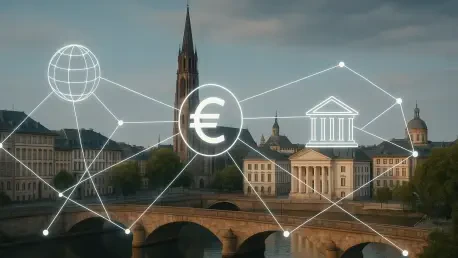

The pursuit of strategic autonomy drives the creation of a payment framework that reduces European reliance on non-European financial infrastructures. The fragmented world of European payments where borders are invisible for people but concrete for their digital wallets is finally fading. With the official launch of the European Network for Payments (ENP) on October 1, 2026, the financial landscape of the continent has entered a new era of integration. Headquartered in the bustling financial center of Madrid, this joint venture represents an unprecedented alliance between five major domestic payment powerhouses: Bancomat, Bizum, the EPI Company, SIBS, and Vipps MobilePay. These organizations have moved beyond their national borders to establish a common interoperability hub that effectively bridges the gaps between previously siloed financial systems. By creating a unified digital finance environment, the ENP addresses the long-standing challenges of cross-border retail payments, offering a seamless experience for 130 million users across 13 countries. This strategic initiative is more than just a convenience; it is a fundamental shift toward collective economic resilience, ensuring that European citizens and businesses can transact with each other as effortlessly as they do within their own local neighborhoods.
The Foundation of a Continental Powerhouse
Market Dominance: The Strength of Founding Partners
The ENP does not emerge as a speculative startup but as a powerhouse built upon the massive, pre-existing user bases of established market leaders. Spain’s Bizum, for instance, has evolved into a national phenomenon with over 20 million users who rely on it for everything from peer-to-peer transfers to e-commerce and point-of-sale transactions. Similarly, Italy’s Bancomat provides the foundational stability and scale of a central domestic card scheme that is deeply embedded in the country’s daily banking habits. In Portugal, SIBS and its MB WAY solution enjoy near-universal adoption and a high degree of consumer trust, making digital payments a standard part of life for millions. These brands have spent years building infrastructure and loyalty, which now serves as the bedrock for the ENP’s expansion. Rather than forcing consumers to adopt entirely new technologies, the alliance leverages the familiarity of these local brands to ensure a smooth transition toward an integrated continental system. This approach preserves the unique cultural and financial identities of each region while providing the necessary scale to compete with global financial giants on equal footing.
Beyond the Mediterranean markets, the inclusion of Vipps MobilePay brings a successful model of regional consolidation from the Nordic countries into the broader European fold. This entity, which previously unified the payment landscapes of Norway, Denmark, and Finland, demonstrates that cross-border collaboration is not only possible but highly effective in creating a dominant digital presence. Complementing this is the EPI Company and its Wero digital wallet, which provide the overarching strategic vision for a cohesive pan-European experience. Together, these founding partners represent more than 70% of the population across the European Union and Norway. The governance structure of the ENP is specifically designed to reflect this collaborative spirit, as all founding members act as equal shareholders. This arrangement prevents any single national interest or large economy from overshadowing the strategic direction of the network. By pooling their technological resources and customer networks, these entities have created a formidable financial ecosystem that is capable of providing the same level of ubiquity and reliability that users have traditionally expected only from international card networks.
Collaborative Governance: The Power of Equal Shareholders
The structural integrity of the ENP is maintained through a balanced governance model that ensures each of the five founding members has an equal voice in the network’s future. This parity is crucial for maintaining trust among the diverse group of banks and financial institutions that support these domestic schemes. By operating as a joint venture where no single party holds a majority, the ENP can navigate the complex political and economic sensitivities of the European landscape. This collaborative framework allows the network to aggregate the best practices from different markets, such as the advanced mobile-first approach of the Nordics and the robust retail banking networks of Southern Europe. The collective intelligence of these market leaders facilitates the rapid identification of emerging trends and the development of standardized protocols that can be applied across the entire network. This synergy is intended to accelerate the pace of innovation, allowing the ENP to roll out new features and security enhancements simultaneously across all 13 participating countries, thereby maintaining a consistent and high-quality service for all users.
Furthermore, the shared ownership model serves as a defensive mechanism against the fragmentation that has historically plagued European financial initiatives. By committing to a unified strategic roadmap, the founding partners align their long-term interests with the success of the ENP rather than competing for regional dominance. This alignment is particularly important as the network seeks to integrate more deeply into the European digital single market. The collective bargaining power of the ENP also allows it to negotiate more favorable terms with technology providers and international regulators, ensuring that the voice of European financial institutions is heard on the global stage. This unified front is essential for establishing the ENP as a credible and sustainable alternative to the established international payment giants. As the network matures, the governance model will likely evolve to include new stakeholders, but the core principle of equal partnership remains the cornerstone of its operational philosophy, ensuring that the network remains a truly European project that serves the interests of all its members and their respective customers.
Pursuing Strategic Autonomy and Technical Harmony
Sovereignty: Through Account-to-Account Infrastructure
A central pillar of the ENP initiative is the active pursuit of strategic autonomy, a goal that seeks to reduce Europe’s heavy reliance on non-European payment infrastructures and the long-standing duopoly of international card schemes. The technical foundation of the network is built upon instant account-to-account (A2A) standards, which represent a significant departure from traditional credit and debit card systems. In an A2A model, funds move directly from the payer’s bank account to the recipient’s account without the need for multiple intermediaries or complex clearinghouse processes. This directness results in nearly instantaneous settlement, providing immediate liquidity for merchants and a transparent experience for consumers. By utilizing European-developed technical standards, the ENP ensures that the core of its financial operations remains within the continent’s jurisdiction and regulatory oversight. This move toward a home-grown infrastructure is essential for protecting the European economy against external shocks and ensuring that the profit and data generated by daily transactions stay within the regional ecosystem, ultimately fostering a more self-sufficient and innovative financial sector.
While the underlying technology is being unified, the ENP places a high value on maintaining the local branding and user interfaces that consumers already trust. This strategy recognizes that financial behavior is deeply personal and often tied to local institutions that have earned a reputation for security and reliability over decades. For example, a traveler from Madrid visiting Rome can still use the Bizum interface they are familiar with to pay for dinner at an Italian restaurant, while the backend hub handles the complexities of the cross-border transfer through Bancomat’s rails. This seamless integration ensures that there is no “learning curve” for the user, which is often the biggest barrier to the adoption of new payment methods. By preserving these domestic brand identities, the ENP reinforces the central role of European banks in the digital age, proving that local expertise can be successfully exported across borders without losing its core appeal. This balance of technical centralization and regional personalization allows the network to scale rapidly while keeping user friction to an absolute minimum, thereby securing the loyalty of 130 million existing customers.
Technical Integration: The Madrid Interoperability Hub
At the heart of the ENP’s operations is the interoperability hub based in Madrid, a facility tasked with the monumental challenge of harmonizing the various technical and regulatory frameworks of 13 different countries. Each participating nation has its own legacy banking systems, specific data security protocols, and variations in how they implement European financial directives. The hub acts as a sophisticated digital translator and bridge, converting the signals and authorization requests from one domestic system into a format that can be instantly understood and processed by another. This operational layer is critical for overcoming the fragmentation that has historically made cross-border A2A payments difficult and slow. Engineers and policy experts at the hub work continuously to align these standards, ensuring that every transaction, whether it originates in Oslo or Lisbon, meets the highest levels of security and compliance. By centralizing these technical functions, the ENP can achieve economies of scale and implement system-wide upgrades more efficiently than if each domestic provider attempted to build its own individual connections to every other country in the network.
The technical architecture of the Madrid hub is designed with inclusivity and future scalability as core principles. While it currently serves as the backbone for the five founding members, the framework is open to other European payment providers who wish to join the network. New participants must meet rigorous technical, security, and operational requirements to ensure that the integrity of the overall system is never compromised. This open-but-secure design prevents the ENP from becoming a closed club, instead positioning it as a universal standard for European payments. The hub also manages the complex task of multi-currency settlement where necessary, particularly for transactions involving non-euro participants like Norway and Denmark. As the network expands, the hub’s ability to process increasingly high volumes of data while maintaining sub-second transaction speeds will be the ultimate test of its success. This commitment to technical excellence ensures that the ENP is not just a temporary fix for cross-border friction but a permanent piece of infrastructure that can support the evolving needs of the European digital economy for years to come.
A Roadmap for Economic Transformation
Operational Strategy: The Phased Implementation of Services
The rollout of the ENP follows a carefully structured three-phase roadmap designed to ensure technical stability and high user adoption at every stage of the journey. The initial phase focused on peer-to-peer (P2P) transfers, allowing users to send money across borders using only a mobile phone number or an alias. This addressed one of the most common pain points for European citizens, such as students studying abroad or expatriates sending funds home, who previously had to navigate expensive and slow international transfers. By starting with P2P, the ENP was able to test its interoperability hub in a lower-risk environment before moving on to higher-volume commercial transactions. Following the success of the P2P phase, the network has expanded into the e-commerce sector. This second phase enables consumers to use their domestic mobile payment apps to shop at online retailers across all 13 participating countries. For the first time, a Portuguese consumer can use MB WAY to pay for a purchase from a Spanish or Norwegian website with the same ease as a domestic order, removing a significant barrier to the growth of the European digital single market.
The final and most ambitious phase of the roadmap involves the integration of point-of-sale (POS) terminals for physical in-store payments. This stage is technically complex because it requires the coordination of hardware and software across millions of merchant terminals to recognize and process payments from the various ENP-connected apps. Achieving this level of ubiquity is essential for the ENP to become a true alternative to international card schemes in daily life. This phase also coincides with the rise of technology where smartphones can act as payment terminals, further lowering the barrier for small merchants to accept ENP transactions. By the completion of this phase, the network aims to provide a comprehensive ecosystem that covers every possible payment scenario, from splitting a dinner bill to buying groceries at a local supermarket in a neighboring country. This systematic approach allows the ENP to refine its technical layer and address any operational friction points in real-time, ensuring that by the time the system is fully operational at the retail level, it is as robust and reliable as any legacy payment method currently on the market.
Economic Value: Benefits for Consumers and Merchants
For the individual consumer, the primary benefit of the ENP is the unprecedented convenience of having a single digital tool that works everywhere in Europe. In the past, travelers were often forced to carry multiple cards or download specific local apps to navigate different national payment landscapes. The ENP eliminates this fragmentation by allowing users to keep using the tools they already know and trust. There is no need to sign up for new services or share sensitive financial data with multiple providers; the security is handled by their own domestic bank and the ENP hub. Furthermore, because the system is built on instant A2A rails, consumers enjoy greater transparency and real-time updates on their account balances. This immediate feedback helps users manage their finances more effectively, especially when traveling. The psychological benefit of paying like a local regardless of where one is in Europe cannot be overstated, as it fosters a deeper sense of continental belonging and trust in the digital economy. As adoption grows, this ease of use will likely make the ENP the preferred method for most retail transactions within the participating 13 countries.
Merchants also stand to gain significantly from the transition to a unified ENP framework, primarily through reduced costs and improved operational efficiency. Traditionally, accepting payments from various international and domestic schemes meant dealing with a complex web of fees, intermediaries, and varying settlement times. The ENP simplifies this by providing a single point of access to a massive customer base of 130 million affluent consumers. Because the system utilizes A2A instant payments, merchants benefit from lower transaction fees compared to traditional card schemes, which often involve high interchange and processing costs. More importantly, the instant settlement of funds means that businesses have immediate access to their revenue, dramatically improving cash flow management and reducing the need for short-term credit. This is particularly beneficial for small and medium-sized enterprises that operate on tight margins and require quick access to liquidity to restock inventory or pay staff. Additionally, the ability to accept a wide range of European payment apps through a single integration reduces the technical burden on IT departments, allowing businesses to focus on growth rather than managing a fragmented payment infrastructure.
Strategic Evolution: Global Competitive Positioning and Next Steps
The establishment of the European Network for Payments successfully demonstrated that a sovereign, collaborative infrastructure could redefine the financial boundaries of a continent. By connecting 130 million users through a common, account-to-account framework, the project addressed the deep-seated fragmentation that once hindered the European digital single market. Stakeholders realized that the success of this entity rested on its ability to maintain the speed and simplicity of domestic brands while scaling them to a international level. The initiative proved that local expertise, when properly integrated into a unified hub, could effectively challenge the dominance of global card schemes. Merchants and consumers alike embraced the system, finding that the benefits of instant liquidity and familiar user interfaces outweighed the convenience of legacy international methods. This shift provided a robust foundation for future innovations, moving the region closer to a truly self-sufficient financial ecosystem that reflects its unique economic values and technological capabilities.
As the network continues to mature, the focus shifted toward deepening the integration of value-added services and expanding the ecosystem to include even more participants. The next logical steps involved the standardization of digital identity verification and the implementation of advanced loyalty programs that operate seamlessly across borders. Merchants were encouraged to fully optimize their payment gateways to prioritize these instant A2A transactions, further reducing their operational overhead. Regulators maintained a supportive yet vigilant oversight, ensuring that the network remained open to competition while upholding the highest standards of security. This journey from a group of separate national brands to a unified European presence secured the continent’s place as a global leader in financial technology. The ENP showed that through collaboration and strategic foresight, it was possible to build a modern payment system that serves the needs of a diverse population, ultimately fostering greater economic unity and prosperity across the 130 million users and beyond.