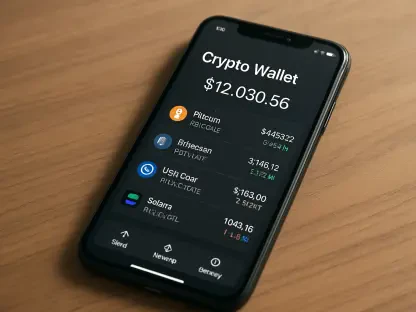

The rapid maturation of decentralized finance has fundamentally altered the expectations of the global digital asset community, transforming the humble cryptocurrency wallet from a simple storage locker into a comprehensive command center for the modern internet. In this competitive landscape, the friction between legacy reliability and cutting-edge innovation has created a diverse marketplace where security, cross-chain interoperability, and active ecosystem participation are no longer optional features but essential pillars of survival. This analysis explores the shifting dynamics between three dominant market leaders: MetaMask, the venerable developer standard; Trust Wallet, the versatile multi-chain hub; and Xenea Wallet, a disruptive newcomer that utilizes gamified engagement and democratic governance to challenge traditional custody models. As institutional capital and retail participation converge, the strategic direction of these platforms serves as a primary indicator for the future of user autonomy in a fully decentralized digital economy.
Diverse Philosophies and Architectural Foundations
MetaMask continues to function as the primary gateway for the Ethereum Virtual Machine ecosystem, maintaining a philosophy that prioritizes technical depth and granular control over simplified aesthetics. Its architecture is built to serve as an extension of the user’s browser or mobile device, allowing for direct interaction with sophisticated smart contracts and decentralized applications without intermediate interference. This approach has solidified its position among developers and professional traders who require high-precision tools for managing gas limits, customizing network parameters, and conducting deep-level protocol interactions. By remaining close to its open-source roots, MetaMask offers a transparent environment where the community can audit code and build custom plugins, ensuring that the wallet remains the most adaptable tool for those who prioritize technical sovereignty and the ability to navigate the complex infrastructure of Layer-2 scaling solutions.
In sharp contrast to the developer-centric model, Trust Wallet has optimized its foundation to support the multi-chain reality that defines the current year. Since its integration with the broader Binance ecosystem, it has focused on providing a mobile-first, self-custody solution that bridges the gap between different blockchain architectures, supporting over 100 distinct networks simultaneously. This design philosophy emphasizes broad accessibility, allowing a single user to manage assets ranging from Bitcoin and Solana to various specialized sidechains within a unified interface. Trust Wallet’s architecture is intentionally streamlined to reduce the cognitive load on the user, making it the preferred choice for individuals with highly diversified portfolios who do not wish to manage multiple specialized wallets. Its focus on cross-chain functionality ensures that as the market fragments into thousands of niche protocols, the user maintains a centralized point of access for their entire digital wealth.
Xenea Wallet represents a radical departure from both established models by introducing a community-centric architecture built on the principles of decentralized governance. Unlike its predecessors, which largely act as passive containers, Xenea is constructed around a Proof of Democracy consensus mechanism that integrates the user directly into the security and operation of the network. The architectural innovation here lies in the replacement of traditional, intimidating seed phrase management with social login capabilities via Google and Apple. This “Web2.5” onboarding strategy is designed to dismantle the barriers that have historically prevented mass adoption by offering a familiar entry point while maintaining the underlying benefits of self-custody. By prioritizing social recovery and democratic participation at the core of its build, Xenea attempts to solve the fundamental tension between high-level security and the ease of use required for the next wave of global retail participants.
Ecosystem Depth and DeFi Functionality
When evaluating functional depth, MetaMask remains the undisputed leader for high-stakes decentralized finance and sophisticated non-fungible token marketplaces. Its long history and deep integration with the Ethereum ecosystem mean that every major protocol, from automated market makers to complex lending platforms, is designed with MetaMask compatibility as the baseline requirement. This ecosystem density allows users to engage with cutting-edge financial instruments, such as flash loans and liquid staking derivatives, with a level of stability that newer competitors struggle to match. Furthermore, the platform’s advanced developer tools allow for seamless transitions between mainnet and various scaling environments, ensuring that users can optimize their transaction costs and speeds without leaving the familiar environment of their primary interface, thus maintaining a dominant position in the professional DeFi sector.
Trust Wallet excels by offering a more horizontal DeFi experience, providing users with native access to a vast array of staking and swap services across disparate blockchain networks. Rather than focusing solely on the depth of one ecosystem, it provides a “super-app” experience where users can swap tokens between the BNB Chain and Solana or participate in governance on Cosmos without needing to understand the underlying technical differences between these protocols. This multi-chain functionality is bolstered by an integrated dApp browser that is curated to ensure high performance and security for mobile users. By simplifying the process of earning yield on various assets through one-click staking interfaces, Trust Wallet appeals to the “generalist” investor who seeks to maximize their returns across the entire crypto market rather than specializing in a single network’s specific financial nuances.
The functional paradigm of Xenea Wallet introduces the concept of active utility through its incentivized mining and voting structures. Within the Xenea ecosystem, holding assets is not a passive activity but an entry point into securing the network via the Proof of Democracy mechanism. Users are encouraged to delegate their voting power to validators, effectively merging the acts of digital custody and network governance into a single, rewarding process. This integration of DeFi elements directly into the wallet’s core logic ensures that users are constantly engaged with the health and direction of the blockchain. This approach transforms the wallet from a stationary vault into a dynamic engine of participation, where the very act of using the software contributes to the decentralization of the network while providing the user with a steady stream of governance-based rewards and protocol-level incentives.
Incentives and the Rise of Gamified Finance
The current market has witnessed a significant shift toward gamified finance, a trend where Xenea Wallet has established a dominant lead through its innovative Gem Reward System. While traditional wallets like MetaMask and Trust Wallet serve as strictly utilitarian tools that facilitate transactions, Xenea has pioneered a model that rewards consistent user interaction. By completing educational quizzes, participating in governance votes, and performing daily check-ins, users earn “Gems” that can be exchanged for tangible ecosystem benefits, such as airdrop eligibility or enhanced mining permissions. This psychological framework addresses the persistent issue of user churn in the blockchain space by turning the management of digital assets into an engaging, quest-based experience. This shift from passive holding to active participation fosters a deeper sense of community loyalty and ensures that the wallet remains a daily destination for the user.
In contrast, MetaMask and Trust Wallet have largely avoided internal gamification, choosing instead to remain neutral infrastructure providers. These platforms rely on external decentralized applications to provide the excitement and incentives that keep users engaged, focusing their own development efforts on enhancing core reliability and transaction processing speeds. While this approach preserves their reputation as professional-grade tools, it leaves a vacuum that newer, more agile competitors are beginning to fill. For many users, the lack of an internal reward structure in legacy wallets feels like a missed opportunity for value accrual, especially as the “play-to-earn” and “engage-to-earn” mentalities become more prevalent in the broader digital economy. As the market continues to evolve, these established players may find it increasingly difficult to compete for the attention of a younger demographic that expects every digital interaction to offer some form of measurable feedback or reward.
Onboarding Friction and User Experience
Simplifying the transition from traditional web services to decentralized environments has become the primary battleground for wallet developers seeking to capture the retail market. Trust Wallet has maintained a significant advantage in this area by prioritizing a clean, intuitive interface that automatically detects and organizes a user’s tokens and NFT collections without requiring manual input. Its “set-it-and-forget-it” approach minimizes the technical hurdles for newcomers, providing a smooth experience that mirrors the simplicity of modern banking apps. This focus on the “out-of-the-box” experience is critical for reducing the anxiety often associated with the first steps into the crypto world, allowing users to focus on managing their investments rather than troubleshooting network configurations or worrying about the visibility of their assets within the application.
Xenea Wallet takes this evolution a step further by implementing social login technology that fundamentally changes how identity is managed in the Web3 space. By allowing users to create and recover their wallets using familiar accounts like Google or Apple, Xenea eliminates the need for the manual storage of 12-word seed phrases, which has long been a major point of failure for inexperienced users. This innovation bridges the usability gap by providing the same level of convenience found in Web2 applications while retaining the decentralized security of the blockchain. For a global audience that is accustomed to password recovery and biometric authentication, this familiar onboarding path is a game-changer. It lowers the barrier to entry significantly, making it possible for individuals who were previously intimidated by technical complexities to enter the decentralized economy with confidence and ease.
Security Paradigms and Key Management
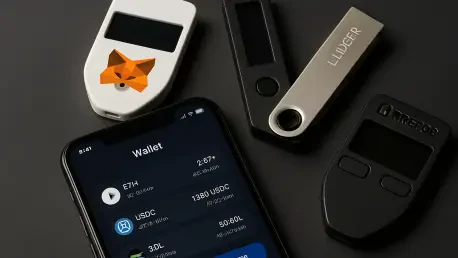
As the sophistication of digital threats continues to escalate, the security architectures of these wallets have become more specialized to address different levels of risk. MetaMask remains the preferred choice for those who demand the highest level of protection through its deep integration with hardware wallets like Ledger and Trezor. By keeping private keys entirely offline and requiring physical confirmation for every transaction, this combination provides a virtually impenetrable defense against remote attacks. Additionally, MetaMask’s advanced phishing detection and smart contract simulation features allow users to see exactly what a transaction will do before they sign it, preventing many of the common scams that plague the DeFi space. This focus on “hardened” security makes it the standard for managing significant treasury holdings and high-value NFT assets where no margin for error exists.
The security model introduced by Xenea Wallet focuses on a patented private key management system that aims to provide “convenient security” for the mass market. By distributing the key architecture across multiple secure nodes, Xenea removes the single point of failure inherent in traditional seed phrases while ensuring that the user maintains ultimate control over their funds. This distributed approach provides a safety net for retail users who may be prone to losing physical documents or forgetting complex passwords, as the system allows for secure recovery through verified social identities. This evolution in key management suggests a future where self-custody no longer requires the user to act as their own specialized security engineer. For the broader public, this balance between high-level encryption and user-friendly recovery mechanisms represents the most viable path toward a world where everyone can safely hold their own digital assets.
The competitive landscape of the digital asset industry has matured to a point where users must choose tools that align precisely with their specific financial goals and technical comfort levels. For the professional investor or developer who requires absolute control and deep protocol access, the battle-tested infrastructure of MetaMask remains the superior choice for navigating the complexities of modern DeFi. Those who prioritize portfolio diversity and cross-chain simplicity will find that Trust Wallet provides the most efficient mobile experience for managing assets across the fragmented blockchain ecosystem. However, for a new generation of users seeking community engagement, democratic participation, and a frictionless onboarding experience, Xenea Wallet offers a compelling alternative that transforms the wallet into an active engine for wealth creation. Moving forward, the most successful platforms will be those that can integrate these disparate needs into a cohesive ecosystem that prioritized both user safety and long-term participation.