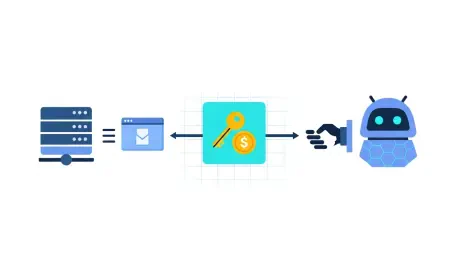

The relentless hum of automated bots scraping websites has long been considered a costly nuisance that drains server resources, but a fundamental shift is underway that redefines this traffic as a potential asset. This is not a futuristic concept; it is a reality unfolding within sophisticated AI systems today. Artificial intelligence agents are already executing machine-to-machine payments as a core part of their operations. They autonomously purchase access to language model APIs based on token usage, rent vector databases by the gigabyte, and settle scraping fees on a per-request basis. Even the cloud-based GPUs that power them are billed by the minute or gigabyte-hour, all managed without direct human intervention for each transaction. This existing infrastructure, where metered endpoints track usage and an API key linked to a payment method empowers agents to operate independently, has created tiny, efficient marketplaces where every byte and every processing cycle has a price. By extending this model to the broader web, websites could transform what was once burdensome bot traffic into a consistent and predictable revenue stream, allowing paid crawling and premium content access without resorting to outright blocking or complex licensing negotiations.
1. Implementing AI Agent Payments with a WordPress Plugin
A free WordPress plugin offers a direct pathway for website owners to monetize their machine traffic by enabling AI agents to pay for access directly. This system operates discreetly at the HTTP level, establishing a secure endpoint where machines can programmatically negotiate prices and settle payments for access to specific pages, content blocks, or e-commerce functionalities. The key advantage is its invisibility to human visitors, who continue to browse the site as usual without pop-ups or interruptions. When an AI agent accesses the site, the plugin initiates a handshake to determine a price and complete the transaction without requiring any manual clicks or approvals. This seamless integration allows site owners to tap into a new income source derived from automated systems while preserving a frictionless user experience for their human audience. The plugin effectively creates a separate, automated commercial layer for machines, turning previously unmonetized bot activity into a valuable component of a site’s financial performance.
This approach provides site owners with highly flexible and granular pricing options, allowing them to tailor monetization strategies to their specific content and business models. For example, a site could charge on a per-URL basis or meter access by content volume, such as setting a micro-fee for every thousand words an agent reads. Another model involves establishing fees for API-style responses, where bots pay for structured data chunks rather than parsing an entire HTML page. In an e-commerce context, pricing can be applied to specific actions within a WooCommerce environment, like charging a small fee for an agent to view detailed product specifications or a slightly higher one to add an item to a virtual cart. To ensure secure transactions, the system integrates with WordPress authentication and WooCommerce checkout hooks, guaranteeing that premium content or data is only unlocked after payment is successfully processed. This functionality fits neatly into familiar administrative flows, making it straightforward for site owners to manage permissions and transactions while creating a reliable revenue stream from machine traffic.
2. The Technical Framework for AI Commerce
The foundation for this new wave of AI commerce is the Agent Payments Protocol (AP2), a standardized framework that empowers AI agents to pay websites autonomously without human intervention. AP2 outlines a clear, machine-readable process for an agent to learn the price of a resource, prove it has the authority to spend, request approval, and settle each charge. At the heart of this protocol is x402, a crypto-friendly handshake mechanism conducted over HTTP that ensures payments are both rapid and secure. The transaction flow is logical and efficient: an AI agent requests a resource from a server, and the server responds with pricing information and a list of accepted payment methods. The agent then presents its verifiable credentials and a spending mandate to prove its identity and authorization. Following this, the server issues a payment challenge using the x402 standard, which the agent completes to finalize the payment. Only after the transaction is successfully settled does the server deliver the requested content or service, creating a trustless and automated value exchange.
A critical feature of this framework is the cryptographic receipt generated with each paid request, which is inextricably tied to that specific transaction. This digital receipt serves as an unforgeable proof of payment that is attached directly to the server’s response, creating a transparent and verifiable audit trail. Consequently, resolving disputes or verifying charges becomes a simple matter of comparing these cryptographic receipts against server logs, eliminating guesswork and ambiguity. Moreover, the Agent Payments Protocol is designed with flexibility and future-proofing in mind. It does not lock websites into a single transport layer or payment rail. While teams can begin with x402 micro-payments for immediate implementation, the protocol is built to accommodate other settlement options as they mature, such as stablecoins, Layer 2 solutions, or bank-linked push payments. This adaptability allows websites to upgrade their AI commerce infrastructure at their own pace, ensuring that their systems for pricing, permissions, and receipts remain clear, fair, and technologically current.
3. Ensuring Security in Automated Payments
To maintain control and prevent misuse in an automated payment environment, mandates function as a spending leash for AI agents. These mandates establish hard, predefined limits on how much an agent can spend and where it is permitted to do so. For instance, an agent could be assigned a strict $25 daily cap for interacting with a specific domain, with its permissions limited solely to pulling product metadata. These pre-approved rules ensure that budgets are tightly controlled and that the agent remains focused on its designated task. This system provides a crucial layer of operational safety by stopping runaway spending before it can escalate. If an agent attempts to exceed its mandated budget or access unauthorized resources, the payment request fails at an early stage. This triggers a fallback response, such as the server delivering a free content teaser or a standard 402 Payment Required error, effectively preventing financial loss and ensuring the agent operates within its intended parameters without constant human oversight.
Complementing mandates, verifiable credentials act as secure digital ID cards for AI agents, allowing them to prove their identity and permissions without exposing sensitive private details. A website can be configured to check for specific claims within these credentials before it even displays pricing information or grants access to premium content, ensuring that only trusted and verified agents can interact with sensitive data. This mechanism allows servers to differentiate between various types of bots and adjust their behavior accordingly. For example, a server could implement tiered rate limits and pricing based on trust levels, offering a verified research bot from a reputable institution a discount while an anonymous, unverified bot is charged the full retail rate. This system of verifiable trust operates quietly in the background, automating control and enabling a secure environment where payments can proceed smoothly. By combining mandates and verifiable credentials, the framework establishes a robust security posture that allows automated transactions to move forward with minimal human intervention.
4. Strategies for Monetizing AI Website Access
By implementing direct AI payments, websites can effectively convert machine traffic from a resource drain into a consistent source of income. This model eliminates the need to either block bots outright or speculate on the value of the data they consume. Instead, sites can charge for exactly what an agent uses, ensuring every byte of data contributes to the bottom line. One of the most common applications is paid crawling, where sites set fees per page, per kilobyte of data transferred, or even by specific structured fields like product specifications or metadata. Upon successful payment, the website returns clean, structured content, such as a JSON snippet or a streamlined HTML fragment. This allows the agent to process the information rapidly and efficiently while reducing the scraping strain on the server. As a result, bot visits, which were once a pure cost, begin to pay for themselves and generate a profit. This creates a symbiotic relationship where bots gain efficient access to valuable data, and websites are compensated fairly for providing it.
Another powerful monetization strategy is content metering, which gives publishers granular control over how their text-based content is consumed by AI. Pricing can be tied to various metrics, such as word count (e.g., $0.003 per 500 words), the freshness of the information, or specific usage rights. For instance, a publisher could sell access to training-safe excerpts that come with a required link-back for attribution, allowing them to share enough information to be useful while keeping their most valuable premium material protected behind a paywall. For e-commerce sites using platforms like WooCommerce, automation can be extended to allow AI agents to conduct commercial transactions directly. An agent could be authorized to pay for product samples, reserve inventory, or place small, recurring orders under preset spending caps. This could automate routine purchases, such as reordering household essentials under $10, without any human effort. To complete the cycle, reporting dashboards provide site owners with crucial insights, allowing them to visualize agent traffic versus revenue, identify top-paying agents, and track key metrics like effective revenue per thousand requests (RPM). This data-driven approach enables them to refine their pricing strategies over time, basing decisions on tangible results rather than hunches.
5. Fostering Collaboration for Future Payment Systems
The era of machines paying other machines for services was no longer a distant concept; it was already an active and functional reality. Websites did not need to undergo a complete architectural rebuild to participate in this emerging economy. Solutions like the PayLayer plugin demonstrated that integration could be achieved with a simple setup on existing platforms like WordPress and WooCommerce, effectively flipping the script on bot traffic from an operational overhead into a measurable revenue stream. The payment rails supporting this new form of AI commerce were continuously taking shape. While x402 crypto micro-payments provided a fast and secure method for current transactions, the ecosystem was designed for evolution. Support for stablecoins, Layer 2 channels, and direct bank-linked push payments was planned to be integrated as those standards matured and gained wider adoption. This forward-looking approach protected websites from vendor lock-in and allowed them to adapt their payment technologies without disrupting established workflows.
The Agent Payments Protocol prioritized interoperability, which allowed agents and websites to transact seamlessly without the need for private contracts or complex, ad-hoc negotiations. The protocol managed price discovery openly, while cryptographic receipts enabled any party to verify a transaction with a high degree of confidence. This transparency extended to publishers, who gained the ability to post machine-readable terms alongside their pricing. These terms could define allowed uses, specify rate limits, and outline attribution rules, creating clear and enforceable guidelines that built trust between humans, bots, and the sites they interacted with. Site owners, plugin authors, and agent builders were encouraged to engage with this technology. Testing these systems on staging environments, matching server logs to receipts, and sharing feedback in public forums helped refine the standards. Proposing new pricing models or credential rules through open collaboration ensured that the developing standards would be fair, robust, and capable of holding up under real-world traffic conditions. This period marked a crucial moment for participation as AI commerce transitioned from small-scale trials to widespread, everyday use.