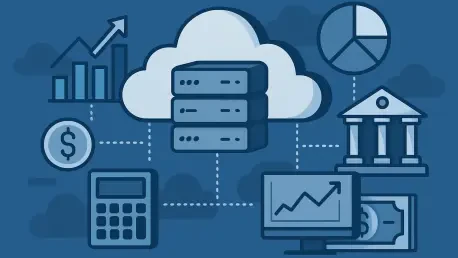

The rapid digitalization of global capital has rendered traditional on-premise data centers nearly obsolete for any institution aiming to survive the current decade of financial evolution. Modern banking no longer relies on static servers tucked away in basement vaults; instead, it lives in a dynamic, distributed environment where milliseconds of latency can determine the success of a multi-million dollar transaction. This shift toward financial-grade cloud architecture represents more than just a change in hosting—it is a total reimagining of how trust, speed, and regulatory compliance intersect in a borderless digital economy.
Evolution of Financial-Grade Cloud Architecture
The migration from legacy hardware to sophisticated Infrastructure-as-a-Service (IaaS) models marks a fundamental turning point for global banking. In the past, financial entities viewed cloud providers as mere utility vendors, much like an electric company. However, the current landscape sees these providers as strategic architects. By integrating high-performance computing with specialized security protocols, modern IaaS allows institutions to bypass the massive capital expenditure of physical hardware while gaining the agility to launch services in new markets within weeks rather than years.
This evolution is particularly evident in how infrastructure now mirrors the complexities of international law. Unlike general-purpose clouds, financial-grade environments are built with the understanding that data is a regulated asset. The transition has enabled a “cloud-first” mentality where scalability is no longer a bottleneck for growth. As institutions move toward these models, the focus shifts from simply maintaining uptime to leveraging the cloud as a launchpad for sophisticated financial products that require immense real-time processing power.
Key Technical Components of Financial Cloud Systems
Multi-Zone Redundancy and High Availability
A defining characteristic of top-tier financial clouds is the implementation of dual availability zones and sophisticated database failover mechanisms. In a practical sense, this means that even if a catastrophic event takes an entire data center offline, the system shifts the workload to a secondary location without a perceptible break in service. This level of redundancy is the bedrock of consumer trust; in the payments sector, even a five-minute outage can cause systemic ripples that damage a brand’s reputation and bottom line.
Infrastructure as Code and Automated Deployment
The adoption of Infrastructure as Code (IaC), utilizing tools like Terraform, has revolutionized how financial environments are built and maintained. By treating hardware configurations like software development, engineers can create repeatable, version-controlled environments that eliminate the risk of human error during manual setup. This automation is a critical differentiator for entities entering new territories, as it allows them to replicate a fully compliant production environment in a new geographic region with high precision and minimal delay.
AI-Powered Payment Processing and Integration
Beyond raw storage, modern cloud infrastructure acts as the engine for artificial intelligence in the FinTech space. High-density computing clusters allow for the real-time analysis of transaction patterns, enabling fraud detection systems to flag suspicious activity before a payment is even finalized. This synergy between AI and infrastructure supports diverse payment solutions, from virtual wallets to complex B2B supplier networks, ensuring that the backend can handle the heavy analytical lifting required for modern risk management.
Emerging Trends in the FinTech Cloud Sector
There is a noticeable shift toward comprehensive architectural partnerships where the cloud provider is involved from the initial blueprint to the final operational handover. FinTech companies are no longer satisfied with “renting” space; they require bespoke environments that satisfy regional data residency laws while maintaining global connectivity. This demand for “local presence” has led to a surge in localized engineering support, where cloud providers offer hands-on assistance to navigate the specific technical hurdles of a local market.
Furthermore, the synthesis of cloud flexibility with rigid security requirements is becoming more seamless. We are seeing the rise of pre-configured, compliant frameworks that allow smaller innovators to compete with established giants by lowering the barrier to entry for regulatory adherence. This trend suggests a future where the primary value of a cloud provider is not just their server count, but their ability to provide a “compliance-in-a-box” solution for global scaling.
Real-World Applications and Industry Use Cases
The strategic expansion of iyzico into the European market serves as a prime example of these technologies in action. By leveraging Tencent Cloud’s Frankfurt-based availability zones, the Turkish FinTech leader was able to establish a foothold in Europe that meets the European Union’s strict data sovereignty standards. This hub-and-spoke model, where a central infrastructure supports localized operations, has become the standard for e-commerce and B2B sectors seeking to bridge the gap between different economic regions.
Moreover, the success of such migrations relies heavily on the availability of 24-hour engineering support. When iyzico integrated its AI-driven payment solutions into the Frankfurt zones, the collaboration proved that localized technical assistance is just as important as the hardware itself. This case study illustrates that for cross-border operations, the infrastructure must be robust enough to handle high-volume holiday shopping peaks while remaining flexible enough to adapt to local consumer behaviors and payment preferences.
Technical Challenges and Regulatory Obstacles
Despite the advancements, navigating the mosaic of global data sovereignty laws remains a significant hurdle. Each jurisdiction has its own set of rules regarding where financial data can be stored and who can access it. Maintaining low-latency performance while encrypting data to meet these varied standards requires a sophisticated balancing act. Many organizations find that the technical complexity of staying compliant across borders can sometimes slow down the very innovation the cloud was supposed to accelerate.
There is also the challenge of “vendor lock-in,” where a company becomes so integrated into a specific provider’s ecosystem that moving becomes prohibitively expensive. To counter this, many forward-thinking firms are exploring multi-cloud or hybrid strategies. While these approaches offer more freedom, they also introduce new layers of management complexity, requiring a highly skilled workforce capable of operating across different platforms and protocols simultaneously.
Future Outlook for Global Financial Infrastructure
The next phase of evolution will likely center on the total automation of compliance. We are moving toward a reality where cloud environments can self-audit and adjust their configurations in real-time to meet changing regional laws. This will further bridge the gap between radical financial innovation and the necessary caution of regulatory scrutiny. As these systems become more intelligent, the distinction between “technology” and “finance” will continue to blur, making global market accessibility a default feature rather than a hard-won achievement.
Furthermore, the long-term impact of scalable IaaS will be the democratization of global finance. Smaller entities will have access to the same high-performance tools as the world’s largest banks, fostering a more competitive and resilient global payment landscape. The cloud will cease to be an “option” and instead become the mandatory foundation for any organization that intends to operate at scale while maintaining local performance standards.
Final Assessment of Financial Cloud Systems
The review of current financial cloud systems demonstrated that a resilient, scalable environment is no longer a luxury but a fundamental requirement for the FinTech sector. The integration of high-performance IaaS and automated deployment tools proved to be the most effective way to foster stability in an increasingly volatile global payment landscape. It was evident that the most successful implementations were those that moved beyond simple hosting to embrace a holistic, partner-driven approach to infrastructure.
Ultimately, the transition to financial-grade cloud systems established a new benchmark for how digital transformation should be handled in highly regulated industries. Future strategies should prioritize the development of multi-cloud proficiency and the adoption of automated compliance tools to stay ahead of shifting global standards. By focusing on localized performance and rigorous security, organizations can ensure that their infrastructure remains a catalyst for growth rather than a limitation in the face of expansion.