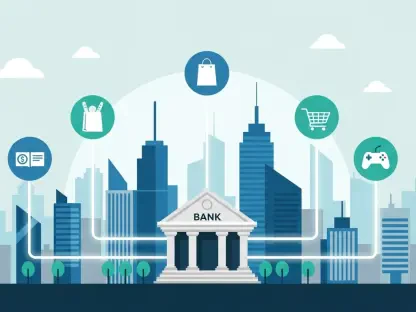

A quiet but profound transformation is reshaping the very definition of a bank, as financial technology firms that once specialized in simple payments are now stepping onto the highly regulated turf of deposit-taking and lending. This strategic pivot from transactional convenience to comprehensive financial services represents more than just an expansion of business models; it signals a fundamental challenge to the long-standing dominance of traditional banking institutions. Driven by a decade of shifting consumer habits and the glaring inefficiencies of legacy systems, this trend is poised to redefine the financial ecosystem, creating new opportunities for consumers and businesses while forcing established players to adapt or risk obsolescence. The core of this movement lies in the pursuit of formal banking licenses, a move that unlocks the ability to offer everything from interest-bearing savings accounts to commercial loans, blurring the lines between tech innovators and century-old financial giants.
The Digital Foundations for a Banking Revolution
The groundwork for this financial revolution was laid not in boardrooms but in the pockets of consumers, with the meteoric rise and widespread adoption of digital wallets. Platforms that simplified peer-to-peer payments and online checkouts have fundamentally altered consumer behavior, making digital transactions the default for a global audience. These services normalized the idea of managing money through non-bank applications, building a level of trust and daily engagement that traditional banks often struggled to achieve. With digital wallets now commanding a staggering 83% of global digital spending and the number of users projected to surge toward six billion by 2030, a massive user base has become comfortable with a financial world that exists outside of brick-and-mortar branches. This behavioral shift created the perfect launchpad for fintech companies to deepen their relationships with customers by offering a broader suite of financial products, moving from a simple utility to an integrated financial hub.
Another powerful catalyst accelerating this trend has been the glaring inefficiency of traditional cross-border payment systems. For decades, individuals sending remittances and businesses conducting international trade have grappled with the slow, opaque, and costly processes of the legacy banking network, epitomized by the SWIFT system. Fintechs identified this pain point and delivered solutions offering superior speed, transparency, and cost-effectiveness. For consumers, this meant more of their hard-earned money reached family members abroad. For businesses operating in a global market valued at approximately $40 trillion, it meant streamlined operations and improved cash flow. By successfully disrupting this critical and lucrative sector, fintechs did more than just capture market share; they built the robust technological infrastructure and secured the loyal customer base necessary to make a credible and ambitious leap into the core functions of banking, using their proven expertise in payments as a powerful springboard.
The Strategic Leap into Comprehensive Financial Services
The current wave of fintech evolution is characterized by a deliberate and strategic push to obtain formal banking licenses in key global markets, including the United States. Prominent companies that built their names on payment processing are now pursuing the regulatory approval needed to function as multifaceted financial institutions. This pursuit is not merely for incremental growth but represents a fundamental expansion of their core mission. The objective is to transition from facilitating transactions to offering a holistic financial experience that encompasses the primary functions of a traditional bank. This includes accepting customer deposits, providing interest-bearing savings accounts that help users grow their wealth, and extending credit through a range of personal and commercial loan products. This evolution marks a direct challenge to the established banking model and is widely seen as the next critical stage in democratizing the financial ecosystem for a new generation of consumers and businesses.
This transformation holds immense potential for advancing global financial inclusion and addressing the needs of underserved populations. An estimated 1.4 billion people worldwide remain unbanked, often excluded from the formal financial system by significant barriers such as high maintenance fees, prohibitive minimum balance requirements, or a deep-seated distrust of traditional institutions. Newly licensed fintech banks are uniquely positioned to dismantle these obstacles by leveraging technology to offer more accessible, lower-cost services. By providing user-friendly platforms for savings and creating new pathways to access affordable credit, these firms can empower individuals in developing countries to invest in education, housing, or entrepreneurship. This not only fosters macroeconomic growth but also helps reduce reliance on unregulated and often predatory black-market financial services, bringing more people into the safety and stability of the formal economy.
A New Landscape of Competition and Collaboration
The entry of fintechs into the lending space introduces a valuable new source of capital, particularly for small and medium-sized enterprises (SMEs) that have historically been underserved by traditional lenders. Companies that have already established strong relationships with millions of merchants through their payment platforms are in an ideal position to offer tailored commercial loans, leveraging vast amounts of transactional data to assess creditworthiness more effectively than legacy models. This influx of new lenders is set to create a more competitive business lending market, which could result in more favorable terms, faster approval times, and greater access to the capital that SMEs need to grow, innovate, and create jobs. For these businesses, the transition of their payment provider into a full-service banking partner represents a significant opportunity to streamline their financial operations and fuel their expansion.
While this trend introduces formidable competition, it does not necessarily signal the end for traditional banks. Instead, their role within the financial system is poised to evolve dramatically, shifting toward a future characterized by increased collaboration. The emerging landscape is likely to be one of “co-opetition,” where established banks and agile fintechs form symbiotic partnerships that leverage their respective strengths. Banks will continue to provide the crucial, capital-intensive infrastructure related to regulatory compliance, liquidity management, and access to central banking systems. In return, fintechs will offer their cutting-edge technology, user-centric design, and ability to rapidly innovate and capture new market segments. This hybrid model promises to reshape the competitive dynamics of the industry, fostering a more open, integrated, and technology-driven financial future where collaboration becomes as important as competition.
A Redefined Financial Future
The deliberate march of fintech companies toward securing banking licenses marked a natural and powerful evolution in the financial services industry. This transformation was not a sudden disruption but the culmination of years of changing consumer preferences, fueled by the mass adoption of digital payments and the persistent inefficiencies of legacy banking systems, especially in cross-border transactions. This movement proved to be far more than a business opportunity; it acted as a transformative force that enhanced global financial inclusion, democratized access to capital, and provided both consumers and businesses with greater choice and superior services. The primary uncertainties that unfolded centered on the pace of this transformation and the intricate partnerships that were forged between agile innovators and the established banking giants they once sought to displace. The overarching narrative was one of a financial ecosystem in dynamic flux, moving decisively toward a more open and integrated future.