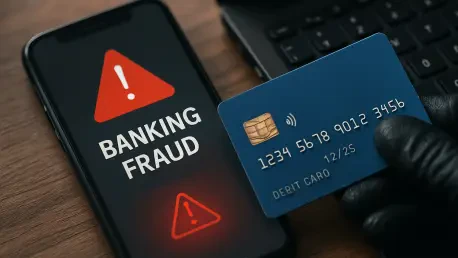

The rapidly shifting landscape of financial technology in South Africa has created an environment where cybercriminals now employ extremely advanced methods to target banking users who rely on mobile applications for everyday transactions. While the convenience of digital banking has grown significantly by 2026, it has been accompanied by a sophisticated surge in fraudulent activities that move far beyond the basic phishing emails of previous years. Criminals are currently utilizing highly technical exploits that allow them to bypass standard security measures, rendering traditional defenses like strong passwords nearly obsolete in the face of motivated attackers. This evolution in tactics means that a single moment of misplaced trust can lead to the complete liquidation of a person’s life savings. As the digital economy expands, the necessity for a deeper understanding of these modern threats becomes paramount for every citizen. The battle for financial security is no longer just about software updates but about recognizing the intersection of human psychology and real-time technical intrusion.
The Evolution of Sophisticated Deception Tactics
The modern fraud landscape is incredibly diverse, ranging from mundane fake traffic fine notifications to highly convincing deepfake videos disseminated through messaging platforms like WhatsApp. By 2026, these operations have reached a level of false legitimacy that can trick even the most cautious and tech-savvy individuals. Major retail brands and government institutions frequently find themselves used as cover for these operations; for instance, prominent retailers and city municipalities have recently issued urgent alerts regarding fraudulent advertisements and job postings. These scams are designed to create a sense of trust by mimicking the branding and communication style of established entities, making every incoming message or notification a potential risk. This environment requires a constant state of digital scrutiny, where users must verify the authenticity of every interaction before engaging with a platform or providing any personal information, as the lines between legitimate service and criminal exploitation continue to blur significantly.
Beyond simple impersonation, the psychological manipulation used by modern scammers has become a primary weapon in their arsenal. Fraudsters often rely on social engineering to manufacture a sense of extreme urgency, pressuring victims to act without thinking critically about the situation. This might involve a call from someone claiming to be from a bank’s fraud department or a courier service regarding a missing package. The goal is to induce a state of panic, leading the victim to believe that their account is about to be blocked or that a legal penalty is imminent. Once the victim is sufficiently distressed, the criminal provides a “solution” that typically involves clicking a link or installing an application. This instructional phase is the most dangerous point of the interaction, as it bridges the gap between a conversation and a technical compromise. By exploiting human emotions, scammers successfully navigate around the technical barriers that banks have spent millions of dollars to implement, making the user the weakest link.
The Technical Mechanics: Remote Access Trojans
At the center of this escalating crisis is the Remote Access Trojan, or RAT, a type of malicious software that grants a criminal complete, real-time control over a victim’s smartphone or computer. Unlike older scams that required a victim to manually enter their login details into a fake website, a RAT attack allows the fraudster to watch the victim’s screen as they navigate their actual banking application. This technical nuance makes standard security protocols like two-factor authentication and One-Time Passwords effectively useless. Because the attacker is viewing the screen live, they can see an OTP the moment it appears in a notification or SMS, using it immediately to authorize fraudulent transactions. This “behind the scenes” operation often remains undetected by the user until the damage is already done, as the malware typically runs silently in the background while the victim believes they are simply performing a routine security check or update requested by a supposed official representative.
The installation of these Trojans is almost always facilitated by the victim under the guise of installing a necessary security patch or a support tool. Scammers frequently direct users to download reputable-looking software like AnyDesk or TeamViewer, which are legitimate remote desktop applications often misused for criminal purposes. Once the software is active, the scammer can observe every action, including the entry of PINs, passwords, and even biometric prompts if the device allows for remote interaction. The criminal often instructs the victim to stay on the line or log into their bank account to “verify” that a problem has been resolved, which is actually a strategy to harvest data in real-time. This level of intrusion represents a significant shift from passive data theft to active hijacking, where the criminal effectively steps into the shoes of the user. Understanding this technical mechanism is vital for modern protection, as it highlights why granting any form of remote access to an unknown party is a catastrophic security failure.
Building a Resilient Defense: Practical Safeguards
Turning the tide against these sophisticated cybercriminals requires a combination of institutional strength and heightened public awareness. Recent data from the National Financial Ombud Scheme has highlighted a staggering 73% increase in digital fraud complaints over the last two years, signaling that the threat is only growing in scale and complexity. While financial institutions have continued to upgrade their encryption and biometric systems, the shift toward targeting the human element means that technology alone cannot provide a total solution. The most effective way to stop these crimes is through a strict refusal to grant unauthorized access to personal devices, regardless of the perceived authority of the caller. Users must adopt a policy of zero trust when it comes to unsolicited communications, verifying every claim through independent channels rather than following the instructions provided in a suspicious call or message. This shift in mindset is the most powerful tool available to the public in 2026.
To maintain security, it is essential to follow rigorous verification protocols and never install remote access software at the request of an external party. Legitimate banks do not require control over a customer’s phone or computer to fix technical issues or to protect an account from a breach. If a person receives an urgent notification, the safest course of action is to terminate the communication immediately and contact the bank using an official phone number found on a physical bank card or a verified website. Furthermore, digital vigilance must extend to checking website URLs for subtle misspellings and looking for verification badges on social media before engaging with a brand. It is also important to remember that a legitimate transaction reversal is an internal banking process that never requires a customer to “approve” a new outgoing transfer. By maintaining a calm and skeptical approach to digital interactions, South Africans effectively dismantled the primary pathways used by modern fraudsters to access their financial assets.