
The quiet replacement of leather wallets with their digital counterparts represents one of the most significant and swift technological shifts in modern consumer behavior, fundamentally altering how we interact with money, commerce, and entertainment. Once viewed as a niche convenience with potential security risks, digital wallets have firmly entered the mainstream, evolving into a central hub for personal finance. This transformation is not merely about replacing physical cards with a smartphone app; it is about creating a more streamlined, secure, and inclusive financial ecosystem. By consolidating payment methods, enhancing security through advanced technology, and integrating seamlessly into the digital entertainment landscape, these platforms are laying the groundwork for the future of transactions. Their rise signifies a deeper change in our expectations for immediacy, convenience, and security in every facet of our economic lives.
The Unstoppable Rise of Digital Convenience
From Niche to Mainstream
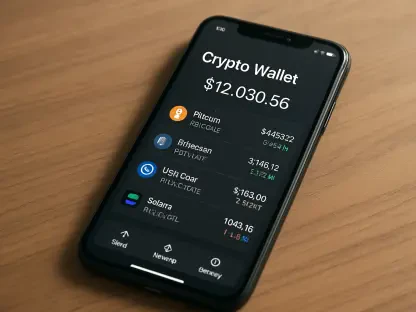
The transition from physical currency to digital transactions has reached a critical tipping point, driven by an overwhelming consumer preference for simplicity and efficiency. Recent data highlights this paradigm shift, with a 2023 study from CapitalOne finding that 53% of Americans now turn to their digital wallets more often than any traditional payment method. This widespread adoption is rooted in the unparalleled convenience of consolidating a multitude of financial instruments—from credit and debit cards to bank accounts and even cryptocurrencies—into a single, easily accessible interface. The technology effectively eliminates the physical friction associated with fumbling for the right card, writing a check, or carrying exact change. This shift is more than a matter of convenience; it represents a fundamental change in consumer psychology, where the expectation is now for instant, one-tap transactions that are both faster and more organized than their analog predecessors, making the digital wallet the new standard for daily commerce.
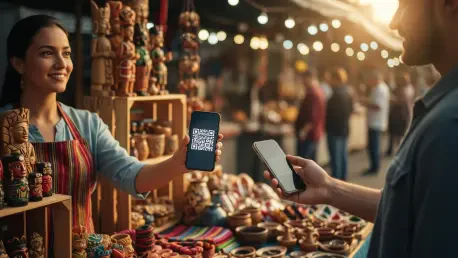
This integration of digital payments has expanded far beyond the realm of e-commerce, embedding itself firmly into the landscape of physical retail and everyday life. The once-novel experience of tap-and-pay functionality has become a ubiquitous feature at checkout counters, in public transit systems, and at vending machines, further accelerating the decline of traditional payment methods. This expansion into the physical world has been crucial in cementing the digital wallet’s position as an indispensable tool. It closes the loop between online and offline commerce, creating a cohesive financial experience managed from a single device. As consumers grow accustomed to this level of seamless integration, the expectation for frictionless transactions becomes the norm, pressuring more businesses to adopt the necessary infrastructure and ensuring that the digital wallet is not just an alternative, but the primary method for a growing majority of the population.
The New Engine of Digital Entertainment
Nowhere is the impact of digital wallets more pronounced than in the vibrant and fast-paced world of digital entertainment, particularly within the global gaming industry. These payment platforms have forged a symbiotic relationship with gaming, acting as the primary engine for in-game economies. For the vast market of mobile and casual gamers, digital wallets facilitate a seamless and frictionless purchasing experience. With a single tap, players can acquire exclusive content, purchase upgrades, or make microtransactions without ever leaving the game environment. This level of immediacy is something traditional payment methods, with their cumbersome data entry requirements, simply cannot match. By removing barriers to purchase, digital wallets not only enhance the player experience but have also become a cornerstone of the monetization strategies that fuel the entire free-to-play gaming model, making them integral to the industry’s financial success and continued innovation.
The role of digital wallets becomes even more critical in the high-stakes environment of real-money online gaming and digital casinos. In this sector, user trust and security are paramount, and digital wallets serve as a vital, trusted intermediary between the player and the gaming platform. By using a digital wallet, players can make deposits and withdrawals securely without ever having to link sensitive banking information, such as a checking account or credit card number, directly to the gaming site. This layer of abstraction provides a powerful safeguard, significantly mitigating the risks of data breaches and fraud. For an industry that relies heavily on consumer confidence, this enhanced security framework is indispensable. It fosters a safer and more reliable environment, encouraging broader participation and ensuring the integrity of financial transactions within the rapidly expanding online entertainment landscape.
Building a More Inclusive and Secure Financial Future
Bridging the Financial Gap
Beyond convenience for the economically established, digital wallet technology—specifically in the form of mobile wallets accessible via smartphones—is emerging as a powerful force for global financial inclusion. For the vast populations of unbanked or underbanked individuals around the world, who may lack access to traditional banking institutions but widely possess a mobile device, this technology provides an essential bridge to the digital economy. It offers a crucial entry point for participating in a world that increasingly demands digital payment capabilities. A mobile wallet can serve as a person’s first formal financial tool, empowering them to engage in a wide array of online activities that were previously out of reach. This includes everything from accessing subscription-based services and shopping on digital marketplaces to participating in the gig economy, thereby fostering greater economic equity and connecting marginalized communities to new opportunities.
The empowerment offered by mobile wallets extends into tangible, life-altering benefits that create pathways to economic stability and growth. For instance, these platforms enable users to receive digital payments for freelance work, sell goods in online markets, and manage their finances with a degree of control and security that cash cannot provide. This access is not just about consumption; it is about participation and production within the digital economy. By providing a secure and accessible financial tool, mobile wallets help break down long-standing barriers, allowing individuals to build a financial history, access a broader range of services, and become more resilient. In this context, the mobile wallet transcends its function as a mere payment app and becomes an instrument of social and economic mobility, contributing to a more inclusive and interconnected global financial system.
The Fortification of Digital Transactions
While early adoption of digital wallets was hampered by legitimate consumer concerns over hacking and fraud, the security architecture of modern platforms has evolved into a highly robust and multi-layered defense system. A cornerstone of this security is the technology of tokenization. During a transaction, tokenization replaces a user’s sensitive credit card data with a unique, non-sensitive string of characters known as a “token.” This token is specific to that single transaction and is useless to malicious actors if intercepted, as it contains no actual account information. This process ensures that the primary card number is never exposed to the merchant or transmitted over potentially insecure networks. By effectively severing the link between the transaction and the sensitive data, tokenization makes digital wallet payments significantly more secure than traditional card swipes, where the actual card number is often stored on merchant systems and vulnerable to breaches.
Building upon the foundation of tokenization, digital wallets incorporate several additional layers of security to protect users from unauthorized access and identity theft. Multi-factor authentication (MFA) is a standard protocol, requiring users to provide multiple forms of verification—such as a password and a one-time code sent to their device—before authorizing a transaction or accessing the wallet. Furthermore, these platforms leverage the advanced security features of modern smartphones, integrating biometric verification like fingerprint or facial recognition as a primary means of access. Complemented by user-set personal identification numbers (PINs), these measures create a formidable barrier against unauthorized use even if the physical device is lost or stolen. It is important to note, however, that user responsibility remains a critical component of this ecosystem; practicing good digital hygiene by using strong, unique passwords and avoiding transactions on unsecured public Wi-Fi networks is essential to maintaining the integrity of this secure system.
The Road Ahead for Digital Payments
The evidence presented by their rapid integration and technological advancement indicated that digital wallets were a central pillar of an increasingly interconnected global economy. The prevailing trend pointed toward an accelerated move to a completely digital, and potentially cashless, society where financial interactions were defined by immediacy and security. The trajectory of innovation suggested that emerging technologies would only further embed these platforms into the fabric of daily life. The advancements that were anticipated in Artificial Intelligence and real-time analytics were poised to dramatically enhance the functionality, security, and personalization of digital payment systems, creating financial tools that could proactively manage budgets, detect fraud with greater accuracy, and offer highly tailored user experiences.
This path of development also signaled that the gaming industry was a space where these advancements were set to become particularly noticeable, paving the way for even greater accessibility and more deeply integrated digital entertainment experiences. The foundational role of digital wallets had already been established, and the continued fusion with technologies like blockchain promised to redefine concepts of digital ownership and in-game economies. It was clear that the evolution of these payment systems was not merely an iteration on existing technology but a fundamental reimagining of how people were to spend, play, and interact with financial services. The consensus from this evolution was that the core principles of convenience, security, and inclusivity, championed by digital wallets, had laid the groundwork for the next generation of digital finance.