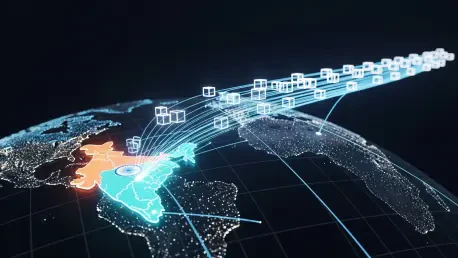

For countless Indian small and medium-sized enterprises venturing into global markets, the final hurdle to success has often been not finding a buyer but navigating the treacherous and often opaque world of international financial transactions. This long-standing challenge is now at the heart of a significant transformation, spurred by the Reserve Bank of India’s (RBI) final authorization granted to the FinTech firm BRISKPE to operate as a Payment Aggregator–Cross Border (PA-CB). This regulatory approval is more than a simple license; it represents a pivotal moment, shifting cross-border transactions from a complex grey area to a formally structured and supervised system, promising to redefine how Indian businesses engage with the global economy.
Beyond the Red Tape Why a Single Regulatory Approval is a Game Changer for India’s Global Aspirations
The central question for a vast number of Indian Micro, Small, and Medium Enterprises (MSMEs) has long been whether the biggest barrier to global trade is market access or the labyrinth of international payments. Historically, the latter has posed a formidable challenge, characterized by high costs, unpredictable timelines, and a heavy compliance burden. The RBI’s final authorization to BRISKPE addresses this issue directly, creating a clear and regulated pathway for managing international funds. This move is a game-changer because it formalizes the role of FinTech intermediaries, bringing their operations under the direct purview of India’s central banking authority.
This development signals a strategic shift in India’s approach to global trade facilitation. By establishing a regulated framework, the RBI is not only enhancing security and transparency but also building a more robust financial infrastructure capable of supporting the country’s growing export and import ambitions. For businesses, this translates into a more predictable and reliable environment, where the focus can shift from navigating regulatory ambiguity to fostering international growth and market expansion. The formalization of these payment channels is a foundational step toward leveling the playing field for Indian MSMEs on the global stage.
The Patchwork Problem Understanding the Old World of Cross Border Payments
Before the introduction of a structured regulatory regime, the landscape of cross-border payments was a fragmented ecosystem. Businesses often had to rely on a patchwork of inconsistent compliance models and convoluted banking arrangements to move money internationally. This system was rife with inefficiencies, where each transaction required navigating a different set of rules and intermediaries, leading to operational friction and a lack of standardized procedure.
The real-world impact of this “patchwork” problem was most acutely felt by MSMEs. These enterprises faced significant operational uncertainty, with unpredictable fund settlement timelines that could disrupt cash flow and hinder business planning. The high compliance burden, which often required dedicated resources to manage, further strained their limited operational capacity. In response to these challenges, the RBI strategically introduced the PA-CB framework. This intervention was designed to formalize, secure, and structure India’s burgeoning digital trade, replacing the old, ad-hoc system with a cohesive and supervised architecture that promotes trust and stability.
The BRISKPE Effect Deconstructing the Core Transformation
With this authorization, BRISKPE transitions from being a FinTech innovator to a regulated entity operating under the stringent guidelines of the Payment and Settlement Systems Act, 2007. This distinction is critical, as it places the company in an exclusive group of firms authorized to handle both inward and outward remittances for Indian businesses. Bolstered by this new status, the company is now aiming to process over $1 billion in transactions annually, a target reflecting the anticipated surge in demand for regulated, efficient cross-border payment solutions.
The ripple effect for exporters and importers is profound. Operating on “regulated rails” creates a stable and predictable financial environment. This new structure enhances transparency in compliance and reporting, allowing businesses to meet their regulatory obligations with greater ease. More importantly, it systematically mitigates the financial and operational risks associated with international payments, such as delays, hidden fees, and compliance failures. The seamless integration of these services into the national payments system ensures that cross-border trade becomes a more streamlined extension of domestic commerce.
At the heart of this transformation is a robust technology platform. BRISKPE’s operational model is designed as an end-to-end digital solution, beginning with streamlined digital onboarding and fortified with rigorous Know Your Customer (KYC) protocols. The system employs real-time transaction monitoring to detect and prevent illicit activities, ensuring a secure environment for all parties. Furthermore, it automates the generation of critical trade documentation, such as electronic Foreign Inward Remittance Advice (e-FIRA) and electronic Bank Realisation Certificates (e-BRC), which are essential for export compliance. This technological backbone removes manual bottlenecks and provides traders with a transparent, efficient, and compliant payment experience.
Expert Insight The Vision for a Complete Trade Finance Loop
Providing insight into this strategic shift, Indunath Chaudhary, Co-founder and COO of BRISKPE, highlights the persistent shortcomings of traditional systems. He analyzes the core challenge as the inherent delays and opaqueness of legacy banking processes in international trade, which create significant hurdles for businesses where timely cash flow is non-negotiable. These legacy systems, often built on outdated infrastructure, have struggled to keep pace with the speed and volume of modern global commerce.
Chaudhary articulates a clear goal: making outward payments as “smooth, transparent, and controlled as inward flows.” This vision aims to perfect the financial cycle for traders, ensuring that the entire transaction lifecycle—from receiving payments for exports to making payments for imports—is managed within a single, cohesive ecosystem. Achieving this symmetry is crucial for optimizing cash flow, reducing administrative overhead, and empowering businesses to manage their international finances with the same level of confidence and control they have in their domestic operations.
A Blueprint for the Future BRISKPE’s Strategy for Full Spectrum Trade Enablement
The initial phase of BRISKPE’s strategy has already solidified its position, building a strong base with over 10,000 MSME exporters who rely on its platform for receiving international payments. This established customer base provides a solid foundation for the company’s next stage of growth, which will be directly fueled by the new regulatory mandate.
Leveraging the PA-CB license, the company is now set for a significant expansion of its service portfolio. The strategy involves moving beyond its current focus on export collections to activate import payment services. This expansion represents the next frontier in its mission, allowing it to cover the full trade lifecycle for its clients. By facilitating importer payables, BRISKPE will be able to manage both sides of a trade transaction, offering a comprehensive solution for businesses engaged in both selling and sourcing goods globally. The ultimate objective is to provide a single, holistic payment platform that enhances cash flow management and operational efficiency for both exporters and importers, completing the trade finance loop.
The formal sanctioning of BRISKPE under the PA-CB framework represented more than a corporate milestone; it marked a foundational shift in the architecture of Indian trade finance. This move by the RBI brought much-needed structure to a vital but previously underserved segment of the digital economy. The establishment of clear “regulated rails” provided a secure and transparent pathway for thousands of MSMEs, which had long been burdened by the complexities and uncertainties of the old system. The authorization was a clear signal that regulatory innovation could serve as a powerful enabler of economic growth, dismantling barriers and fostering greater participation in global commerce. This development ultimately empowered a new generation of Indian entrepreneurs to look beyond domestic borders with renewed confidence.