
With deep expertise spanning blockchain, regulation, and cross-border payments, Kofi Ndaikate offers a unique perspective on the FinTech revolution in emerging markets. Today, he joins us to dissect the complexities global companies face when entering vibrant but fragmented regions like Latin America. We’ll explore the critical role of localized payment strategies, drawing on a recent partnership between dLocal and Amway in Colombia. Our conversation will touch on the power of offering diverse local payment methods, the operational efficiencies gained from a unified platform, and how such a model can serve as a blueprint for sustainable regional expansion.
For global companies operating in Latin America, payment processing can be a significant hurdle. What specific challenges with authorization rates and settlement times prompted Amway to adopt a local acquiring strategy in Colombia, and what measurable improvements have resulted? Please share some examples.
The core issue for any global company entering a market like Colombia is that standard, cross-border processing just doesn’t cut it. You’re immediately confronted with frustratingly low authorization rates because local banks are often wary of international transactions. This leads to lost sales and a poor customer experience. Furthermore, settlement times can be painfully slow, impacting cash flow and operational planning. By shifting to a local acquiring strategy with a partner like dLocal, Amway directly addressed these pain points. The tangible results are exactly what you’d hope for: a significant improvement in authorization rates, much faster settlement times, and the added benefit of clearer, more transparent reporting. This fundamentally changes the payment experience from a point of friction to a reliable, consistent part of their business.
The solution for Amway incorporates local cards, PSE bank transfers, and Efecty cash vouchers. Could you walk us through how offering this particular mix of payment methods caters to Colombian consumer behavior and what impact it has had on the end-user experience and transaction security?
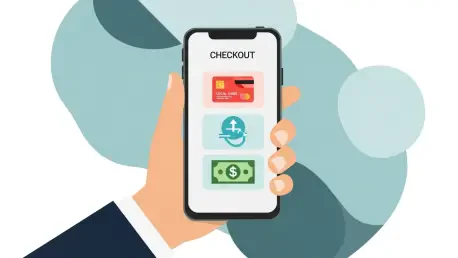
This mix of payment methods is a masterclass in understanding the local landscape. In Latin America, consumer payment habits are not monolithic; they are incredibly diverse. While local card processing is essential, relying on it alone would exclude a huge portion of the market. By integrating PSE bank transfers and Efecty cash vouchers, Amway tapped into how a large segment of Colombians actually prefer to pay. This isn’t just about convenience; it’s about trust and accessibility. The impact on the end-user experience, as their team noted, is profound. Customers now see a “clear and simple experience” because they are using familiar, trusted methods. This localization inherently makes transactions feel more secure and seamless, transforming a potentially confusing international checkout into a straightforward local purchase.
Managing payments through a single platform provides clear advantages. How does this centralized approach specifically simplify local processing and pricing optimization for a company like Amway, and what does the on-the-ground support model look like in practice?
The beauty of a single platform is that it untangles an incredibly complex web of relationships. Instead of managing multiple vendors, banking relationships, and technical integrations for each payment method, Amway streamlines everything through one provider. This centralized approach simplifies everything from reconciliation to troubleshooting. For instance, pricing optimization becomes much more manageable because you have a holistic view of all your transaction flows and can negotiate more effectively. In practice, the on-the-ground support means having a single, accountable partner who understands the local nuances. When an issue arises, you’re not trying to navigate different time zones and languages; you have one team to call who handles the local legwork, making operations vastly more efficient.
This partnership is framed as a replicable strategy for regional growth. What core elements of the Colombian implementation are essential for creating a successful template, and what are the key steps involved in adapting this model as Amway expands into new Latin American markets?
The absolute core element is the principle of “deep localization.” This isn’t just about accepting local currency; it’s about integrating the specific payment rails that dominate each market. The Colombian model, with its blend of cards, bank transfers, and cash vouchers, is the template. The key steps to replicate this are, first, conducting a thorough analysis of the target market’s preferred payment methods. Second, leveraging a single, agile platform that can quickly activate these methods without a massive new technical lift. Finally, ensuring that the platform provides unified reporting and support. As Amway looks to expand, the discussion isn’t about reinventing the wheel but rather about identifying the unique payment mix for the next country and simply plugging it into their established, successful framework.
Amway’s team highlighted the platform’s stability and the clear, simple experience for their users. From a technical perspective, what features ensure this reliability and ease of use across different payment rails, and how does that contribute to a more efficient operational flow internally?
From a technical standpoint, stability across diverse payment rails comes from a robust, well-maintained gateway that acts as a universal translator. This platform is built to communicate fluently with the different systems of local card processors, banks for PSE, and cash voucher networks like Efecty. Features like intelligent routing, which can redirect transactions if one path is down, and standardized APIs ensure consistent performance regardless of the chosen payment method. This technical reliability directly creates that “clear and simple experience” for the user because the transaction just works, quickly and securely. Internally, this translates into a far more efficient operational flow. The finance and customer service teams aren’t bogged down chasing failed payments or dealing with confused customers; they can trust the system, which frees them up to focus on more strategic tasks.
What is your forecast for the future of digital payments for direct selling companies in Latin America?
I believe the future for direct selling companies in the region hinges entirely on hyper-localization and seamless integration. The one-size-fits-all, U.S.-centric payment model is dead. We will see a continued acceleration toward platforms that offer a comprehensive suite of local payment options—from real-time bank transfers and digital wallets to cash-based solutions—all accessible through a single API. Success will not be defined by who has the flashiest technology, but by who can provide the most frictionless, trusted, and familiar payment experience for both the salesforce and the end consumer in every single market. The companies that embrace this deep-seated localization will be the ones who not only survive but thrive and expand their footprint across Latin America.