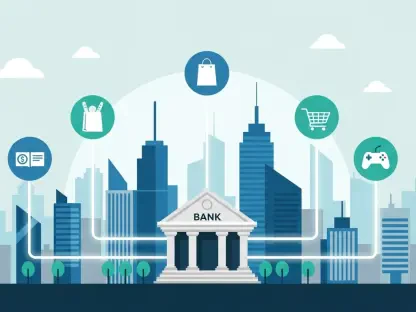

Despite its reputation for a robust and stable financial system, Canada harbors a significant and growing population left on the outside looking in, facing tangible barriers to basic economic participation. A 2022 study revealed a stark reality: approximately 600,000 Canadians are entirely “unbanked,” lacking even a fundamental checking or savings account. Beyond this group, millions more are considered “underbanked,” often compelled to rely on high-cost alternative services like payday lenders and check-cashing outlets to manage their finances. This issue of financial exclusion does not affect the population evenly; it disproportionately impacts some of the nation’s most vulnerable groups, including newcomers navigating a new country, low-income workers struggling to make ends meet, and residents of rural or Indigenous communities who are geographically isolated from financial centers. This deep-seated challenge within a modern economy highlights a critical need for innovative solutions that can bridge the gap where traditional institutions have fallen short.
The Widening Gaps in Traditional Banking
A primary driver exacerbating financial exclusion is the steady erosion of physical banking infrastructure, which creates a paradox where financial services are simultaneously more digital and less accessible. Since 2019, the country has witnessed the closure of over 400 brick-and-mortar bank branches, a trend that significantly impacts communities reliant on in-person services. For many in remote or rural areas, the local branch was the only accessible point of contact with the financial system. Its disappearance leaves a void that digital-only alternatives often cannot fill due to inconsistent and unreliable internet access. This forced shift to online platforms creates a new set of barriers for individuals who may lack the digital literacy, necessary devices, or stable connectivity required to manage their money online. The traditional system’s reliance on stringent criteria like credit history, a permanent physical address, and specific forms of identification further marginalizes newcomers and those with non-traditional employment, effectively locking them out before they even have a chance to participate.
A Decentralized Path to Financial Inclusion
In stark contrast to the closed nature of legacy finance, decentralized finance (DeFi) offers a fundamentally different paradigm built on openness and accessibility. Operating on blockchain technology, DeFi removes the need for traditional intermediaries like banks and brokerage firms, replacing them with automated, transparent protocols known as smart contracts. This “always-on” infrastructure provides continuous, 24/7 access to a growing suite of financial services, including borrowing, lending, and earning interest on digital assets. The most revolutionary aspect of DeFi is its remarkably low barrier to entry. Rather than requiring extensive documentation, a credit check, or a physical address, participation typically demands only an internet connection and a digital wallet. This structure inherently bypasses the very obstacles that exclude so many from the conventional banking system. For those failed by traditional finance, this borderless and permissionless ecosystem represents more than just an alternative; it is a pathway to financial autonomy and inclusion on their own terms.
Forging a More Inclusive Financial Future
The exploration of decentralized finance revealed its profound potential to reshape the landscape of financial accessibility in Canada. It became clear that blockchain-based solutions offered more than just a technological curiosity; they presented a viable and powerful alternative for the hundreds of thousands of individuals left behind by the traditional banking system. The discussion shifted from merely patching the gaps in an old framework to envisioning the construction of a new, inherently more equitable one. For DeFi to transition from a niche innovation to a mainstream tool for financial inclusion, several critical steps were identified. These included the development of more intuitive user interfaces to simplify adoption, the establishment of clear regulatory frameworks to ensure consumer protection and stability, and a concerted effort to enhance digital literacy across underserved communities. The promise of this technology rested not on replacing the existing system entirely, but on providing a crucial, accessible alternative that could finally offer financial sovereignty to those who needed it most.