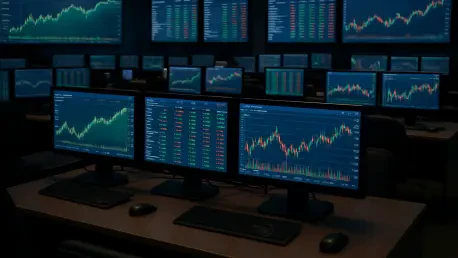

The efficiency of modern global finance depends almost entirely on the invisible digital pulse of exchange trading systems, where trillions of dollars change hands through algorithms that operate at speeds beyond human comprehension. These platforms are no longer just marketplaces; they are the highly sophisticated nervous systems of the world economy. This review explores how these technologies have evolved from their mechanical roots into the current era of hyper-velocity trading, examining their architecture, the critical risks posed by their complexity, and the regulatory landscape that governs their operation.
Fundamentals of Electronic Exchange Infrastructure
At the heart of every modern exchange lies the matching engine, a software powerhouse designed to pair buyers and sellers within microseconds. This process relies on a limit order book that organizes incoming data by price and time priority, ensuring that execution remains fair and transparent. Unlike the shouting matches of historical trading floors, these environments prioritize deterministic latency, where the goal is to provide a consistent response time for every participant regardless of market volatility.
The transition to this automated model has fundamentally changed the nature of market integrity. Reliability is now measured in “nines”—referring to 99.999% uptime—because even a brief delay can lead to massive capital losses and a breakdown in investor trust. These systems must process millions of messages per second, requiring a delicate balance between high-throughput performance and the rigorous data validation needed to prevent erroneous trades from entering the ecosystem.
Core Technical Components and Fail-Safe Mechanisms
Automated Auction Engines and Price Discovery
Primary trading systems utilize specialized auction engines to manage the intense periods of activity during the market open and close. These algorithms are designed to find the “equilibrium price” by aggregating all available interest and calculating the single point where the most shares can be traded. This mechanism is vital because it sets the benchmark for thousands of derivative products and individual investment portfolios. Without a stable price-discovery process, the market effectively flies blind, leading to wider spreads and increased costs for the average investor.
Redundancy Protocols and Disaster Recovery Systems
To prevent total catastrophic failure, exchanges employ redundant architectures consisting of primary and secondary disaster-recovery sites. These systems are mirrored in real-time to ensure that if the main data center fails, a backup can take over without losing a single byte of transaction history. However, the complexity of managing these dual environments is a significant technical hurdle. A “split-brain” scenario, where both systems believe they are in control or report conflicting data, can lead to the very instability these protocols were designed to avoid.
Real-Time Monitoring and Surveillance Tools
Modern surveillance software acts as a continuous diagnostic layer, scanning for anomalies in order flow and system health. These tools use sophisticated telemetry to alert engineers to hardware degradation or software bottlenecks before they impact the public. Moreover, they provide the necessary data for regulatory reporting, documenting every millisecond of activity to ensure that no single participant is gaining an unfair technological advantage through predatory latency or manipulative trading patterns.
Contemporary Innovations and Shifting Industry Trends
The industry is currently moving toward “resilience-by-design,” integrating cloud-based infrastructure to handle sudden bursts in volume that traditional on-premise servers might struggle to process. Furthermore, artificial intelligence is being deployed not for trading, but for defensive monitoring. These AI models identify “out-of-band” behavior that might signify a localized technical glitch or a cyber-attack, allowing for automated circuit breakers to pause activity before a minor error cascades into a systemic event.
Real-World Implementations and Case Studies
The New York Stock Exchange (NYSE) stands as a primary example of high-tier technical deployment, yet even the most advanced systems are vulnerable. On January 24, 2023, a manual oversight caused the NYSE to run its primary and backup systems simultaneously. This dual operation confused the matching engine, leading it to skip opening auctions for over 2,800 securities. The result was a chaotic 90-minute window where stocks opened at distorted prices, leading to thousands of “busted” or canceled trades and a massive blow to the exchange’s reputation for technical excellence.
Critical Challenges and Regulatory Obstacles
Operational Vulnerabilities and Manual Error Risks
The NYSE incident highlighted the paradox of automation: the more complex the system, the more devastating a simple human error becomes. When technicians fail to follow strict procedural checklists, the resulting “cascading failure” can bypass even the most expensive safety nets. Managing the handoff between primary and backup infrastructure remains a high-risk manual task that requires absolute precision, as misinterpreting a system status for even a few seconds can trigger a market-wide disruption that takes hours to rectify.
Compliance and Oversight Mandates
In response to such failures, the SEC has increased its scrutiny, recently levying a $9 million penalty against the NYSE for inadequate procedural safeguards. Regulators now demand robust, written policies that go beyond mere technical uptime; they require exchanges to prove they have the monitoring capabilities to detect and mitigate glitches in real-time. This shift forces technology departments to prioritize “observability”—the ability to see exactly what is happening inside the code—as much as they prioritize execution speed.
Future Trajectory of Exchange Technologies
Looking ahead, the goal is the creation of autonomous, self-healing trading environments that can reconfigure themselves in response to hardware failures without human intervention. While blockchain-based settlement offers a tempting vision of instant, error-free clearing, the immediate focus remains on hardening existing legacy systems. Stricter regulatory standards will likely stifle some “move fast and break things” innovation, but they will ultimately produce a more durable financial foundation that is better equipped to handle the stresses of a globalized, 24-hour trading cycle.
Summary and Strategic Assessment
The evolution of exchange trading systems proved that technical speed is worthless without operational resilience. While the transition to fully digital markets increased liquidity and lowered costs, it also introduced systemic risks that require constant vigilance and sophisticated oversight. The industry learned that backup systems are only as effective as the human protocols governing them, and the focus shifted toward proactive, AI-driven monitoring to catch errors before they manifest as market-wide crises. Future developments will likely emphasize absolute transparency and automated recovery, ensuring that the digital backbone of the global economy remains stable under any conditions.