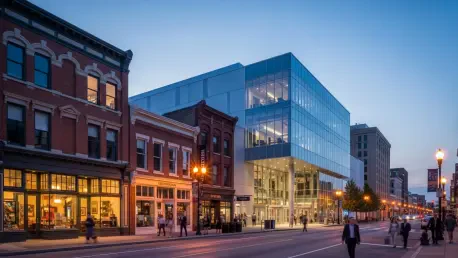

The city of Fargo stands at a defining crossroads that will determine the architectural and economic trajectory of the Red River Valley for decades to come as officials prepare to select a developer for a massive municipal convention center. This ambitious project, which has been under rigorous development for over 15 months, has been narrowed down to two competing visions that offer vastly different philosophies regarding urban growth and fiscal management. On one side, a proposal centered at the vibrant Brewhalla entertainment hub promises a modern, destination-style experience, while a competing plan from the Kilbourne Group aims to breathe new life into the historic downtown Civic Center. The decision is far more than a simple real estate transaction; it represents a high-stakes calculation designed to maximize tourism revenue while insulating the municipal general fund from the volatility of the regional hospitality market and construction cost fluctuations.
As the Fargo City Commission enters the final stages of the vetting process, a sense of political urgency has permeated every meeting and public discussion regarding the facility’s future. The current leadership is operating under a ticking clock, with a municipal election in June and a transition of power scheduled for July that could fundamentally reshape the commission’s priorities. Proponents of the development express deep concerns that if a definitive choice is not codified before the new board takes office, the extensive research, committee work, and public outreach conducted since the 2024 referendum could be discarded. Consequently, the sitting commissioners are tasked with balancing a “once-in-a-generation” economic catalyst against the fiduciary responsibility of ensuring that the project’s complex funding mechanisms, primarily tied to lodging taxes, remain sustainable over the next several decades of service.
Comparing the Primary Development Proposals
The Brewhalla Entertainment Hub Vision
The leading proposal in the current selection rankings focuses on the expansion of the Brewhalla site located at 1702 1st Ave. N., an area that has already established itself as a premier market and entertainment destination. This plan, championed by Drekker Brewing co-founder Mark Bjornstad and developer Kevin Bartram, seeks to capitalize on the existing cultural momentum of the district to create a seamless convention experience. One of the most significant advantages of this bid is the use of a “Guaranteed Maximum Price” contract through Mortenson Construction, which provides a rigid ceiling on construction costs. This legal and financial structure is specifically designed to protect Fargo taxpayers by shifting the risk of material price spikes or labor shortages directly onto the developer and the construction firm. By establishing this clear financial boundary, the Brewhalla team argues that the city can proceed with confidence, knowing that the project’s initial budget will remain intact regardless of future economic shifts in the regional construction market.
Beyond the immediate protection of construction caps, the Brewhalla proposal introduces a unique “shortfall guarantee” that addresses the long-term operational risks associated with municipal facilities. The development team has pledged to personally cover any revenue gaps should the 3% lodging tax collections fail to meet the debt service requirements during the critical early years of operation through 2031. This level of private-sector accountability is rare in public-private partnerships and serves as a powerful incentive for the city to move forward with the 1st Avenue location. Furthermore, the project is inextricably linked to the broader revitalization of the surrounding “Unicorn Park” neighborhood, promising a holistic urban renewal effort. Although the developers have indicated that the convention center itself is not dependent on Tax Increment Financing, they have cautioned that the scale and surrounding infrastructure would be heavily influenced by the approval of a broader tax district, highlighting the interconnected nature of the proposal.
The Kilbourne Group’s Downtown Revitalization
The secondary finalist, presented by the Kilbourne Group under the leadership of Mike Allmendinger, offers a vision rooted in the preservation and modernization of the existing Fargo Civic Center at 207 4th St. N. This approach focuses on the heart of downtown, arguing that the concentration of existing hotels, restaurants, and retail shops makes the historic site the most logical choice for a high-traffic convention facility. Unlike the Brewhalla bid, the Kilbourne proposal utilizes McGough Construction and suggests a more flexible pricing model where the final guaranteed price is set once architectural drawings reach the midpoint of completion. While this offers less immediate certainty than a flat cap, the Kilbourne Group provides a robust completion guarantee, ensuring that the project will be finished even if unforeseen structural challenges arise during the renovation of the aging municipal building. This strategy emphasizes the long-term value of revitalizing the riverfront and maintaining the civic importance of the downtown core.
From a financial perspective, the Kilbourne plan diverges from the direct developer guarantees offered by its competitor, proposing instead a specialized reserve fund to manage economic fluctuations. Under this model, approximately $2 million in bond proceeds would be set aside to act as a buffer for any potential shortfalls in lodging tax revenue, providing a public-sector safety net rather than a private one. The plan also seeks to utilize the existing Riverfront Tax Increment Financing district to offset the substantial costs associated with the demolition and asbestos abatement required for the old Civic Center site. By leveraging these existing urban renewal tools, the Kilbourne Group argues that the project can serve as an anchor for a much larger transformation of the downtown landscape. This vision positions the convention center not just as a standalone venue, but as a critical piece of infrastructure that reinforces the density and economic vibrancy of Fargo’s urban center for the next several decades.
Fiscal Oversight and the Impending Deadline
Rigorous Financial Scrutiny and Projected Benefits
Ensuring the long-term fiscal health of the city remains the top priority for Finance Director Susan Thompson and City Attorney Ian McLean as they conduct the final due diligence on both development bids. To provide an objective perspective, the city has engaged the accounting advisory firm Baker Tilly to perform a comprehensive audit of the financial projections provided by each developer. The cornerstone of the project’s viability is the 3% lodging tax increase approved by voters in 2024, which is expected to provide the primary revenue stream for servicing the construction debt. Analysts are currently scrutinizing whether these tax projections are conservative enough to withstand a potential downturn in the travel industry. The stakes of this financial vetting are incredibly high, as Shirley Hughes of Visit Fargo-Moorhead has projected that a modern facility could generate nearly $30 million in direct visitor spending within its first year, providing a massive boost to the local economy.
The financial oversight process also includes a deep dive into how each proposal interacts with the city’s general fund and its overall credit rating. City leaders are determined to avoid a scenario where a shortfall in specialized tax revenue forces the municipality to dip into essential service budgets or increase property taxes to cover bond payments. Consequently, the evaluation of the Brewhalla shortfall guarantee versus the Kilbourne reserve fund is a central point of contention in the current deliberations. Every line item in the proposals is being examined for potential hidden costs, from infrastructure upgrades to long-term maintenance requirements. By conducting this level of rigorous analysis now, the city aims to create a sustainable model that fulfills the voter mandate for a new center while ensuring that the facility becomes a self-sustaining asset rather than a perpetual liability for the residents of Fargo and the surrounding community.
Navigating the Ticking Political Clock
The atmosphere surrounding the upcoming May 26 commission meeting is charged with a sense of historical consequence, primarily due to the imminent shifts in the local political landscape. With five candidates vying for the mayor’s office in the June primary, including three current commissioners, the leadership of Fargo is guaranteed to look very different by mid-summer. Committee Chairman Charley Johnson has been vocal about the “ticking clock,” warning that any delay in selecting a developer before the July transition could effectively reset the entire project. There is a legitimate fear among project stakeholders that a new commission, composed of members who were not involved in the initial 15 months of planning, might lack the institutional knowledge or political will to follow through on the current recommendations. This creates a narrow window for the sitting administration to finalize a deal that honors the work already completed.
As the city reaches this critical juncture, the focus must shift toward securing a contract that provides both immediate economic stimulus and long-term structural flexibility. The final decision should prioritize a development partner capable of adapting to future technological needs and changing travel trends, ensuring the facility remains competitive in the regional market for at least thirty years. Once a developer is selected, the city should immediately establish a dedicated oversight board to monitor the construction phases and manage the transition to operational status. This proactive approach will be essential for maintaining public trust and ensuring that the final facility reflects the ambitious vision set forth during the 2024 referendum. By making a decisive move now, the current commission can safeguard the progress made thus far and provide a stable foundation for the incoming leadership to build upon as Fargo enters a new era of urban development.