
A decade into the digital age, many prestigious commercial banks still operate within a paradox where multi-million-dollar credit facilities are processed through fragmented manual spreadsheets and endless email chains. This operational disconnect highlights the high cost of maintaining a traditional approach in an environment that demands unprecedented speed and precision. While retail banking has successfully pivoted toward a seamless digital experience, the commercial sector often remains tethered to legacy processes that prioritize administrative box-checking over strategic client engagement. Consequently, the “time to revenue” for a new relationship is frequently measured in months rather than days, draining profitability long before the first transaction is ever completed.
The High Cost of the Status Quo: Efficiency Gaps in Commercial Banking
The financial landscape in 2026 demands more than just stability; it requires an agility that many legacy systems simply cannot provide. The “Time to Revenue” challenge has become a critical metric, as lengthy onboarding processes create a significant drag on institutional growth. When a corporate client initiates a relationship, the window of opportunity for the bank to demonstrate value is narrow. Delays caused by redundant data entry and manual document verification not only frustrate the client but also delay the accrual of interest and fee income, creating a direct negative impact on the bottom line.
Moreover, the shifting expectations of B2B clients have reached a breaking point. Corporate treasurers and executives now demand the same digital convenience they experience as retail consumers. They are no longer willing to tolerate opaque processes that involve mailing physical documents or repeating information to different departments within the same bank. This expectation gap creates a competitive opening for digital-first institutions that can offer a faster, more transparent journey, leaving traditional banks to face the reality that a slow onboarding process is often perceived as a lack of technical competence.
From Silos to Systems: Understanding the CLM Evolution
The evolution of Client Lifecycle Management (CLM) represents a shift away from the traditional, fragmented banking structure where various departments operate in isolation. In the past, prospecting, onboarding, and loan origination were treated as distinct functions with little communication between them. This structural friction often led to inconsistent client data and a disjointed experience where the client was treated as a stranger at every new touchpoint. Modern CLM is defined as a holistic institutional philosophy that prioritizes the continuity of data across the entire lifespan of the relationship.
The consequences of fragmented data extend beyond mere inconvenience; they represent a significant operational risk. When information is siloed, the institution lacks a single version of the truth, which can compromise regulatory standing and increase the likelihood of compliance failures. A unified CLM framework ensures that every department, from front-office sales to back-office risk management, has access to the same high-quality data. This transparency is essential for maintaining a clear audit trail and for ensuring that the institution remains compliant with evolving global financial regulations.
The Architecture: Building a Unified CLM Ecosystem
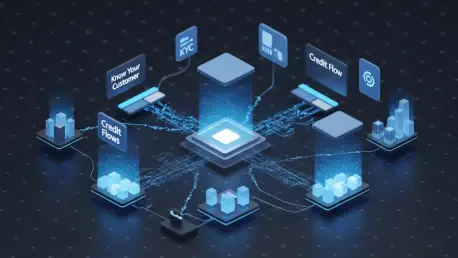
A modern CLM ecosystem is designed as an end-to-end journey that integrates lead capture, rigorous identity verification, and credit applications into a single, cohesive flow. By automating the “Know Your Customer” (KYC) and “Know Your Business” (KYB) protocols, banks can effectively remove the primary bottleneck that leads to prospect abandonment. Automation allows for the rapid cross-referencing of corporate hierarchies and ultimate beneficial ownership, tasks that previously required dozens of man-hours to complete manually. This technical foundation allows for a smoother transition from the initial handshake to the final signature.
Furthermore, the integration layer of a CLM platform utilizes APIs to connect modern interfaces with legacy core banking systems. This “orchestration layer” approach is vital because it avoids the need for a total, high-risk replacement of existing infrastructure. Instead, the CLM software acts as a conductor, pulling data from various sources to provide a real-time risk assessment and ensure continuous monitoring. This shift from periodic reviews to real-time oversight allows the bank to identify potential risk triggers immediately, rather than waiting for the next scheduled audit cycle.
Quantifying the Institutional Impact: Measuring the Modernization Payoff
The transition to an integrated CLM framework provides a definitive “Triple Win” for the institution. For compliance officers, it delivers automated due diligence and a robust defense against financial crime. Commercial leaders benefit from faster deal cycles and higher conversion rates, while IT departments appreciate a simplified vendor landscape that reduces technical debt. The economic reality is stark; manual onboarding for a complex commercial client can cost an institution tens of thousands of dollars in lost productivity and overhead. By digitizing these flows, banks can realize a massive reduction in the cost-to-serve.
Case studies in agility have demonstrated that modernized banks are capturing market share at a rate far exceeding their slower competitors. These institutions are able to process loan applications with greater accuracy and speed, leading to higher client retention and stronger relationship depth. The ability to provide a frictionless experience has become a primary differentiator in the market, allowing digital-forward banks to win the business of high-value corporate entities that value time as much as capital.
Strategic Implementation: A Framework for Integrated CLM Adoption
The first step in a successful modernization strategy involves a comprehensive audit of existing manual touchpoints and data redundancies. Institutions must map the entire lifecycle to identify where friction is most prevalent and where data is being lost between departments. Prioritizing the User Experience (UX) is equally critical; by building intuitive digital document portals, banks can simplify the client’s contribution to the process. This collaborative approach turns the onboarding journey into a partnership rather than an administrative burden, fostering long-term loyalty from the very first interaction.
Implementing a phased integration roadmap allowed many organizations to deploy CLM software as an orchestration layer without disrupting daily operations. This strategy empowered relationship managers by shifting their focus from tedious data entry to high-value advisory services. As the administrative burden decreased, staff members were able to spend more time understanding client needs and offering tailored financial solutions. This transition ultimately redefined the role of the banker, turning them from a process manager into a strategic partner who leveraged technology to deliver superior financial outcomes. The industry moved toward a model where data served the relationship, ensuring that institutional growth was built on a foundation of operational excellence and client-centricity.