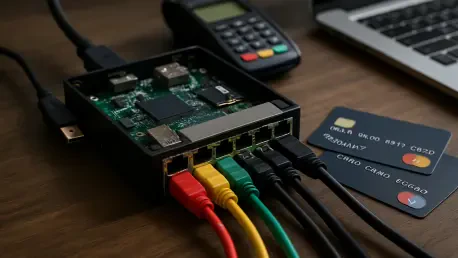

When a single national payments switch stalls even for minutes, small merchants lose sales, salary disbursements pile up, and trust in digital money takes a visible hit across neighborhoods. That fragility has shadowed the Philippines even as glossy front ends proliferate—QR PH at checkout, Apple Pay and Google Pay on phones—because the back end still costs too much and breaks too often. Into that gap comes Higala, a Philippines-based startup with a US$4 million seed round and an argument: an open-source payments switch, paired with a platform-banking model, can cut costs, widen access, and give the system a second, resilient rail.
Rather than chase yet another consumer app, the effort targets the plumbing. Higala blends ISO 20022 messaging, a Mojaloop-based instant payments core, and a connectivity layer that lets large “Platform Banks” extend real-time rails to rural banks, cooperatives, and MFIs with minimal custom work. The promise is pragmatic—reduce per-transaction costs by up to 60%, improve uptime, and make instant payments affordable at the edge of the network where inclusion is won or lost.
Why an open-source payments switch matters
A payments switch is the traffic controller of instant transfers: it routes, clears, and enforces rules. Open standards shift the economics by cutting integration time, avoiding proprietary tolls, and enabling shared services that small institutions could never build alone. In a market where every basis point matters, standardized rails change who gets to participate and at what price.
The Philippine context sharpens the case. Front-end innovation raced ahead, yet the country leaned on a single national switch, creating a systemic chokepoint that translated into outages and escalating fees. Higala positions its model as complementary, not combative—an additional open rail aligned with policy goals for interoperability and redundancy, aimed toward inclusion as much as efficiency.
Architecture and core design
ISO 20022 for standardized messaging
ISO 20022 provides the grammar: rich, extensible data structures that align with global schemes and ease compliance. With this backbone, fields for identity, purpose codes, and remittance information travel intact, enabling better reconciliation and analytics without bespoke formats.
For rural and thrift banks, that consistency lowers friction. Integrations stop being one-off marathons and become repeatable sprints, reducing vendor dependence and support overhead. Standardized data also strengthens fraud detection, since signals are consistent across participants.
Mojaloop-based instant switching
Mojaloop brings an open-source engine built for interoperability and inclusive design. It supports account-to-account transfers, directory services to map aliases to accounts, and flexible settlement models tuned to local rules. Higala adapts scheme parameters for the Philippines while preserving upstream compatibility.
Real-time clearing rides on this stack with scheme rules encoded as code paths, not policy memos. That approach shortens change cycles and supports features like prepaid validation and error handling at the edge, crucial for merchant flows and G2P disbursements.
Platform banking connectivity
The platform-banking layer is the distribution hack. Large universal banks serve as anchors, shouldering compliance, liquidity access, and scheme connectivity. Smaller institutions plug into those anchors rather than integrate directly with every rail.
This model minimizes per-institution integration work and ongoing costs. It also spreads fixed expenses—monitoring, fraud tooling, 24/7 operations—across many participants, unlocking unit economics that make sense for low-volume banks without diluting safeguards.
Core banking modernization suite
Many rural institutions still operate on legacy cores that resist APIs. Higala’s lightweight core offers rapid deployment, account ledgering, and product orchestration designed for digital channels. It is not a rip-and-replace mandate; it is a bridge that moves branches into the instant-payments era quickly.
APIs expose accounts, limits, and workflows so banks can launch modern products—P2P, bill pay, QR PH merchant acceptance—without overhauling everything at once. That phased path reduces change risk while accelerating tangible wins.
Security, compliance, and resilience
Authentication and fraud controls sit in-line, leveraging risk scoring, velocity checks, and shared watchlists. AML/CFT workflows integrate with ISO 20022 data richness, improving screening precision while reducing false positives that frustrate users and staff.
Resilience is baked into the topology. Multi-rail redundancy, active-active failover, and cloud-native observability reduce single points of failure. The aim is not perfection but graceful degradation—transactions clear, or they queue predictably, with clear operator visibility.
Performance, economics, and reliability
Higala claims up to 60% cost reduction through open-source components and pooled services. The math works when shared utilities absorb fixed costs and licensing fees shrink. For small banks, tiered pricing and volume pooling tilt unit economics in favor of adoption.
Instant payments demand stringent targets: low double-digit millisecond processing within the switch, sub-second end-to-end latency in typical cases, and 99.9x uptime SLAs. While figures vary by deployment, the architecture supports horizontal scaling and rolling upgrades without downtime, a meaningful break from batch-bound legacies.
Market momentum and deployments
Globally, policy has nudged markets toward ISO 20022 and interoperability, while Mojaloop has matured into a credible foundation for inclusive systems. The industry’s center of gravity is shifting from app-centric competition to shared infrastructure that underpins many front ends.
Higala reports partnerships with leading universal banks acting as Platform Banks, eight rural banks live or onboarding, and a path to more than 40. Priority flows include P2P, QR PH merchant payments, bill pay, G2P disbursements, and remittances, with early replication discussions in Southeast Asia and Latin America signaling portability.
Competitive posture and risks
Compared with proprietary switches, card networks, and walled wallet ecosystems, the differentiation rests on open-source tech plus platform distribution. Standalone integrations struggle to match the speed and total cost of ownership when anchors handle compliance and connectivity at scale.
Risks remain. Regulatory approvals and scheme compliance demand meticulous execution. Liquidity and settlement risk for small participants require clear rules and safeguards. Fraud controls must scale without dampening user experience. Change management and talent gaps can slow go-lives, and incumbent pricing responses could compress margins. Open governance and transparent roadmaps help counter lock-in fears.
Inclusion and resilience impact
Lower per-transaction costs change who can afford to move money in real time. With shared services, rural and thrift banks gain competitive digital offerings, extending instant, affordable payments to millions who rely on nearby institutions rather than national brands.
A second, open rail also strengthens system resilience. If one switch falters, the other can sustain critical flows, reducing systemic shock. That redundancy, once optional, now feels essential in a market where digital payments are daily infrastructure, not a luxury.
Roadmap and outlook
The near-term agenda centers on scaling bank onboarding, deepening Platform Bank integrations, and expanding ISO 20022 coverage for richer data. Advanced fraud analytics, offline-capable payments for patchy connectivity, and an API marketplace point to ecosystem growth.
Cross-border corridors come next, where standards can compress the cost of remittances. Replication playbooks for neighbors in Southeast Asia and parts of Latin America suggest a broader ambition: inclusive, fault-tolerant payment stacks that localize quickly while remaining interoperable.
Verdict
Higala delivered an engineering-forward, standards-based switch coupled with platform banking that reduced cost, complexity, and fragility for smaller institutions. Partnerships, a live cohort of rural banks, and a practical core banking suite demonstrated execution beyond the press release. The most sensible next steps were disciplined scaling with regulators in the loop, transparent performance reporting, and measured expansion into cross-border corridors where inclusion gains were largest. If those pieces held, the model stood to anchor an open, resilient payments layer in the Philippines and travel well to markets facing the same constraints.