
The global financial architecture continues to funnel trillions of dollars into sectors directly responsible for tropical forest loss despite the escalating frequency of climate-driven catastrophes that threaten long-term economic stability. This persistent disconnect suggests a systemic failure within the risk management frameworks used by major banking institutions and asset management firms. While corporate social responsibility reports often highlight green initiatives, the core investment portfolios frequently remain tethered to industries like industrial agriculture, timber, and mining. These sectors often lack the granular transparency required to map every tier of their supply chains back to specific geographical coordinates. Consequently, capital flows into activities that undermine biodiversity and carbon sequestration targets set during international climate summits. The reluctance to overhaul these funding mechanisms stems from a combination of ingrained market behaviors and the perceived complexity of auditing land-use changes across various jurisdictions.
Institutional Inertia and the Reliance on Traditional Metrics
The primary driver behind the continued financing of deforestation-linked activities is the heavy reliance on historical performance metrics that do not adequately account for environmental externalities. Investment committees typically prioritize quarterly earnings and immediate yields over the abstract, long-term costs of ecosystem collapse. Because the depletion of natural capital is rarely priced into the financial statements of major agribusinesses, banks see little incentive to withdraw support from profitable ventures that happen to operate on the edge of protected rainforests. Furthermore, the complexity of indirect financing through subsidiaries and offshore vehicles allows financial giants to maintain a degree of plausible deniability. This structural opacity makes it difficult for external auditors to hold institutions accountable for the environmental footprint of their lending. Without a fundamental shift in how value is calculated, traditional finance will likely continue to favor business-as-usual over more sustainable yet potentially less lucrative alternatives in the near term.
Beyond the pressure for immediate profits, many financial organizations struggle with the internal siloing of sustainability teams away from core decision-making bodies. ESG specialists often operate as advisory consultants rather than integral members of the credit approval process, leading to a situation where environmental risks are treated as secondary concerns. When a multi-billion dollar loan is on the table, the immediate interest income often outweighs the vague threat of future regulatory fines or reputational damage. This internal disconnect is exacerbated by a lack of specialized knowledge among traditional analysts regarding tropical ecology and land-tenure rights. Consequently, the due diligence process frequently overlooks the nuances of local land laws and the potential for leakage, where a company protects one area while shifting destructive activities to another. As long as the financial upside remains decoupled from the health of the biosphere, the incentive structure will favor exploitation over preservation, ensuring that capital remains a silent partner in the global loss of forests.
Technological Innovation and the Path Toward Accountability
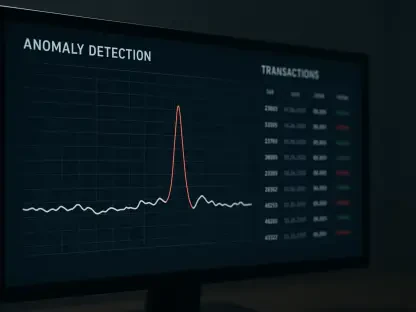
Advancements in geospatial technology have made it possible to monitor forest cover in near-real-time, yet the financial sector has been slow to integrate these tools into its standard operational procedures. While platforms like Global Forest Watch provide high-resolution satellite imagery, many investment banks rely on self-reported data from clients, which is notoriously unreliable and often outdated. This reliance on paper-based compliance allows companies to mask the origin of soft commodities such as soy, palm oil, and beef. The challenge is not a lack of data, but rather a lack of standardized protocols for ingesting that data into financial risk models. Bridging this gap requires a sophisticated marriage of artificial intelligence and land-use mapping to verify that every dollar lent is not facilitating illegal logging or land clearing. Until the financial industry adopts automated, verifiable monitoring systems that flag environmental infractions as they happen, the oversight of global supply chains will remain reactive rather than proactive.
The transition toward a deforestation-free financial system required a total reassessment of how risk and reward were balanced across the global market. Successful institutions prioritized the development of internal expertise, hiring ecologists and land-use specialists to work alongside traditional financial analysts. They also collaborated on industry-wide standards that prevented the migration of capital to less regulated markets, effectively closing the loopholes that had long allowed environmental degradation to persist. Governments and international bodies played a crucial role by providing the legal backing needed to enforce transparency and by offering incentives for investments in restoration and regenerative agriculture. By moving toward a model where every transaction was scrutinized for its impact on natural capital, the financial sector finally began to fulfill its role as a driver of positive change. The lessons learned during this period emphasized that technological innovation and regulatory alignment were the essential catalysts for transformation.