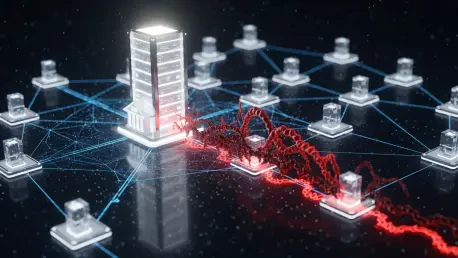

The rapid escalation of digital threats has pushed the global cybersecurity community to a critical inflection point, a reality that echoed through the halls of the recent Black Hat Europe conference in London. With a theme of “The Future of Cybersecurity is Now,” the event drew a record-breaking crowd of over 4,500 professionals, a 25% increase that signals a growing urgency within the industry. The consensus was clear: the traditional, reactive approach to cyber defense is no longer sustainable. Experts from across the globe presented a unified call for a fundamental strategic shift toward proactive, resilient, and intelligence-driven security postures capable of anticipating and neutralizing threats before they can inflict widespread damage.
Redefining the Defense Strategy
The Inadequacy of Conventional Responses
A resounding theme from keynote presentations was the dangerous inadequacy of conventional, compliance-focused security frameworks in the face of modern adversaries. Speakers argued that treating cybersecurity as a checklist of regulatory requirements creates a false sense of security while leaving organizations vulnerable to sophisticated attacks. The barrier to entry for cybercriminals to orchestrate large-scale disruption remains alarmingly low, yet their operational networks are growing in complexity, making global cyber attribution a significant challenge. This disparity puts defenders at a distinct disadvantage. Furthermore, the conference shed light on the counterintuitive consequences of reactive measures, such as paying ransoms. Contrary to the belief that payment resolves an incident quietly, experts warned that it frequently leads to increased public exposure and marks the victim as a willing target for future attacks. This cycle not only fails to mitigate the immediate risk but also directly funds the criminal ecosystem, enabling attackers to refine their tools and expand their operations, thus perpetuating a problem that requires a proactive strategy to dismantle.
The Double-Edged Sword of Artificial Intelligence
The inaugural AI Security Summit highlighted the dual nature of artificial intelligence as both a powerful weapon and an indispensable shield in the cyber domain. On one hand, AI represents a formidable threat, empowering adversaries to automate and scale their attacks with unprecedented efficiency. Discussions focused on the rise of adversarial attacks, where malicious actors manipulate machine learning models to cause them to malfunction or reveal sensitive data. Attackers are leveraging AI to craft highly convincing phishing campaigns, develop polymorphic malware that evades signature-based detection, and discover vulnerabilities in software at a speed that far outpaces human security teams. On the other hand, the summit emphasized AI’s crucial role as a cornerstone of modern, proactive defense. Security professionals are harnessing machine learning algorithms for advanced threat detection, enabling systems to identify subtle anomalies in network traffic and user behavior that may indicate a brewing attack. AI-driven platforms can analyze vast datasets in real time to predict emerging threats, automate incident response, and provide security teams with the actionable intelligence needed to stay ahead of adversaries.
Addressing Sector-Specific Vulnerabilities
Securing the Financial Ecosystem
Another new summit zeroed in on the unique and high-stakes vulnerabilities facing the financial services sector. This industry remains a top target for cybercriminals due to the direct path to monetization, but the attack vectors are becoming increasingly intricate. A primary concern was the systemic risk posed by supply chain vulnerabilities. Attackers are shifting their focus from directly targeting well-fortified banks to compromising their less-secure third-party vendors, such as software providers or service contractors. A single breach in the supply chain can create a cascading effect, providing a backdoor into the networks of multiple financial institutions. The summit also addressed the evolving threats to critical payment systems, which are constantly under assault from sophisticated fraud schemes and denial-of-service attacks designed to disrupt economic activity. The discussions underscored the necessity for a collaborative defense model where institutions share threat intelligence and work together to fortify the entire financial ecosystem, recognizing that a vulnerability anywhere in the network is a threat to everyone.
A Mandate for Strategic Resilience
The conference ultimately delivered a clear mandate for a new era of strategic resilience, a message particularly emphasized during the Executive Summit for C-suite leaders. The conversations reflected a critical evolution in thinking, where cybersecurity is no longer viewed as a siloed IT function but as a core component of business risk management. The role of the Chief Information Security Officer (CISO) was a central topic, with a consensus that the position must evolve from a technical manager to a strategic business partner who can effectively communicate cyber risk in financial and operational terms to the board. This strategic alignment was complemented by the innovations on display in the Business Hall, where over 120 providers showcased cutting-edge solutions designed to enable this proactive shift. Attendees left not with a sense of fear, but with a concrete roadmap and the technological tools needed to build more anticipatory and resilient defenses against the sophisticated threats of today and tomorrow.