
The landscape of Australian corporate governance is currently facing a transformative crisis as traditional methods of financial oversight clash with increasingly sophisticated technological exploitation. Recent findings from the SAP Concur IFOL Finance Leaders’ Fraud Report 2026 indicate that the vulnerability of accounts payable and employee expense management systems has reached a critical tipping point. Many organizations find themselves trapped in a dangerous cycle where manual review processes, once considered a standard safeguard, are now largely ineffective against the speed and precision of modern fraudulent schemes. This systemic threat requires a fundamental shift in how businesses perceive their operational integrity, moving away from a reactive posture toward a proactive, technology-driven defense. As transaction volumes grow and decentralized financial interactions increase, the gap between antiquated controls and innovation continues to widen, making it imperative for executives to reconsider their existing security frameworks.
The Financial Impact of Sophisticated Payment System Threats
Statistical evidence suggests that the scale of financial misconduct has evolved from an occasional annoyance into a persistent drain on corporate resources, with global estimates indicating that firms lose approximately five percent of their annual revenue to illicit activities. In the Australian market, the situation is particularly acute, as roughly sixty-two percent of finance leaders reported direct losses within the timeframe spanning 2024 to 2026, highlighting a failure in legacy monitoring systems. These traditional mechanisms often rely on sampling or retrospective reviews, which are fundamentally ill-equipped to detect high-frequency, low-value anomalies that eventually coalesce into massive financial deficits. When fraud remains undetected for extended periods, the resulting damage extends beyond immediate monetary loss, affecting shareholder confidence and the overall market valuation of the organization, thereby threatening its future stability and competitive standing.
Internal vulnerabilities have also undergone a significant transformation, with employee expense claims emerging as one of the primary drivers of decentralized corporate fraud in recent years. As businesses expand their operational footprints and adopt more flexible spending policies, the sheer volume of small-scale transactions makes it increasingly difficult for human auditors to maintain a consistent level of scrutiny. This reliance on personal trust rather than rigorous, automated verification creates an environment where incremental misconduct can flourish unnoticed, such as the submission of duplicate receipts or the inflation of travel expenses. Such activities are often dismissed as administrative errors rather than intentional fraud, yet their cumulative impact can severely undermine the financial health of even the most robust corporations. Addressing this issue requires a move toward total visibility, where every single dollar spent is tracked and verified against established policies.
Overcoming the Technological Lag in Modern Auditing
Despite the rapid evolution of digital threats, a significant portion of the Australian corporate sector has been slow to adopt the very technologies that could provide the strongest defense against financial crime. Specifically, more than half of domestic organizations have yet to fully integrate artificial intelligence or machine learning into their spend management workflows, leaving them exposed to a new generation of AI-powered fraud. Criminals are currently using generative AI to create near-perfect replicas of invoices and receipts that are indistinguishable from authentic documents to the naked eye. When a finance department relies on human review, these high-tech forgeries often pass through the system unchallenged, resulting in the approval of illegitimate payments that drain corporate coffers. This technological disparity creates a massive disadvantage for firms that continue to prioritize manual processing over digital transformation in an increasingly digital economy.
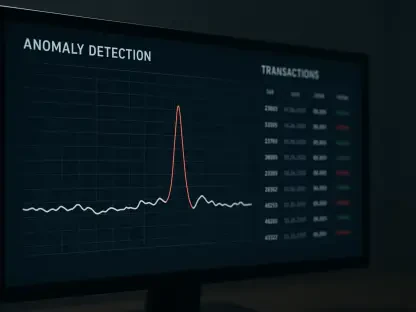
To bridge this widening gap, industry experts are calling for a shift toward layered oversight and the implementation of intelligent automation as a core component of the finance function. By transitioning away from a single point of approval and adopting AI-driven auditing tools, companies can perform deep anomaly detection across massive datasets that would be impossible for a human team to analyze. These systems are capable of identifying subtle patterns, such as vendor bank account changes or unusual spending spikes, that serve as early warning signs of fraudulent behavior. Furthermore, intelligent automation allows finance teams to focus their limited resources on investigating high-risk exceptions rather than wasting time on routine, compliant transactions. This proactive approach ensures that fraud is stopped in its infancy, significantly reducing the potential for major financial loss while simultaneously improving the efficiency of the entire finance team.
Strategic Imperatives for Rebuilding Corporate Financial Integrity
Ensuring long-term resilience against fraud requires elevating financial security from a back-office compliance task to a central pillar of the company’s broader strategic objectives. Senior leadership must recognize that protecting the spend pipe is not merely about preventing loss, but about maintaining the operational stability necessary to navigate a volatile economic landscape. Modernizing the financial infrastructure involves embedding policy checks directly into the workflows used by employees, ensuring that compliance is not an afterthought but a fundamental part of the spending process. This shift in perspective allows finance leaders to move beyond their traditional roles as reactive investigators and become proactive guardians of corporate integrity. By investing in scalable, cloud-based platforms that provide a single source of truth, organizations can eliminate the silos that often hide fraudulent activity and create a more transparent corporate environment.
The final stages of this transformation involved a radical realignment of how Australian firms approached their internal audit cycles and executive reporting structures. Organizations successfully mitigated risks by implementing real-time data analytics that provided immediate feedback on spending patterns, allowing for rapid intervention before fraudulent schemes could gain momentum. These leaders also prioritized cross-functional collaboration between IT and finance departments, ensuring that cybersecurity protocols were deeply integrated into every financial platform. By the conclusion of the most recent reporting period, the most resilient companies had transitioned to a model where human intelligence was augmented by autonomous monitoring, creating a dual-layered defense system. These proactive measures did more than just recover lost revenue; they fostered an environment of transparency that restored trust and secured the financial future of the enterprise.