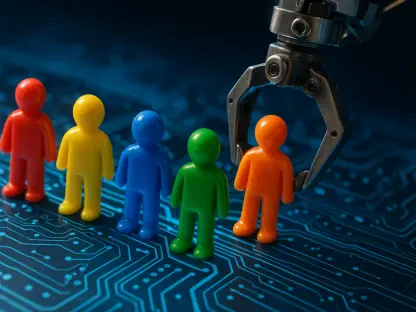

The landscape of digital finance has been irrevocably altered by the democratization of advanced machine learning tools that allow bad actors to manipulate visual and auditory data with professional-grade accuracy. A digital shadow now trails every financial transaction, cast by sophisticated synthetic identities that can bypass standard security protocols with chilling precision and speed. The era of static passwords and simple multi-factor authentication has effectively ended as generative AI tools provide even low-level criminals with the ability to clone voices, forge high-resolution video, and simulate human behavior in real time. Banks and fintech platforms face an unprecedented challenge where the data points previously used to establish trust are now weaponized against them. This technological arms race has reached a tipping point where traditional defense perimeters are no longer sufficient to stop the flow of fraudulent capital. The industry must pivot from periodic checks toward a model that assumes identity is fluid and requires constant validation. This strategic shift is necessary to protect the integrity of the global economy against increasingly autonomous and intelligent cyber threats.
The Erosion of Traditional Identity Assurance
Sophisticated Deepfakes and Synthetic Actors
Synthetic identity fraud has evolved from simple credit mashing into a complex orchestration of entirely fabricated digital personas that exist only within the databases of financial institutions. These entities are constructed using a mix of legitimate stolen credentials and AI-generated content, creating a convincing profile that behaves like a high-value customer for months before executing a large-scale theft. Unlike traditional identity theft, where a real victim eventually notices a discrepancy, synthetic fraud often goes undetected because there is no individual to report the crime. Advanced generative models now produce realistic social media histories, professional backgrounds, and even biometric data that can fool standard liveness tests during the onboarding process. The scale of this problem has forced institutions to reconsider the validity of every digital interaction, as the distinction between a genuine user and a machine-generated mimic continues to blur into invisibility within current systems.
The Failure of One-Time Enrollment Checks
The reliance on “one-and-done” verification processes has become a primary vulnerability for global financial systems operating in a high-speed digital environment. Once a user passes the initial verification hurdle, they are typically granted a level of trust that persists for years, with only occasional re-screenings triggered by high-risk events. This creates a massive window of opportunity for account takeovers where attackers use AI-driven phishing to seize control of legitimate accounts and then operate them without further scrutiny. Since the system assumes the user is still the person who passed the enrollment check, the unauthorized activity is often ignored until the damage is irreversible. Static verification fails to account for the dynamic nature of modern cyber threats, which rely on the persistence of trust to move illicit funds through legitimate channels. Replacing these outdated periodic audits with a system that evaluates risk at every touchpoint is no longer an optional upgrade but a core requirement for survival.
Architecting Resilient Systems for the AI Age
Behavioral Intelligence and Continuous Monitoring
Transitioning to a continuous verification model requires the integration of behavioral biometrics that monitor how a user interacts with a platform rather than just what they know or possess. This technology analyzes patterns such as typing speed, touch pressure, device orientation, and even the specific way a person scrolls through an application to create a unique behavioral signature. Because these patterns are subconscious and deeply ingrained, they are significantly harder for even the most advanced AI models to replicate perfectly over a sustained period. When a user’s behavior deviates from their established baseline—perhaps by interacting too quickly or showing robotic precision—the system can instantly escalate the verification requirements or pause the transaction for manual review. This layer of security operates passively in the background, ensuring that the user experience remains seamless while providing a robust defense against automated bots and human attackers who have managed to compromise traditional login credentials.
Forward-Looking Strategies for Sustainable Security
Organizations that successfully mitigated these emerging threats recognized that the path forward demanded a holistic integration of real-time telemetry and adaptive risk scoring. It was determined that the most effective strategy involved moving beyond isolated security silos and fostering a collaborative environment where data was shared securely across the entire financial ecosystem. The implementation of zero-trust architectures became the standard, ensuring that every request was verified regardless of its origin or the previous status of the account. Leaders in the field prioritized the deployment of self-learning algorithms that evolved alongside the threats they were designed to stop, rather than relying on hard-coded rules that quickly became obsolete. These proactive measures established a new benchmark for digital integrity, where the focus shifted from reactionary damage control to the creation of resilient networks. By treating security as a continuous conversation, the industry laid the groundwork for a future where trust is earned.