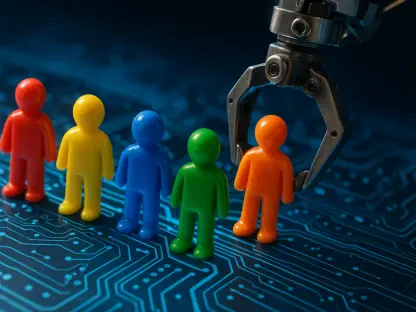

The rapid acceleration of digital financial transactions has forced global banking institutions to reconsider the very foundation of how they verify human identity in an increasingly hostile cyber landscape. For decades, the industry relied on knowledge-based authentication, like passwords and PINs, to protect sensitive data; however, as the digital economy grows more complex, banks are moving toward a multi-layered security model that uses biometrics, cryptography, and artificial intelligence to create a more resilient environment. This transformation is driven by the realization that traditional security methods are no longer sufficient to stop modern cybercriminals who utilize sophisticated automation to bypass static barriers. By integrating physical traits and behavioral patterns, financial institutions are building a “passwordless” future where the user’s presence is the key. This new framework aims to replace static secrets with dynamic, unique identifiers that are much harder to steal or replicate, ensuring that only the rightful owner can access their accounts. The ultimate goal of these changes is to provide a “frictionless” experience for the customer, allowing for secure transactions without the constant interruption of manual inputs or forgotten security questions. By using advanced technology to verify identity in the background, institutions can protect users’ assets while maintaining the speed and convenience that modern consumers expect from mobile and online banking.
The Downfall of Traditional Knowledge-Based Security
The Weakness: Why the Password-Centric Model Failed
The traditional password-centric model has reached its breaking point because it relies on the flawed assumption that secret knowledge remains secret over long periods of time. In the current landscape, users are overwhelmed by the sheer number of digital accounts they must manage, leading to a phenomenon known as password fatigue, where individuals choose easily guessable strings or reuse the same credentials across high-value and low-value platforms. This behavior creates a massive vulnerability, as a single breach at a minor e-commerce site can give attackers the keys to a primary bank account. Furthermore, the advent of sophisticated phishing kits and social engineering tactics has made it easier than ever for bad actors to trick even tech-savvy users into surrendering their secrets. The static nature of a password means that once it is compromised, it remains a viable entry point until the user or the institution detects the breach and takes manual action to reset it.
Beyond human error, the rise of powerful computing resources has rendered many older password standards obsolete through sheer brute-force capability and massive leaked credential databases. Cybercriminals now utilize automated bots to perform credential stuffing attacks, where millions of stolen username and password combinations are tested against banking portals in a matter of seconds. These automated scripts are designed to mimic human browsing behavior, making them difficult for basic firewalls to distinguish from legitimate traffic. As the cost of executing these attacks continues to drop, the financial industry has recognized that continuing to rely on shared secrets is a losing proposition. The shift toward biometrics is not just about convenience; it is a strategic necessity to move away from a security architecture that is fundamentally dependent on the user’s ability to remember and protect a string of characters that can be easily stolen or guessed.
Modern banking security requires a dynamic approach that does not rely on a single point of failure, which is exactly what a password represents in a traditional setup. Even multi-factor authentication systems that use SMS-based one-time codes have shown significant weaknesses, as attackers have successfully bypassed them through SIM swapping and interception techniques. This has led to an industry-wide push for phishing-resistant authentication methods that link the user’s identity to their physical person or a specific hardware device. By removing the “knowledge” element from the equation, banks can effectively eliminate the most common vector of account takeover. This transition marks the end of an era where security was a chore for the user and moves toward a model where protection is an inherent property of the interaction itself, powered by the unique physiological and behavioral markers of the individual.
The Economic Impact: Credential Stuffing and Account Takeover
The financial implications of maintaining an outdated security infrastructure are staggering, with account takeover fraud costing the global banking industry billions of dollars annually in direct losses and operational overhead. When a customer’s credentials are compromised, the bank must not only reimburse the stolen funds but also invest significant resources into forensic investigations, customer support, and legal compliance. These incidents erode consumer trust, which is the most valuable asset any financial institution possesses. As news of large-scale data breaches becomes more frequent, customers are increasingly looking for banks that can demonstrate a superior commitment to protecting their assets through advanced technology. The cost of inaction is no longer just a line item on a balance sheet; it is a threat to the long-term viability of the brand in a competitive digital marketplace where switching costs are lower than ever.
In addition to direct financial losses, the prevalence of credential stuffing attacks places a massive strain on banking infrastructure, leading to increased latency and potential service outages for legitimate users. To defend against these high-volume automated attacks, banks have traditionally implemented aggressive rate-limiting and CAPTCHA systems, but these often introduce friction that frustrates real customers. This “security vs. convenience” trade-off has plagued the industry for years, forcing institutions to choose between being too permissive or too restrictive. The move toward AI-driven biometric systems allows for a more nuanced approach, where legitimate users can be identified with high confidence without being subjected to repetitive challenges. By reducing the success rate of automated attacks, banks can also decrease the secondary market value of stolen credentials, making these types of cybercrimes less profitable and discouraging future attempts.
The regulatory environment is also shifting to reflect the dangers of inadequate identity verification, with new mandates requiring more robust protection of consumer data. Compliance frameworks like the revised Payment Services Directive and various global data privacy acts are pushing banks to adopt “strong customer authentication” standards that go beyond simple passwords. Failure to meet these standards can result in massive fines and regulatory sanctions that far outweigh the initial investment required to upgrade security systems. Therefore, the transition to biometrics and AI is as much a regulatory requirement as it is a technological evolution. By proactively adopting these technologies, banks can stay ahead of both the criminals and the regulators, ensuring they remain compliant while providing a modern, secure service that meets the demands of the current digital economy.
Implementing Biometric Modalities: Beyond Fingerprints
Physiological Identifiers: The Rise of 3D Facial Mapping and Iris Scans
Physiological biometrics have evolved far beyond the simple fingerprint scanners that first introduced the public to the concept of biometric security on mobile devices. Today, high-definition 3D facial recognition has become a primary method for securing mobile banking apps, utilizing infrared sensors and dot projectors to create a detailed map of the user’s facial geometry. This method is significantly more secure than 2D photography because it can distinguish between a real human face and a high-resolution image or video, effectively thwarting “spoofing” attempts. The precision of these sensors allows banks to verify identity in varying lighting conditions and even when the user is wearing accessories like glasses or hats. This level of accuracy ensures that the authentication process is both fast and reliable, providing the seamless experience that modern consumers demand while maintaining a high security bar.
Iris recognition and vein pattern scanning are also gaining traction as secondary or high-security authentication layers for large transactions or administrative access. The iris contains a highly complex and unique pattern that remains stable throughout an individual’s life, making it one of the most accurate biometric markers available. Similarly, vein patterns in the palm or finger are nearly impossible to replicate or steal because they are located beneath the skin and require specialized light to be visualized. These modalities are particularly useful in physical banking environments, such as ATMs or branch offices, where they can replace the need for physical debit cards and PINs entirely. By utilizing markers that are unique to the internal biology of the user, banks can provide a level of assurance that was previously impossible, moving closer to a future where your body is your universal key.
The integration of these physiological markers into the banking workflow requires sophisticated backend systems capable of processing and matching biometric templates with extreme speed and accuracy. These templates are not images of the face or iris but mathematical representations that are encrypted and stored securely to prevent them from being reconstructed into the original biometric data. This distinction is crucial for maintaining privacy and ensuring that even if a template were stolen, it would be useless to an attacker. As hardware capabilities on consumer devices continue to improve, the ability to perform these checks locally on the device—rather than sending raw data to the cloud—further enhances both security and privacy. This localized approach minimizes the “attack surface” and ensures that the user’s most sensitive biological information never leaves their control.
Behavioral Biometrics: The Invisible Layer of Continuous Verification
While physiological biometrics verify who a person is, behavioral biometrics analyze how a person interacts with their devices to provide a continuous layer of security throughout a session. This technology monitors subtle patterns such as keystroke dynamics, mouse movement, touch pressure, and even the angle at which a user holds their smartphone. Because these habits are deeply ingrained and unique to each individual, they are incredibly difficult for a fraudster or a bot to mimic. For example, a legitimate user might type their password with a specific rhythm or scroll through their transaction history at a particular speed. If a session is initiated by someone who knows the correct credentials but displays different behavioral patterns, the AI-driven system can flag the activity as suspicious and trigger additional verification steps.
The power of behavioral biometrics lies in its ability to provide “passive” authentication, meaning the user does not have to perform any specific action to be verified. This solves the problem of session hijacking, where an attacker takes over an already-authenticated session after the user has logged in. By constantly monitoring the interaction, the bank can ensure that the person who started the session is the same person who is currently performing a sensitive transaction, such as a wire transfer. If the system detects a sudden change in behavior—such as a shift from right-handed to left-handed use or a significant change in typing speed—it can immediately lock the account or ask for a facial scan. This creates a security environment that is always active, rather than one that only checks identity at the “front door” of the application.
Furthermore, behavioral biometrics can be used to detect “bot” activity and remote access tools that are often used in sophisticated fraud schemes. Bots typically exhibit mechanical and perfectly consistent behaviors that are vastly different from the erratic and organic movements of a human user. Similarly, if an account is being accessed via a remote desktop protocol, the interaction patterns will show subtle delays and different input signatures that the behavioral engine can recognize. This allows banks to stop fraud in real-time, often before a transaction is even submitted. By layering behavioral analysis on top of physical biometrics, institutions create a multi-dimensional profile of the user that is virtually impossible to bypass, providing a level of defense-in-depth that represents the current gold standard in digital security.
Integrating Artificial Intelligence for Real-Time Threat Detection
Machine Learning: Processing Vast Datasets to Identify Fraud
Artificial intelligence and machine learning serve as the central nervous system of modern banking security, processing millions of data points in real-time to identify patterns that are invisible to human analysts. Traditional rule-based systems, which flag transactions based on simple criteria like “is the amount over $5,000?”, are easily bypassed by sophisticated criminals who stay just below the radar. In contrast, AI models are trained on vast datasets of both legitimate and fraudulent transactions, allowing them to understand the context of every interaction. These systems consider variables such as geographic location, time of day, device reputation, and historical spending habits to assign a risk score to every login attempt and transaction. If a user who typically shops in New York suddenly attempts a high-value purchase from a foreign IP address using a new device, the AI can intervene instantly.
The true strength of machine learning in this context is its ability to adapt and evolve as new threats emerge. When a new type of fraud is detected anywhere in the network, the AI can learn the characteristics of that attack and immediately update its detection parameters across the entire institution. this proactive approach is essential in an environment where cybercriminals are constantly innovating. AI can also perform “link analysis” to identify organized crime rings by spotting connections between seemingly unrelated accounts, such as shared IP addresses or similar behavioral patterns. By looking at the big picture rather than isolated events, banks can move from a reactive posture to a predictive one, stopping fraud before it occurs and protecting the integrity of the entire financial ecosystem.
Beyond fraud detection, AI is also being used to automate the “know your customer” and “anti-money laundering” processes that are central to banking compliance. These processes traditionally required hours of manual labor to review documents and verify identities, but AI-powered OCR and natural language processing can now do this in seconds. By automatically scanning government-issued IDs and comparing them against live biometric scans, the system can verify the authenticity of a new customer with high precision. This not only reduces the risk of identity theft but also significantly speeds up the onboarding process, allowing banks to grow their customer base without compromising on security. The combination of speed, accuracy, and adaptability makes AI an indispensable tool for any financial institution operating in the digital age.
Adaptive Authentication: Managing Risk Through Dynamic Friction
Adaptive authentication is a sophisticated strategy that uses AI to adjust the level of security required based on the perceived risk of a specific action. Instead of subjecting every user to the same rigorous checks every time they open their app, the system evaluates the context of the request. For low-risk activities, such as checking a balance from a known device at a frequent location, the user may only need a simple biometric check or even no prompt at all if behavioral patterns match. However, if the user attempts to add a new payee or transfer a large sum of money, the system can dynamically “step up” the authentication requirements, perhaps asking for a secondary biometric factor or a hardware-based passkey. This approach minimizes friction for everyday tasks while ensuring that high-value actions are protected by the strongest possible defenses.
This dynamic friction model is a significant departure from the “all-or-nothing” security of the past, where users were often forced to jump through multiple hoops regardless of what they were trying to do. By making the security experience more proportional to the risk, banks can improve customer satisfaction and reduce the likelihood that users will try to bypass security measures. The AI engines that power adaptive authentication are constantly recalibrating their risk models based on real-world data, ensuring that the balance between convenience and protection is always optimized. This is particularly important for mobile banking, where users expect instant access and any delay can lead to a negative perception of the service. Adaptive systems ensure that the most secure path is also the most natural one for the user to follow.
Furthermore, adaptive authentication can take into account “environmental” risk factors that are outside the user’s control. If a particular region is experiencing a surge in cyberattacks, or if a specific mobile operating system is found to have a zero-day vulnerability, the AI can automatically increase the authentication requirements for all users in that category. This allows banks to implement surgical security measures that protect vulnerable populations without impacting the entire user base. This level of granularity is only possible through the integration of AI and real-time data streaming. As we move forward, these systems will become even more intelligent, eventually being able to predict potential threats based on global cybersecurity trends and adjusting the bank’s defensive posture before an attack even reaches its servers.
The Role of Cryptography and Secure Enclaves
Cryptographic Foundations: The Shift Toward Passwordless Standards
The transition toward a passwordless future is underpinned by advanced cryptographic standards like FIDO2 and WebAuthn, which replace shared secrets with public-key cryptography. In this model, a private key is stored securely on the user’s device, while the corresponding public key is registered with the bank. When the user attempts to log in, the bank sends a “challenge” that can only be signed by the private key on the user’s device. Because the private key never leaves the device and is never shared with the bank’s servers, there is no central database of secrets for a hacker to steal. This effectively eliminates the risk of large-scale credential breaches, as an attacker would need physical access to the user’s specific device to compromise their account. This architecture provides a level of security that is fundamentally superior to any system based on passwords or one-time codes.
These cryptographic standards also incorporate a “user gesture” requirement, which usually involves a biometric check like a fingerprint or facial scan. This ensures that the cryptographic signing process cannot be triggered by malware or a remote attacker without the physical presence and consent of the user. This link between the user’s biology and the cryptographic key creates an unbreakable chain of identity. For the user, this process is incredibly simple: they just use their face or finger to unlock their device, and the cryptographic handshake happens in the background. This “passkey” approach is being adopted by major technology providers and financial institutions worldwide, signaling a global shift toward a more secure and user-friendly internet. By removing the human-readable secret from the equation, we are effectively closing the door on phishing and social engineering.
The implementation of these standards also has significant benefits for the banks’ backend operations. Managing millions of encrypted passwords and the associated reset flows is a massive operational burden and a significant security risk. By moving to a public-key infrastructure, banks can simplify their identity management systems and reduce their liability. If a bank’s server is breached, the attackers would only find a collection of public keys, which are useless without the corresponding private keys stored on millions of individual devices. This decentralization of security makes the entire financial system more resilient to systemic shocks and targeted attacks. As more institutions adopt these standards, we are seeing the emergence of a more secure digital economy where identity is verified by math and biology rather than memory and luck.
Trusted Execution Environments: Protecting Data at the Chip Level
To ensure that biometric data and cryptographic keys are truly secure, modern devices utilize a “Trusted Execution Environment” (TEE) or “Secure Enclave,” which is a dedicated area of the processor that is hardware-isolated from the rest of the operating system. When a user scans their face or finger, the raw biometric data is processed entirely within this secure zone. The main operating system never sees the biometric image; it only receives a “yes” or “no” from the TEE confirming that the scan matched the stored template. This isolation is critical because it means that even if a smartphone is infected with a sophisticated virus or malware, the attacker cannot steal the user’s biometric data or the private keys used for authentication. The security of the bank’s digital portal is therefore anchored in the hardware itself, providing a foundation of trust that software alone cannot achieve.
The use of secure enclaves also allows for “hardware-backed” attestation, where the device can prove to the bank’s servers that it is a genuine, non-tampered device and that the security keys are being stored in a protected hardware environment. This allows banks to set higher security policies for devices that have this capability, further reducing the risk of fraud. If a user tries to log in from a “rooted” or “jailbroken” device where the hardware security has been compromised, the bank can automatically deny access to sensitive functions. This hardware-level verification is a powerful tool in the fight against automated fraud, as it is much harder for a bot to spoof a genuine hardware enclave than it is to spoof a browser or an app. By leveraging the security features built into modern silicon, banks are turning every smartphone into a sophisticated security token.
Looking forward, the evolution of secure hardware will continue to play a pivotal role in banking security, with the development of even more specialized chips designed specifically for identity and privacy. These future “security processors” will likely handle even more complex tasks, such as performing encrypted AI computations locally on the device to further enhance behavioral biometrics without compromising privacy. The goal is to create a “zero-trust” environment where the bank’s servers do not have to trust the user’s mobile operating system, but rather the hardware itself. This move toward hardware-anchored security represents a significant milestone in the maturity of the digital banking industry, providing a level of protection that is equivalent to—or even exceeds—the security of a physical bank vault.
Navigating Ethical and Privacy Concerns in the AI Era
Data Sovereignty: Protecting the Integrity of Biometric Templates
As banks increasingly rely on biometric data, the issue of data privacy and sovereignty has become a central concern for both consumers and regulators. Unlike a password, a person’s biometric traits cannot be changed if they are compromised, making the protection of this data a matter of extreme importance. To address this, the industry has adopted a standard where raw biometric images—such as a photo of a face or a scan of a fingerprint—are never stored. Instead, the system generates a mathematical “template” or “hash” of the biometric features. This template is a one-way representation, meaning it is impossible to recreate the original image from the stored data. Furthermore, these templates are often encrypted with keys that are unique to the device and the user, ensuring that the data is useless if accessed by an unauthorized party.
The concept of data sovereignty also involves giving users clear control over how their biometric data is used and stored. Modern privacy regulations require banks to be transparent about their data practices and to obtain explicit consent from users before collecting biometric information. Many institutions are now implementing “privacy-by-design” principles, where security features are built with the assumption that the user’s privacy is paramount. This includes providing options for users to delete their biometric data or to opt-out of certain types of behavioral tracking. By fostering a culture of transparency and respect for user privacy, banks can build the long-term trust that is necessary for the widespread adoption of these technologies. Security and privacy are often seen as being in conflict, but in the world of modern biometrics, they are two sides of the same coin.
Furthermore, the industry is exploring decentralized identity models where the user has full ownership of their identity credentials, which are stored in a digital wallet rather than on a central bank server. In this scenario, the bank acts as a “verifier” of the identity rather than a “custodian” of the data. This model significantly reduces the risk of massive data breaches because there is no central target for hackers to attack. It also gives the user more power over their digital life, allowing them to share only the specific information that is necessary for a transaction. While this move toward decentralized identity is still in its early stages, it represents a promising path toward a future where security is both highly effective and deeply respectful of individual privacy.
Mitigating Algorithmic Bias in Financial Decisions
One of the most significant challenges in deploying AI for security and identity verification is the potential for algorithmic bias. If an AI model is trained on a dataset that is not representative of the diverse global population, it may perform less accurately for certain demographic groups. For example, some early facial recognition systems showed higher error rates for people of color or different age groups, which could lead to unfair denials of access or increased friction for those users. In the context of banking, where access to funds is a critical necessity, these errors are not just technical glitches; they are ethical failures that can have real-world consequences. Therefore, it is essential for banks to ensure that their AI systems are trained on diverse, high-quality datasets and are regularly audited for bias.
To combat this, leading financial institutions are implementing rigorous “fairness testing” for all their AI models. This involves testing the system’s performance across different ethnicities, genders, and age groups to identify and correct any disparities. Developers are also using techniques like “synthetic data generation” to augment their training sets and ensure that underrepresented groups are better accounted for. Moreover, there is a growing move toward “explainable AI,” which allows security analysts to understand why an AI model made a particular decision. If a user is flagged for potential fraud, the analyst can see which factors contributed to that score, ensuring that the decision was based on legitimate risk factors rather than biased patterns. This transparency is key to ensuring that AI remains a tool for protection rather than a source of exclusion.
The ethical use of AI also requires a human-in-the-loop approach, especially for high-stakes decisions. While AI can process data at a scale that humans cannot match, it still lacks the human capacity for contextual judgment and empathy. When an automated system flags a transaction as fraudulent, there should always be a clear and accessible path for the user to resolve the issue with a human representative. This ensures that the technology serves the user, rather than the other way around. As AI becomes more integrated into the fabric of banking security, the industry must remain committed to these ethical principles to ensure that the benefits of the technology are shared equitably across all segments of society. By prioritizing fairness and accountability, banks can create a security infrastructure that is not only powerful but also just.
Strategic Implementation: Building the Resilient Bank of Tomorrow
The transformation of banking security through biometrics and artificial intelligence proved to be a decisive shift that redefined the relationship between financial institutions and their customers. By moving away from the fragile, knowledge-based models of the past, the industry successfully implemented a multi-layered defense system that prioritized both rigorous protection and user convenience. The adoption of physiological and behavioral biometrics, supported by advanced hardware isolation and cryptographic standards, effectively neutralized the threat of large-scale credential theft. This transition was not merely a technical upgrade but a strategic pivot that allowed banks to regain the initiative against increasingly sophisticated cybercriminal networks. The implementation of these technologies demonstrated that high-level security does not have to be a burden on the user; instead, it can be an invisible, seamless part of the digital experience.
Moving forward, financial institutions established a clear roadmap for maintaining this resilience by prioritizing cross-industry collaboration and the continuous refinement of AI models. The focus shifted toward creating interoperable standards that allowed for secure identity verification across different platforms and services, reducing the complexity of the digital ecosystem. Organizations that invested in robust data governance and ethical AI frameworks found themselves at a significant competitive advantage, as they were able to build deeper levels of trust with a more privacy-conscious consumer base. The lessons learned from the initial rollout of biometric systems highlighted the importance of transparency and user control, which became core tenets of the modern banking experience. By grounding their security strategies in the unique biological and behavioral identity of the individual, banks ensured that they were prepared for the challenges of the evolving digital landscape.
Ultimately, the successful integration of these technologies required a proactive approach to hardware-based security and the adoption of decentralized identity models. The industry moved toward a “zero-trust” architecture where identity was constantly verified through passive, non-intrusive means, ensuring that security was always active but never in the way. For banks looking to thrive in the coming years, the primary directive became the elimination of static secrets and the full embrace of dynamic, AI-driven authentication. This evolution ensured that the financial system remained a secure foundation for global commerce, capable of adapting to new threats while providing the frictionless service that defined the modern era. The shift toward biometrics and AI was not the end of the journey, but rather the beginning of a more secure, inclusive, and efficient future for global finance.