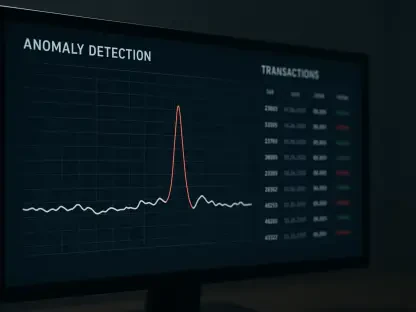

The escalating sophistication of digital financial crime has forced banking institutions to rethink their security frameworks entirely as traditional perimeter defenses prove increasingly inadequate against contemporary synthetic identity theft. Financial institutions now face a landscape where automated bots and deepfake social engineering are frequently used to bypass standard multi-factor authentication protocols. NOBA Bank Group has recognized that the rapid shift toward instant payments requires a parallel shift in defensive technology, moving away from reactive measures toward a predictive and proactive posture. This transformation involves integrating high-speed data processing with specialized algorithms that can distinguish between legitimate consumer behavior and the subtle anomalies indicative of large-scale fraud operations. By focusing on the intersection of user experience and rigorous security, the organization aims to protect customer assets without introducing friction that could disrupt the flow of modern commerce. This balance remains the central challenge in the current environment where speed and safety are expected in equal measure. The integration of advanced telemetry and machine learning has become the primary line of defense.
Implementation: Real-Time Behavioral Analytics
To combat these sophisticated threats, NOBA Bank Group has deployed a proprietary behavioral biometrics system that analyzes thousands of data points in real-time during a single transaction session. This technology looks beyond simple passwords and tokens, instead monitoring the specific way a user interacts with their device, such as typing cadence, touchscreen pressure, and mouse movement patterns. When a transaction deviates from an established baseline of normal activity, the system can instantly flag the attempt for manual review or require additional verification steps. This approach is particularly effective against account takeover attacks where criminals possess valid credentials but fail to mimic the unique physical interactions of the actual account holder. Furthermore, the bank has invested heavily in machine learning models that process historical transaction data alongside live external threat intelligence. This allows the system to identify emerging fraud patterns before they can be exploited locally. By centralizing these analytical capabilities, the bank ensures that every entry point is protected by the same level of rigorous oversight. The result is a dynamic defense layer that evolves alongside the tactics used by international cybercrime syndicates.
Strategic Alliances: Strengthening the Financial Ecosystem
Beyond internal technological upgrades, the institution prioritized the establishment of collaborative data-sharing networks with other financial entities to create a unified front against systemic risks. These partnerships facilitated the exchange of anonymized threat data, which allowed for the early detection of coordinated mule account networks and phishing campaigns. The implementation of cross-industry standards for secure identity verification served as a critical component in this strategy, ensuring that security protocols remained consistent across different platforms. Stakeholders recognized that individual efforts were insufficient in the face of decentralized criminal organizations, leading to the adoption of decentralized ledger technologies for tracking suspicious fund movements. As these systems matured, they provided a more transparent record of transactions, reducing the time required to trace stolen funds. Financial professionals recommended that future investments focus on quantum-resistant encryption and more granular AI modeling to stay ahead of digital threats. The transition toward an integrated security architecture provided a blueprint for navigating the complexities of the global economy while maintaining public trust.