
The tension between open-source innovation and regulatory scrutiny has often forced traditional financial institutions into the restrictive confines of private, permissioned networks, yet the industry landscape is witnessing a significant transformation. Risk management on decentralized networks is shifting toward a standard of reasonableness, where firms focus on screening their direct customers rather than every network validator. This shift, highlighted by recent industry guidance from a16z crypto, suggests that the perceived incompatibility between public blockchains and U.S. regulatory mandates is a hurdle of the past. By decoupling the underlying infrastructure from the specific activities of users, banks and asset managers can maintain strict adherence to anti-money laundering and sanctions protocols without needing to own or control the global ledger itself. This approach mirrors how institutions currently utilize the internet or international telecommunications systems—shared, open infrastructures that facilitate secure transactions without the service providers bearing liability for the entire network’s data traffic. Consequently, the conversation has moved from whether institutions can use public chains to how they can implement the necessary application-layer controls to do so safely and legally.
The Strategic Transition to Open Protocols
The momentum behind public, permissionless infrastructure has reached a tipping point as major global financial players recognize the limitations of isolated, private environments. Historically, private blockchains were seen as a safe harbor, but they ultimately created liquidity deserts that lacked the interoperability and massive network effects found on public chains. Leading firms like BlackRock and Franklin Templeton have already crossed this threshold, launching tokenized money market funds on Ethereum and Solana to leverage the depth of liquidity and the seamless movement of assets across different protocols. These implementations are not mere experiments; they serve as sophisticated models for how the world’s largest asset managers can integrate decentralized ledger technology into their core operations. By moving away from “walled gardens,” these organizations have gained access to a global pool of capital while demonstrating that financial integrity can be preserved through robust, identity-based controls at the edge of the network rather than through protocol-level restrictions.
Building on this foundation, the move toward permissionless networks is driven by the realization that innovation in decentralized finance occurs almost exclusively on open protocols. Private chains, while offering a sense of control, often struggle with obsolescence and the inability to interact with the broader ecosystem of decentralized applications and oracles. To remain competitive in a landscape where speed and efficiency are paramount, institutions have begun to adopt hybrid models where the core asset remains on a public chain while compliance is managed through regulated gateways. This transition allows for the automation of complex financial processes, such as real-time settlement and dividend distribution, which were previously bogged down by manual verification and legacy banking rails. The shift is not just about adopting a new technology but about fundamentally redesigning the architecture of global finance to be more transparent, resilient, and accessible, all while ensuring that every participant is thoroughly vetted through modernized digital identity frameworks.
Navigating the Mechanics of Reasonableness
The legal foundation for institutional participation in public blockchains rests on the interpretation of the Bank Secrecy Act and regulations managed by the Office of Foreign Assets Control. These frameworks do not demand the total elimination of risk, which is a mathematically impossible standard in any financial system, but instead require “reasonably designed” programs to mitigate significant threats. Under this model, an institution is legally responsible for its direct customers and the specific entities with which it transacts, rather than every anonymous validator or node operator that helps secure the network. This distinction is critical because it aligns blockchain usage with traditional banking practices, where a bank is not held accountable for the internal compliance standards of every intermediary telecommunications provider or regional utility that helps facilitate a wire transfer. By applying this “reasonableness” standard, institutions can confidently engage with public chains by focusing their resources on rigorous counterparty due diligence and suspicious activity monitoring at the point of interaction.
One of the most persistent technical and regulatory concerns has been the potential risk of paying transaction fees, commonly known as gas, that might eventually flow to a sanctioned validator. Recent interpretive guidance from the Office of the Comptroller of the Currency has provided much-needed clarity, suggesting that paying these network fees to facilitate legitimate business activities is a permissible function of a modern financial institution. Furthermore, the absence of enforcement actions against firms for protocol-level fees underscores a growing regulatory consensus that such payments do not constitute providing “material support” to sanctioned parties in the same way a direct financial transfer would. This clarity has allowed compliance officers to develop more nuanced risk assessments that prioritize high-impact areas, such as the screening of digital wallets and the monitoring of fund flows, rather than becoming paralyzed by the decentralized nature of the underlying hardware. This pragmatic approach to compliance ensures that the benefits of blockchain efficiency are not lost to overly restrictive interpretations of decades-old statutes.
Implementing Comprehensive Risk Management Protocols
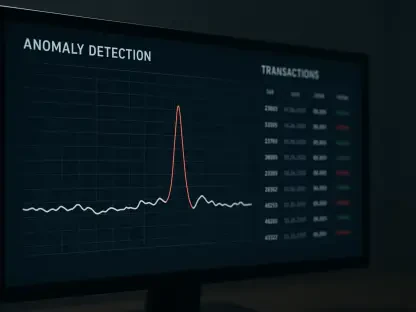
To bridge the gap between decentralized technology and federal mandates, a structured framework of nine essential components has emerged as the industry standard for on-chain compliance. At the core of this strategy is the rigorous application of customer-level Know Your Customer protocols and enhanced due diligence, which remain the first line of defense against illicit activity. This is supplemented by advanced wallet screening and real-time transaction monitoring, which leverage the inherent transparency of the blockchain to flag suspicious patterns as they occur. By using sophisticated analytics, institutions can trace the provenance of funds and identify high-risk behaviors with a level of precision that is often impossible in the opaque world of traditional correspondent banking. These tools provide a continuous audit trail, allowing compliance teams to demonstrate to regulators that their activities are partitioned from potential bad actors while maintaining the operational benefits of a shared, high-speed ledger system.
Beyond individual transaction monitoring, the framework addresses the technical requirements of the Travel Rule and other international funds transfer regulations. This involves the integration of specialized software that allows for the secure exchange of originator and beneficiary information alongside on-chain transfers, ensuring that the identity of the transacting parties is known to the relevant financial institutions. Additionally, the management of private keys and digital assets has been elevated to meet the highest cybersecurity standards, incorporating multi-party computation and hardware security modules to prevent unauthorized access. By focusing on third-party risk management and continuous system testing, firms have created a resilient environment where the risks associated with decentralized networks are not just managed but proactively minimized. This multi-layered defense-in-depth strategy provides the necessary assurance that institutional grade finance can thrive on public protocols without compromising on the principles of financial integrity or national security.
Technological Privacy and the Legislative Environment
The integration of advanced cryptography, specifically zero-knowledge proofs, has solved the long-standing dilemma of maintaining financial privacy on a public and transparent ledger. These tools allow institutions to prove that a transaction or a user meets certain criteria—such as verifying that a customer is not on a global sanctions list—without revealing sensitive personal information to the general public. This “selective disclosure” capability is fundamental for institutional adoption, as it provides regulators with the necessary “viewing keys” to perform oversight while keeping the details of corporate strategies and individual wealth encrypted. This technological breakthrough ensures that privacy and regulatory transparency are no longer mutually exclusive but are instead complementary features of a modern digital asset ecosystem. As these cryptographic solutions become more standardized, they are expected to form the backbone of a global financial system that prioritizes both security and the protection of confidential data.
The evolution of the legal landscape has further reinforced these technical strategies, with recent legislative efforts like the GENIUS Act providing a clear roadmap for market participants. This legislation clarified that the burden of compliance lies with identifiable, regulated entities—such as stablecoin issuers, custodians, and exchanges—rather than the decentralized and neutral protocols through which assets move. This alignment between technology and law has empowered firms to establish dedicated digital asset departments and invest in the infrastructure necessary for a blockchain-native future. In the recent past, forward-thinking institutions established comprehensive viewing key protocols and internal audit cycles that successfully demonstrated the feasibility of this model to federal examiners. Leaders recognized that by embracing these standards, they could capture the immense efficiencies of decentralized networks while setting a new benchmark for financial oversight. As the industry moved toward wider adoption, the integration of real-time monitoring and cryptographic verification became the cornerstone of a more efficient and secure global economy.