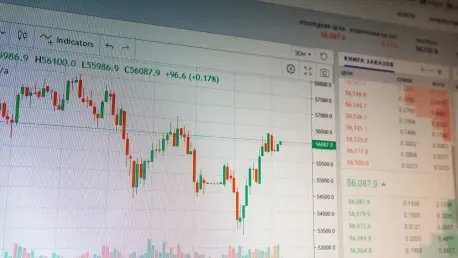

The global cryptocurrency market has currently reached a critical juncture where the appetite for risk is being carefully weighed against the looming specter of a more aggressive Federal Reserve policy. This period of consolidation is defined by a strategic holding pattern as institutional and retail investors alike pause to consider the implications of a pivotal interest-rate decision. While specific assets have shown flickers of recovery, the overarching narrative is one of caution, with market participants prioritizing defensive hedging over the aggressive positioning that characterized earlier quarters. Trading activity remains high, yet it lacks a clear directional consensus, creating a “churn” where volume does not necessarily equate to a sustained breakout. This indecisive environment reflects a broader market hesitancy to commit capital before the central bank clarifies its stance on cooling an economy that continues to show unexpected resilience. Consequently, the digital asset landscape has become a mirror of the tension found in traditional finance.
Macroeconomic Pressures and Mainstream Assets
Federal Reserve Influence and Inflationary Impacts
The primary narrative driving the current market cycle is the ongoing tension surrounding U.S. inflation, which remains stubbornly fixed at 4.1 percent. Although many analysts expect the Federal Reserve to maintain a pause, a significant portion of the market remains concerned about a potential rate increase, which would represent the first such move in three years. This underlying uncertainty has pushed a significant amount of capital toward traditional safe-haven assets like gold and silver, which have seen renewed interest as digital counterparts move sideways. While cooling geopolitical tensions have stabilized global oil prices, the resulting lack of volatility in energy has not yet translated into a clear green light for riskier assets. Instead, the market is bracing for a potential hawkish surprise, with investors meticulously analyzing every piece of labor and manufacturing data. This cautious atmosphere suggests that the floor for risk assets remains fragile as long as the cost of borrowing remains a point of contention.
Price Stability and Derivatives in Bitcoin and Ether
Bitcoin has successfully managed to identify a psychological floor near the $64,300 mark after a period of sharp volatility that was largely triggered by fluctuations in external equity markets. Despite this relative stability in the primary asset, the broader market remains on edge as Ether has shown a slight downward trend accompanied by a consistent decline in Open Interest across major derivatives exchanges. This divergence is particularly noteworthy because it suggests that while Bitcoin is still viewed as a primary hedge against macroeconomic uncertainty, traders are increasingly hesitant to commit to Ethereum-based positions or smart-contract platforms. The decline in speculative interest for Ether indicates that the market is waiting for a clear signal from the Federal Reserve before re-engaging with the decentralized finance ecosystem at large. For now, the focus remains on capital preservation, with Bitcoin serving as the last line of defense against a deeper correction that many fear could occur if interest rates are adjusted upward.
Market Sentiment and Sector Rotations
The Shift from Speculative AI to Institutional DeFi
A selective rotation is currently unfolding within the altcoin market, where investor interest is shifting away from speculative sectors like Artificial Intelligence toward more established Decentralized Finance platforms. While tokens such as Fetch.ai have experienced significant weekly declines after a period of intense hype, projects like Uniswap have gained surprising momentum. This trend is largely driven by institutional moves, most notably BlackRock’s integration of its tokenized treasury funds into the DeFi space, which has provided a much-needed layer of credibility and utility. This shift highlights a growing preference for assets that are backed by institutional interest and real-world utility rather than pure speculative narratives. As the market matures, the “hype-driven” cycles of the past are being replaced by a more sober analysis of cash flows and protocol sustainability. Investors are now seeking refuge in platforms that demonstrate consistent usage and clear integration with the traditional financial system.
Technical Indicators and Institutional Liquidity
Current market health indicators show a significant degree of “churn,” where high trading volumes are not necessarily translating into long-term commitment or price appreciation. Technical data reveals a remarkably balanced ratio between long and short positions, yet a high volume of put options suggests that sophisticated traders are quietly preparing for a possible price drop. This defensive posture indicates that the market is braced for a hawkish surprise from the Federal Reserve, despite the relatively low levels of implied volatility seen in recent trading sessions. Liquidity is also increasingly consolidating within major, established platforms like Binance, which continues to hold a dominant share of user funds and spot trading activity. This concentration suggests that as investors reposition their portfolios, they are seeking the most liquid and secure environments to weather potential storms. The next major movement in the crypto space will likely depend on whether the central bank prioritizes inflation control over energy and geopolitical pressures.
Strategic Alignment for Upcoming Market Shifts
Market participants ultimately adopted a strategy that prioritized liquidity and risk management over the pursuit of speculative gains during this period of high-stakes monetary transition. Investors successfully utilized the consolidation phase to rebalance portfolios toward assets with proven institutional backing, such as those involved in tokenized treasury initiatives. The focus shifted from short-term price fluctuations to the long-term sustainability of protocols that could bridge the gap between traditional finance and decentralized systems. Decision-makers evaluated the potential for a hawkish central bank shift and responded by increasing their exposure to defensive hedging instruments and stablecoin reserves. This proactive approach prepared the industry for various macroeconomic outcomes, ensuring that capital remained mobile and ready to react once the Federal Reserve provided the necessary clarity. Moving forward, the integration of institutional frameworks into the digital asset ecosystem acted as a foundation for the next phase of market expansion and growth.