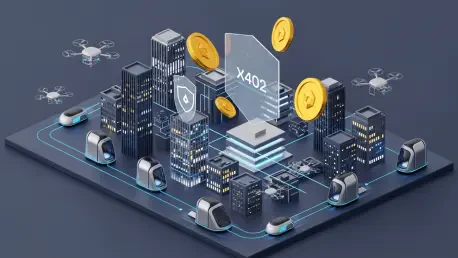

Digital landscapes are currently witnessing a massive shift where autonomous software entities possess the capability to manage their own capital, negotiate for server resources, and settle high-frequency debts without any human intervention. By the middle of 2026, the global financial landscape has witnessed the rise of an agentic economy, where independent AI agents navigate the XRP Ledger to perform complex financial operations. These software entities are no longer just tools for human traders; they are sovereign participants capable of paying for their own computing power, data access, and API usage. This foundational shift marks the end of an era dominated solely by human-centric transactions and signals the beginning of a highly automated digital infrastructure. As these agents become more sophisticated, the demand for a reliable settlement layer has positioned the ledger as the primary venue for autonomous commerce. This evolution is driven by the necessity for speed and low costs, which are essential for bots that conduct thousands of micro-transactions every hour.
The Infrastructure of the Agentic Economy
Technical Foundations: The Protocol of Necessity
At the heart of this technological leap lies the x402 protocol, which has effectively repurposed the classic “payment required” HTTP status code for the modern blockchain environment. Officially integrated into the XRP Ledger ecosystem in June 2026, this protocol provides a standardized framework for software to request and receive payments for digital services. When an AI agent requires data from a remote server, the server can issue an x402 request, triggering an immediate and automated settlement through the agent’s wallet. This system is heavily supported by the XRPL AI Hub, an initiative that provides developers with ready-to-use libraries for building agents with native wallet management capabilities. Furthermore, the protocol incorporates a unique deflationary mechanism where a small portion of XRP is burned during these machine-driven interactions. By tying the utility of AI software to the token’s supply, the network ensures that increased automation directly benefits the long-term integrity of the asset.
Commercial Integration: Scaling Machine Transactions
The rapid adoption of these automated systems is evident in recent market data, which shows that autonomous transactions have surged by 127% following the protocol’s full-scale implementation. This growth is not merely internal to the crypto community, as over a hundred traditional merchants and service providers have now established machine-to-machine payment channels. These businesses utilize a combination of XRP for high-speed liquidity and the RLUSD stablecoin for price-sensitive commercial operations. While XRP serves as an efficient bridge for cross-border or cross-network settlements, the stablecoin offers the predictability required for long-term service contracts and resource leasing. This dual-asset approach has led to a twelvefold increase in monthly transaction volume, as institutional players begin to recognize the efficiency of bypassing manual invoicing. By automating the payment cycle, companies can reduce overhead and allow their software to scale resource consumption based on real-time demand.
Market Dynamics and Future Prospects
Network Resilience: Navigating the Valuation Gap
Despite the clear surge in technical utility and a record-breaking number of active wallet addresses, the market price of XRP has remained relatively stable throughout the current cycle. This stability persists even as spot ETFs have attracted billions in inflows from institutional investors who are eager to gain exposure to the underlying technology. Interestingly, some legacy financial indices have continued to exclude the asset from their benchmarks, citing outdated criteria that do not account for the unique value of utility-focused protocols. This discrepancy highlights a growing gap between traditional financial analysis and the tangible economic activity generated by non-human actors. As the ledger continues to facilitate millions of daily transactions between bots, the focus is shifting toward how legacy institutions will eventually adjust their models to reflect this new reality. The resilience of the network remains unchallenged as the volume of machine-driven commerce continues to outpace traditional retail trading activity.
Global Expansion: The Path Toward Total Automation
The initial success of the x402 protocol on the XRPL served as a fundamental blueprint for its subsequent adoption across more than a dozen different blockchain networks. By establishing a clear standard for agentic payments, the community successfully laid the groundwork for an interoperable internet where software traded value regardless of the underlying chain infrastructure. Organizations that early-integrated these autonomous payment layers reported significant improvements in operational speed and a measurable reduction in settlement delays throughout their supply chains. Looking ahead, the focus moved toward scaling these systems to handle hundreds of millions of payments per day as the global economy became increasingly automated. Stakeholders realized that the transition to a machine-led financial system required robust security frameworks to protect the integrity of autonomous wallets. The ledger emerged as a central hub for this transition, providing the stability for a world where software became the primary driver of growth.