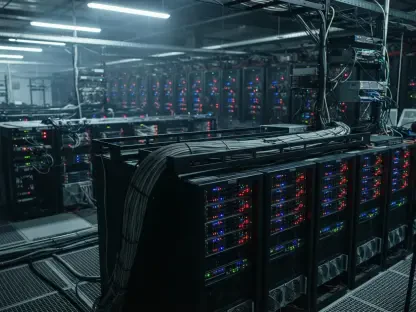

Taiwan’s critical role in semiconductor manufacturing is under the spotlight as labor disputes over profit-sharing mechanisms threaten to stall DRAM production. This specific disruption in the industrial heartland of the island is merely one facet of a broader, more complex financial tapestry that has emerged as the final quarter of the current year progresses. Global investors are navigating a landscape where the promise of artificial intelligence and digital assets is constantly being tested by tangible operational hurdles and shifting geopolitical alliances. The current market environment is no longer driven by the speculative fervor seen in previous cycles; instead, it is defined by a rigorous demand for validation and measurable results. While institutional analysts remain optimistic about long-term capital growth, the immediate reality for many firms is a struggle to balance high-tech innovation with the rising costs of labor and specialized materials. This tension has created a unique volatility paradox, where the potential for high-yield returns is accompanied by an unprecedented degree of risk that even the most seasoned portfolio managers are finding difficult to mitigate effectively. As the fiscal year winds down, the focus remains squarely on how these structural pressures will reshape the global economy heading into 2027 and beyond.
Projections for Digital Assets and Institutional Adoption
The Shifting Role: Bitcoin in Professional Portfolios
JPMorgan Chase & Co. has recently updated its ten-year outlook for Bitcoin, marking a significant milestone in the institutional acceptance of digital assets. For the first time in the long history of its capital market reports, the firm has provided a specific return range for the cryptocurrency, forecasting an annualized return of 10% over the next decade. This projection is particularly notable because it suggests that Bitcoin will likely outperform traditional financial heavyweights, including large-cap stocks and gold. This shift in perspective signals that major banking institutions are moving past the initial skepticism that characterized the early adoption phase, acknowledging the asset’s potential as a primary driver of long-term wealth. However, this optimism is grounded in a sophisticated understanding of the asset’s unique behavior within a diversified portfolio, rather than a simple endorsement of the “crypto-to-the-moon” narrative that previously dominated the retail space.
Despite the bullish return forecast, Bitcoin remains excluded from core institutional portfolio models due to its projected 55% annualized volatility. This dramatic price swing creates a significant disparity between simple average returns and the actual “keepable” gains that an investor can realize over time. While the arithmetic average return might suggest massive gains, the impact of significant drawdowns means that the effective compound return is much lower. This volatility continues to be the primary hurdle for wider institutional integration, as most pension funds and insurance companies require a level of stability that Bitcoin has yet to demonstrate. The firm’s cautious approach highlights the ongoing struggle to categorize digital assets: are they a stable store of value similar to digital gold, or remain a speculative hedge against the potential debasement of traditional fiat currencies? Until this question is answered with more data, the asset will likely remain a high-conviction peripheral play rather than a foundational core holding.
Statistical Modeling: The Path to Market Legitimacy
The methodology behind these institutional forecasts relies on a sophisticated blend of global money growth and network utility models. By comparing global monetary expansion against the fixed supply of the Bitcoin blockchain, analysts can estimate the asset’s intrinsic value in a world where central banks are frequently forced to intervene in the economy. Approximately 65% of the current forecasting model is weighted toward this money growth metric, reflecting a belief that the asset’s primary value proposition is its scarcity. This is complemented by a secondary view of Bitcoin as a digital supplement to gold, which accounts for another 30% of the model’s weight. The remaining 5% focuses on the actual transaction volume and utility within the network, suggesting that while the technology is impressive, the “store of value” aspect remains the dominant driver of price action in the current economic environment.
For Bitcoin to achieve full legitimacy in the eyes of regulatory bodies and traditional investors, it must demonstrate a more stable correlation with other major asset classes. Currently, the asset maintains a relatively low correlation with stocks and gold, which makes it an attractive diversifier on paper but a difficult asset to manage during periods of extreme market stress. Analysts suggest that the next phase of institutional adoption will depend heavily on the development of clearer regulatory frameworks that protect investors without stifling the inherent innovation of the blockchain. As these rules are codified, the market expects to see a gradual stabilization of price action, though the path to that stability will likely remain volatile for the foreseeable future. The goal is to move beyond the speculative phases of the past and into a period of sustainable, long-term growth driven by actual institutional demand and clear legal guidelines.
Defense and Technology Sector Dynamics
Financial Resilience: Navigating Volatility in Aerospace Contracting
Kratos Defense & Security Solutions serves as a primary example of the current disconnect between corporate business development and stock market performance. While the company’s share price has faced significant downward pressure throughout the year, its underlying business operations remain robust and increasingly diversified. The firm continues to secure major contracts in high-priority areas such as space monitoring, cyber defense, and hypersonic thermal testing, indicating that government demand for advanced defense technology remains high. This resilience is a testament to the company’s strategic positioning within the “mid-market” defense sector, where it can provide specialized solutions that larger contractors might struggle to deliver as efficiently. However, the market’s reaction to these successes has been muted, overshadowed by broader concerns about government spending and the long-term stability of the federal budget.
The disparity between a company’s operational success and its stock price is often a result of systemic uncertainties that are outside of its direct control. Factors such as the federal budget process, continuing resolutions, and the general political climate in Washington can weigh heavily on companies that rely on government appropriations for a significant portion of their revenue. For Kratos, this has meant that even positive news regarding contract wins or infrastructure expansion in key states is often met with a sell-off from cautious investors. Despite these challenges, the company’s strong balance sheet—characterized by a high cash position and manageable debt levels—provides a buffer that many of its peers lack. This financial health allows the firm to continue investing in next-generation technologies like the 5G satellite ground systems, which are expected to become critical components of the national security infrastructure over the next several years.
Strategic Buying: Resilience Amidst High-Tech Friction
The semiconductor industry is currently navigating a dual-threat environment characterized by labor unrest and the emergence of new international competitors in the memory market. Planned strikes at major manufacturing hubs in Taiwan have threatened the supply of AI-essential memory chips, which are critical for the continued growth of the global technology ecosystem. These labor disputes are centered on profit-sharing mechanisms, reflecting a growing demand among specialized workers for a larger share of the massive profits generated by the AI boom. The potential for a prolonged disruption in DRAM and HBM production has caused a ripple effect throughout the market, leading to increased volatility for industry leaders who are already dealing with the pressures of a fast-moving and highly competitive landscape.
At the same time, the rise of manufacturers in other regions is introducing new competitive pressures, particularly in the server-memory market. While some market observers dismiss these developments as temporary distractions, the cumulative effect has been a period of intense instability for established semiconductor firms. This competition forces companies to accelerate their development of next-generation technologies, such as HBM4 and specialized AI rack systems, to maintain their market dominance. Despite the “brutal” nature of memory investing, many retail and institutional investors view the current price dips as strategic buying opportunities. The long-term demand for high-performance computing and AI-driven infrastructure remains a powerful secular trend that is expected to outweigh the short-term challenges posed by labor strikes and competitive entry into the market.
Innovation in Transportation and Infrastructure
Strategic Consolidation: Integration of American Hardware Platforms
The autonomous vehicle sector is expected to undergo a period of significant consolidation as companies look to bridge the gap between world-class software and efficient hardware production. Strategic acquisitions are increasingly seen as the most viable path for software leaders to secure a reliable, domestic vehicle platform that is free from the political and economic complications of relying on foreign manufacturing. This movement is largely driven by a recognition that self-driving technology is only as good as the hardware it inhabits. By acquiring or merging with established electric vehicle manufacturers, autonomous technology firms can create a vertically integrated entity that controls every aspect of the user experience. This strategy not only improves operational efficiency but also provides a level of quality control that is difficult to achieve through traditional outsourcing models.
Geopolitical “optics” have become a major concern for autonomous fleet operators, especially regarding the use of vehicles manufactured in regions that are currently subject to high trade tensions. Significant tariffs and national security concerns are pushing companies to seek American-made alternatives for their expanding fleets. This shift is expected to redefine the supply chain for autonomous vehicles as the next generation of regulatory requirements begins to take effect. Companies that have relied on international manufacturing partners are now finding themselves at a disadvantage, facing both public scrutiny and potential regulatory hurdles. By pivoting toward domestic production, these firms can align themselves with national economic priorities while also securing their supply chains against future geopolitical shocks. This move toward “onshoring” is likely to be a defining characteristic of the transportation industry for the remainder of the decade.
Reputation Management: Governance in the Transparency Era
United Airlines finds itself at a unique crossroads, attempting to balance major technological advancements with a public relations crisis involving its executive leadership. On one hand, the airline is successfully implementing high-speed satellite internet across its entire fleet, significantly enhancing the passenger experience and improving the airline’s overall operational metrics. These technical upgrades, including the integration of SpaceX’s Starlink system, provide a sense of “operational optimism” that supports the company’s long-term value in a competitive market. However, these successes are being tested by the controversy surrounding the personal political views expressed by the company’s leadership. In an era where corporate governance and executive ideology are under constant scrutiny, such public statements can have a direct and measurable impact on brand loyalty and investor confidence.
The friction between an airline’s operational performance and the public perception of its leadership creates a complex risk profile for investors. While the financial fundamentals of the company might remain stable, the potential for brand damage can lead to a cooling of retail investor sentiment. This is particularly relevant in the current economic environment, where consumer choice is often driven by a sense of alignment with a company’s values. For United, the challenge lies in maintaining its technological edge and operational excellence while simultaneously managing a reputation that has been tarnished by executive overreach. The airline’s ability to navigate this period of heightened scrutiny will depend on its ability to demonstrate that its commitment to passenger service and technological innovation remains its primary focus, independent of the personal views held by those in the boardroom.
Synthesized Market Outlook Through 2026
The Volatility Paradox: Final Reflections on Market Decoupling
A recurring theme across all analyzed sectors is the “volatility paradox,” where the highest-growth assets require a level of risk tolerance that often discourages traditional institutional investment. Understanding the difference between simple arithmetic gains and the actual compound returns has become an essential skill for modern portfolio management in 2026. This awareness is forcing a more disciplined approach to risk across both digital and traditional asset classes, as investors realize that the “headline” returns often hide a more complex and difficult reality. As the market continues to evolve, the ability to manage this volatility will be the primary differentiator between successful portfolios and those that are overwhelmed by the rapid shifts in sentiment and price. The current year has proven that high technology and high risk are inextricably linked, requiring a new set of tools for the modern era.
The trend toward “derisking” from international dependencies has also accelerated significantly, particularly in the semiconductor and automotive sectors. Whether driven by labor strikes in Taiwan or the need for domestic vehicle platforms in the autonomous space, there is a clear movement toward local consolidation and more secure, resilient supply chains. This shift is creating a new hierarchy of market leaders—those who have the foresight to secure their manufacturing and material sources before the next global crisis. While this process is often expensive and disruptive in the short term, it provides a level of long-term stability that is becoming increasingly valuable in an unpredictable world. The decoupling of sentiment from strategy is now a reality, as investors prioritize companies that can demonstrate tangible, secure operational paths over those that merely offer exciting but fragile growth projections.
Strategic Implementation: Actionable Insights for the Path Ahead
The financial developments of the current year provided a clear roadmap for navigating the complexities of a transitioning global economy. It was observed that the most resilient entities were those that successfully integrated advanced technology while simultaneously insulating themselves from geopolitical and labor-related shocks. For participants in the digital asset market, the focus shifted toward high-conviction, long-term holdings that could withstand the inevitable 55% volatility swings predicted by institutional models. Meanwhile, in the defense and technology sectors, the market favored companies with robust balance sheets and a demonstrated ability to secure government contracts despite macroeconomic headwinds. These strategic priorities helped investors filter out the noise of short-term price fluctuations and focus on the structural shifts that defined the underlying value of their positions.
By the end of the current period, the divergence between institutional caution and retail opportunism became a permanent fixture of the market landscape. Successful strategies involved a disciplined adherence to risk management, particularly the recognition that the “AI trade” had moved from a phase of speculation into a phase of rigorous operational validation. This required a shift in focus toward companies that controlled their own hardware platforms and maintained a transparent approach to corporate governance. Moving forward, the lessons learned from the labor disputes in Taiwan and the consolidation within the autonomous vehicle sector should serve as a template for evaluating future opportunities. The goal for any sophisticated investor is to remain adaptable, leveraging the high-growth potential of emerging technologies while maintaining the defensive posture necessary to survive an era of constant structural change.