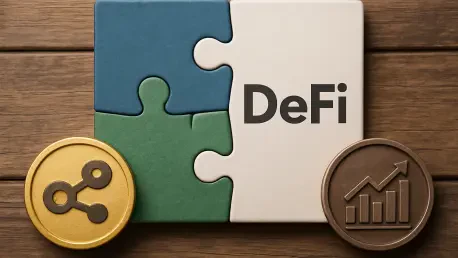

The digital asset landscape has reached a pivotal juncture where the convenience of centralized platforms finally meets the rigorous security of decentralized protocols through high-level technical synergies. By embedding the Uniswap API directly into the MetaMask swap interface, the industry has effectively dismantled the barriers that once separated the most popular self-custody wallet from the deepest pools of on-chain liquidity available today. This integration serves as a significant milestone in the maturation of the decentralized finance ecosystem, providing a seamless experience for millions of users who previously navigated a fragmented landscape of disparate decentralized applications and complex bridging protocols. The shift emphasizes a broader trend where infrastructure providers prioritize interoperability over isolation, ensuring that the end user can access high-performance trading tools without leaving their primary wallet environment. As these two giants synchronize their efforts, the traditional distinction between a storage tool and a trading venue begins to dissolve, paving the way for a more unified Web3 experience.
Bridging the Gap Between Wallets and Liquidity
Enhanced Routing Architectures
Efficiency in the decentralized market depends heavily on the ability to find the most cost-effective path across a myriad of liquidity pools and blockchain networks. This collaboration utilizes the sophisticated routing engine of the Uniswap protocol, which now aggregates liquidity across its various iterations, including legacy v2 and v3 pools, the highly customizable v4 hooks, and the auction-based mechanisms of UniswapX. By supporting more than 16 different blockchain networks, this system ensures that retail traders are not limited to a single ecosystem but can instead tap into a global reservoir of assets. Such a robust architecture reduces the slippage often encountered during high-volatility periods and provides reliable price quotes for both major assets like Ethereum and smaller, niche tokens. The technical achievement here lies in the abstraction of complexity; the user simply requests a trade, while the backend coordinates a multi-hop route across several layers to secure the best possible outcome for the participant.
Institutional Standards for Retail Users
Bringing institutional-grade performance to a retail-focused wallet changes the fundamental expectations for self-custody interactions in the current market environment. The Uniswap infrastructure has already proven its resilience by processing over $40 trillion in cumulative volume, a feat that has earned the trust of significant institutional providers such as Fireblocks and Ledger. By integrating this same level of reliability into MetaMask, the friction associated with switching between various decentralized applications is significantly reduced, creating a cohesive financial portal. This move effectively professionalizes the retail experience, offering the same liquidity depth and security standards that were previously reserved for professional desks or those with the technical skill to manage manual interactions. Consequently, the wallet transforms from a simple gateway into a powerful terminal, allowing users to execute complex trades with the confidence that they are interacting with the most battle-tested protocols in the industry.
The Evolution of Developer Ecosystems
Open Access and Financial Tools
The democratization of financial technology is further accelerated by the decision to offer the Uniswap API without restrictive subscription fees or prohibitive costs for developers. This open-access model lowers the entry barrier for smaller development teams and independent innovators who wish to build sophisticated trading tools or specialized financial products. By providing a reliable and free interface to massive liquidity, the partnership encourages a surge in creative solutions that can cater to specific user needs or regional markets. This approach fosters a more vibrant ecosystem where competition is based on the quality of the user interface and added features rather than exclusive access to liquidity sources. Furthermore, this trend toward open tools suggests a move away from the “walled garden” philosophy that has long dominated the financial sector. Developers can now focus on refining the user experience, knowing that the underlying liquidity layer is both stable and accessible, which ultimately benefits the end user through more diverse financial options.
Transitioning Toward Invisible Decentralized Finance
A major shift in the industry is the move toward “invisible” decentralized finance, where the complex mechanics of blockchain interactions are hidden behind intuitive interfaces. This collaboration represents a strategic fusion where the wallet acts as an intelligent intermediary, handling the intricacies of backend routing and liquidity sourcing without requiring user intervention. By making the trading process as simple as a few clicks, the integration challenges the historical dominance of centralized exchanges, which many users preferred solely for their ease of use. This evolution allows users to maintain full control of their assets in a self-custodial framework while enjoying the efficiency and speed typically associated with centralized platforms. The goal is to create an environment where the technology works silently in the background, allowing the user to focus on their financial objectives. This synthesis of convenience and protocol depth is likely to channel significantly more volume into decentralized ecosystems, reinforcing the idea that security does not have to come at the expense of usability.
Strategic Considerations for Market Participants
Market participants who sought to maximize their capital efficiency benefited greatly from this transition by re-evaluating their reliance on centralized intermediaries for basic asset swaps. The technical alignment between these two major entities provided a clear roadmap for how decentralized protocols achieved mass adoption without compromising on the core principles of self-custody. Users were encouraged to audit their own trading habits, shifting toward platforms that offered direct access to protocol-level liquidity while maintaining the safety of their private keys. Developers also found it necessary to integrate these open-source APIs to remain competitive, as the standard for user convenience reached new heights. In the long term, the industry moved toward a more resilient and transparent financial system where the barriers between different blockchain networks were effectively minimized. This shift ensured that the future of finance remained open, accessible, and driven by technical excellence rather than the traditional gatekeeping mechanisms that once defined the broader global economic landscape.