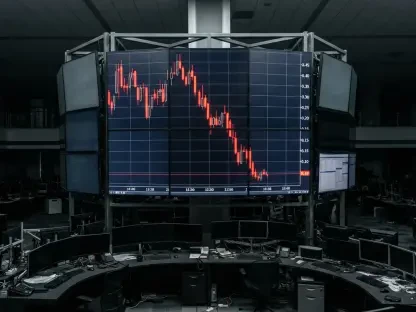

The global demand for high-performance computing has reached a fever pitch where the lead time for specialized hardware often dictates the survival of an enterprise, yet the traditional financial system remains tethered to nineteenth-century speeds of credit approval. This friction has created a

Web3 payroll and invoicing systems face new threats where payments can fail at the custody or compliance layer regardless of the underlying blockchain's security. The coordinated freeze of $1.8 billion in stablecoins on October 29, 2026, alongside a massive $5.6 billion breach at a major exchange,
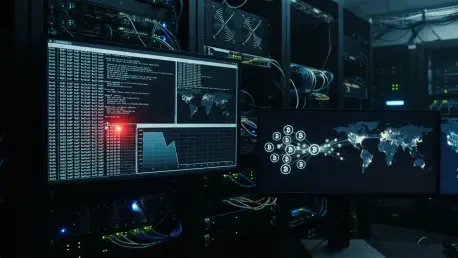
The divergence of TRON from the broader market during the October 2026 crash highlights the network's structural insulation from vulnerabilities specifically targeting the Ethereum blockchain. While the majority of digital assets succumbed to a frantic sell-off triggered by a catastrophic breach at

Tokenization technology provided by ST0x enables 24/7 market access to traditional securities, bypassing the rigid hours of conventional centralized stock exchanges. This development marks a pivotal shift in how global investors engage with the most established equity markets, effectively
The October 30 incident represents a pivotal moment for Binance as it attempts to restore confidence while its withdrawal systems remain entirely offline. This unprecedented security breach, which saw approximately $2.54 billion in digital assets targeted by a sophisticated exploit, has

The transformation of waste management into a digital ecosystem depends on the ability to verify the specific activities of recyclers and manufacturers. In the current landscape, shifting from a linear economic model to a circular one requires a radical overhaul of how data is collected and