
As the brutal force of winter storm Fern descended upon the United States, an unprecedented signal rippled not through the power grid, but through the digital world of cryptocurrency, compelling the nation’s largest Bitcoin miners to power down. This was not a system failure but a deliberate, coordinated act of support for the public energy grid, illustrating a profound shift in the industry’s role. Bitcoin mining, long criticized for its substantial energy consumption, is now emerging as a surprisingly vital and flexible tool for maintaining grid stability during periods of extreme weather and peak demand. This analysis will examine the data from this pivotal event, explore the real-world application of miners as a “controllable load resource,” and project the future of this increasingly symbiotic relationship.
The Data Behind the Trend: From Theory to Practice
The recent curtailment during winter storm Fern provided a clear, quantifiable demonstration of the Bitcoin mining industry’s potential to serve as an energy buffer. The data reveals not just a temporary reduction in network activity but a deliberate and impactful response to a real-world crisis, moving the concept of miners as grid partners from academic theory into established practice. This event has set a precedent, showcasing how a digital asset industry can integrate with physical infrastructure to provide widespread public benefit.
Quantifying the Curtailment and Network Impact
The scale of the power-down was significant. Foundry USA, the world’s largest Bitcoin mining pool, voluntarily reduced its hashrate by approximately 60%, a staggering cut of nearly 200 exahashes per second (EH/s). This massive reduction in computational power sent a noticeable ripple through the global Bitcoin network, with the average time to produce a new block temporarily increasing to 12 minutes, a clear indicator of the decreased processing power securing the blockchain.
This action was not an isolated incident but part of a growing industry trend. An increasing number of US-based miners, including prominent pools like Luxor, are actively participating in demand response programs. These programs formalize the relationship between energy consumers and grid operators, allowing miners to be compensated for reducing their power usage on demand. This structured participation signals a strategic evolution from being simple consumers of electricity to becoming active partners in energy management.
Case Study Winter Storm Fern and the Controllable Load Resource
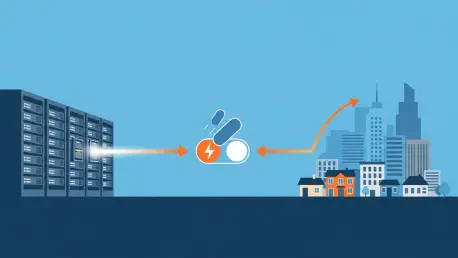
During the storm, mining operations acted as a premier example of a “controllable load resource.” By shutting down their vast arrays of servers, they instantly freed up gigawatts of critical energy capacity. This power was then available to be redirected to where it was needed most: warming homes, keeping hospitals online, and supporting other essential services, effectively acting as a virtual power plant in a time of crisis.
This relationship offers a crucial dual benefit. While miners can shed load during peak demand, they are equally valuable during periods of low demand and excess power generation, particularly from intermittent renewables like wind and solar. By absorbing this surplus energy, they prevent potential damage to grid infrastructure from oversupply and monetize electricity that would otherwise be wasted. The sheer scale of this capability is underscored by the fact that even after its massive 60% reduction, Foundry USA still controlled 23% of the global mining hashrate, demonstrating the immense capacity this industry holds.
Expert Insights a Paradigm Shift in Energy Asset Management
Energy sector analysts and Bitcoin mining executives increasingly view this capability as a paradigm shift in how large-scale energy assets are managed. The events during winter storm Fern have solidified the perception of mining farms not as parasitic loads but as dynamic, responsive partners that can enhance grid resilience. This evolving role is driven by both technological capability and powerful economic incentives.
The financial model underpinning this cooperation is mutually beneficial. For miners, participating in demand response and other grid services creates a new, reliable revenue stream that supplements income from mining rewards. They can essentially sell their power capacity back to the grid at a premium during critical periods, making their operations more profitable and less susceptible to cryptocurrency price volatility. This economic driver ensures that participation is not merely an act of goodwill but a sustainable business strategy.
Experts also highlight the unique technical advantages mining farms offer over traditional industrial power consumers. Unlike a factory or smelter that may take hours to safely power down and restart, a Bitcoin mining facility can curtail its energy consumption with surgical precision in a matter of seconds. This near-instantaneous and scalable response is an invaluable tool for grid operators, who must balance supply and demand on a knife’s edge to prevent blackouts.
The Future Outlook Integrating Mining into Modern Grids
The trend of integrating Bitcoin mining into grid management is poised to fundamentally reshape the future of energy infrastructure. As this symbiotic relationship matures, it promises to foster more resilient, flexible, and efficient electrical grids capable of navigating the challenges of extreme weather and the transition to renewable energy sources. This integration will likely move from emergency response to a core component of daily grid operations.
In the coming years, this will likely lead to the development of formalized, long-term partnerships between mining companies and utility providers. These collaborations could see mining operations co-located with power generation facilities, including struggling legacy plants and new renewable projects. Furthermore, the industry’s digital-native infrastructure makes it an ideal candidate for integration into automated smart grid management systems, where algorithms can dispatch miners’ load-balancing capabilities in real-time to optimize grid performance.
The broader implications of this trend are profound, particularly for the global energy transition. One of the primary obstacles to the widespread adoption of wind and solar power is their intermittency. Bitcoin miners provide a solution by acting as a consistent buyer of first resort for any surplus power generated, creating a price floor that de-risks investment in new renewable projects. In this capacity, the mining industry could become a key catalyst in accelerating the deployment of clean energy worldwide.
Conclusion From Energy Consumer to Grid Stabilizer
The decisive actions taken by the Bitcoin mining industry during winter storm Fern provided undeniable evidence of its capacity to function as a crucial grid stabilization tool. What was once a theoretical benefit became a practical and powerful reality, showcasing how a digital industry can deliver tangible support to critical physical infrastructure. This event has fundamentally altered the conversation around mining’s energy use, reframing it as a dynamic asset rather than a static liability.
This trend’s importance has been firmly established as a workable solution to the immense challenge of balancing modern energy supply and demand. As grids become more complex with the integration of intermittent renewables, the need for flexible, fast-acting resources like Bitcoin miners will only grow. To fully realize this potential, a path forward requires robust collaboration between policymakers, utility companies, and the mining industry to create regulatory frameworks and market structures that harness this capability for a more stable and efficient energy future for all.