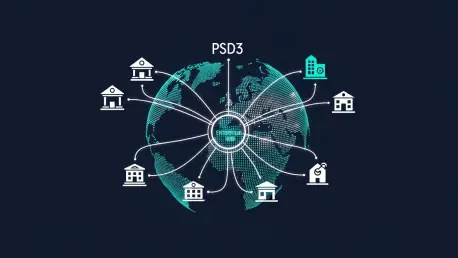

Corporate treasurers are finally discarding the cumbersome spreadsheets that once defined their daily workflows in favor of a synchronized, real-time financial architecture that bridges the gap between disparate banking platforms. For years, the industry operated under a cloud of fragmentation, where vital account data remained trapped within individual bank portals, forcing teams to manually reconcile figures in a high-risk environment. This reactive approach often led to delayed reporting and missed opportunities for liquidity optimization, creating a bottleneck for enterprise growth. Today, the landscape is shifting toward “Open Banking 2026,” a strategic evolution catalyzed by the Third Payment Services Directive (PSD3) and the Payment Services Regulation (PSR). This new era represents a fundamental transition from basic digital connections to a high-performance financial architecture, empowering treasury departments with instant data access and more secure methods for managing global cash flows across multiple banking partners.
Modernizing Connectivity Through API Integration
The Mechanics: Account and Payment Services
At the heart of this transformation lies the strategic deployment of Application Programming Interfaces (APIs), which function as secure digital conduits connecting internal treasury management systems directly to banking infrastructures. These tools are generally categorized into two primary functions: Account Information Services (AIS) and Payment Initiation Services (PIS), both of which serve distinct but complementary roles in financial oversight. AIS APIs act as the comprehensive “eyes” of the organization, automatically aggregating balances and detailed transaction histories from various global jurisdictions into a centralized dashboard. Conversely, PIS APIs function as the operational “hands,” allowing treasury teams to move capital between accounts with precision and speed, bypassing traditional, fee-heavy credit card networks. This seamless integration eliminates the friction of manual logins and file uploads, ensuring that the financial data remains accurate and readily available.
Beyond the basic benefits of connectivity, these API-driven tools offer profound strategic advantages by providing finance leaders with immediate, granular visibility into their global cash positions. In an environment characterized by economic volatility, the ability to know exactly how much liquidity is available at any given second allows treasurers to maximize interest income and significantly reduce unnecessary borrowing costs. High-velocity data streams from these APIs support much more accurate cash forecasting, enabling finance departments to transition from passive data collectors to proactive strategic advisors. By leveraging real-time insights, these teams can model future cash flows with a degree of precision that was previously unattainable under older, batch-processing regimes. This shift not only improves capital allocation but also enhances the overall agility of the enterprise when responding to sudden market shifts or emerging investment opportunities.
Operational Excellence: Efficiency and Security
Automation serves as the primary engine driving cost reduction and operational excellence within the modern enterprise treasury framework. By eliminating the necessity for manual data entry and the tedious, error-prone reconciliation of monthly bank statements, finance departments can pivot their collective focus toward high-value strategic initiatives. These tasks often include advanced risk management, sophisticated investment strategies, and the optimization of working capital across diverse business units. This streamlining of internal processes does more than just save time; it ensures that the data utilized for major corporate decisions is consistent, verified, and current across the entire organizational hierarchy. When manual intervention is minimized, the likelihood of human error decreases, leading to a more robust and reliable financial reporting structure that satisfies both internal stakeholders and external auditors during year-end reviews.
As sensitive financial data moves more freely through open API channels, the industry has prioritized the adoption of the FAPI 2.0 standard to guarantee enterprise-grade security for all participants. Unlike earlier, consumer-focused protocols, FAPI 2.0 is specifically engineered to handle the complexities of high-stakes financial exchanges by offering enhanced protection against unauthorized access and sophisticated token theft. For corporate treasurers, ensuring that their banking partners and third-party software providers strictly adhere to these rigorous standards has become a fundamental requirement for safeguarding company assets. This level of security is essential for maintaining data integrity in an era where cyber threats are becoming increasingly sophisticated and targeted at financial centers. By implementing these advanced security layers, organizations can reap the benefits of open banking without exposing themselves to the vulnerabilities that often accompany increased digital connectivity.
Navigating the Regulatory Shift to PSD3
Regulatory Evolution: Transitioning to Uniformity
The regulatory shift from the Second Payment Services Directive (PSD2) to the current PSD3 framework represents a deliberate effort to rectify the inconsistencies that previously hampered earlier open banking initiatives. While PSD2 established a vital groundwork for digital finance, its implementation varied significantly across different European jurisdictions, resulting in fragmented API performance and unreliable service levels. By transitioning many of these rules into the Payment Services Regulation (PSR), the European Union ensures that financial standards are applied uniformly across all member states without the need for individual national interpretations. This legislative harmonization greatly simplifies compliance for multinational corporations that operate across multiple European markets, providing them with a predictable and stable regulatory environment. This move toward uniformity reduces the administrative burden on treasury teams, allowing them to scale their operations.
Under the newly established regulations, banking institutions are now held to much higher performance standards, with a mandate that their external APIs must perform as reliably as their own customer-facing web portals. One of the most significant security enhancements introduced within the PSD3 framework is the “IBAN-name matching” requirement, frequently referred to in the industry as Verification of Payee. This critical measure mandates that a recipient’s name must be electronically verified against the official account details before any payment can be finalized by the sender. This provides a powerful defense against accidental transfers to incorrect accounts and protects organizations from the rising threat of authorized push payment fraud. For treasury teams, this added layer of verification reduces the risk of financial loss and ensures that large-scale corporate transfers are directed precisely to their intended destinations, reinforcing trust in the digital system.
Future Perspectives: Open Finance and FIDA
The continued evolution of the banking sector is expected to expand into a much broader “Open Finance” model, facilitated by the Financial Data Access (FIDA) framework currently being integrated. While the initial focus of open banking was primarily centered on payment accounts, FIDA proposes the secure sharing of data across a much wider spectrum of financial products, including investments, pensions, and insurance. For a corporate treasurer, this transition translates into the ability to view the entire financial ecosystem of a corporation on a single, unified dashboard. Such comprehensive visibility allows for the integrated management of both assets and liabilities, providing a holistic perspective on the firm’s financial health that was previously fragmented across different departments. This ecosystem-wide data access enables more sophisticated treasury strategies, such as automated sweeping of excess funds into higher-yield investment vehicles.
Despite the numerous benefits offered by this new regulatory environment, many enterprises still face a significant “integration gap” due to legacy accounting systems that were never designed for real-time API communication. To successfully bridge this divide, treasurers must prioritize data normalization—the process of standardizing various bank formats into a single, usable data structure for internal analysis. Overcoming this challenge requires more than just technical upgrades; it necessitates a cultural shift within the finance department as teams move away from batch-oriented thinking toward fully automated workflows. Retraining staff to interpret and act upon real-time data, rather than relying on traditional end-of-day reports, is essential for a successful transition into the modern era. Organizations that invest in these structural and cultural changes today will be better positioned to leverage the full potential of open finance in the coming years.
Strategic Implementation: Readiness and Results
To prepare for the full implementation of these standards between 2026 and 2028, leading enterprises initiated comprehensive audits of their existing bank connectivity and internal technology stacks. Proactive treasury teams focused on establishing rigorous governance frameworks for API access while evaluating the potential of account-to-account payments to drastically lower transaction costs. They recognized that modernizing internal systems was not merely a compliance exercise but a strategic move toward building a more resilient and data-informed operation. These organizations prioritized the selection of banking partners who met the FAPI 2.0 security standards and actively participated in the FIDA framework. By addressing the integration gap early and fostering a culture of technical literacy, finance leaders ensured their operations remained competitive in a global economy. The transition to a unified financial architecture ultimately provided the agility needed to manage complex liquidity demands with confidence.
Successful implementation of these new frameworks relied heavily on the collaboration between IT departments and financial officers to ensure that data flows remained both fluid and protected. Treasurers who embraced this shift moved beyond the role of simple gatekeepers, becoming architects of financial value who utilized real-time data to drive corporate strategy. They successfully integrated account-to-account payment systems that reduced reliance on expensive intermediaries, thereby improving the bottom line. Furthermore, the adoption of standardized verification processes significantly lowered the incidence of fraud, protecting the organization’s reputation and financial assets. By looking back at the progress made during this period, it became clear that those who acted early were able to define the standards for their industry. The shift toward a fully integrated, API-driven treasury environment proved to be the most significant advancement in corporate finance for a generation, setting the stage for continued innovation.