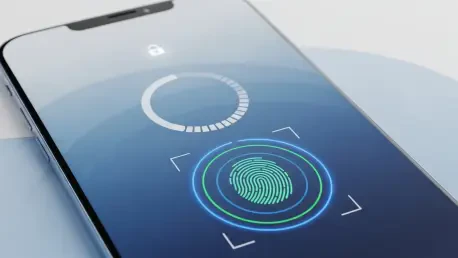

The swift evolution of mobile finance has reached a critical juncture where the friction of entering a manual PIN often stands in the way of a truly seamless retail experience. ICICI Bank recently took a decisive step to address this by introducing biometric authentication for Unified Payments Interface (UPI) transactions within its iMobile Pay application. This update allows users to authorize payments using fingerprint or facial recognition, effectively removing the traditional requirement of a manual PIN for every small interaction. By integrating this technology, the bank aims to balance the need for rapid, low-friction checkouts with the rigorous security demands of modern digital finance. This shift impacts user behavior, enhances transaction security, and reflects the broader evolution of the Indian payment landscape.
Streamlining Digital Transactions through Biometric Innovation
The introduction of biometric authorization marks a shift in how consumers interact with their mobile wallets during high-pressure retail moments. Instead of fumbling with a keypad while standing at a busy counter, users can now finalize their purchases with a simple glance or a touch. This transition reflects a deeper understanding of human behavior, where convenience often dictates the choice of payment platform.
Furthermore, it demonstrates how financial institutions are evolving to meet the expectations of a mobile-first generation that prioritizes speed without wanting to compromise on the fundamental safety of their assets. By removing the cognitive load of remembering and entering codes, the bank fosters a more fluid relationship between the consumer and the digital economy.
The Growth of UPI and the Shift Toward Frictionless Banking
Since its inception, the Unified Payments Interface (UPI) has revolutionized the way India manages retail payments, becoming the primary rail for both person-to-person and merchant transfers. Historically, the four- or six-digit PIN served as the gold standard for security, providing a necessary barrier against unauthorized access. However, as transaction volumes reached unprecedented levels, the demand for a more efficient user experience grew significantly.
ICICI Bank’s move toward biometric integration is a direct response to this shift, building on years of digital banking advancements that prioritize intuitive solutions over legacy systems. Understanding this background is essential to grasp why moving beyond the PIN is the next logical step in the financial digitization of the country. This evolution signals a departure from static security methods toward dynamic, hardware-integrated protection.
Redefining Security and User Experience in Retail Payments
Enhancing Efficiency for High-Frequency Transactions
The primary advantage of biometric authentication lies in its ability to facilitate small-ticket transactions with minimal effort. ICICI Bank set a specific threshold of ₹5,000 for biometric-approved payments, targeting the vast majority of daily retail interactions. By removing the need to type a PIN for these smaller amounts, the bank effectively reduced the likelihood of failed transactions caused by input errors or time-outs during checkout. This efficiency is particularly valuable in high-traffic merchant environments, such as grocery stores or transit hubs, where speed is a critical factor for both consumers and vendors.
Leveraging Device-Specific Hardware for Robust Protection
Unlike a PIN, which can be observed and stolen through shoulder surfing in public spaces, biometric data is stored locally on the user’s device and is significantly harder to replicate. The implementation utilizes Android’s fingerprint sensors and iOS’s FaceID technology to create a multi-layered security approach. This method aligns with current regulatory guidelines while ensuring that high-value transactions—those exceeding the ₹5,000 limit—still require the traditional UPI PIN. This hybrid model ensures that convenience does not come at the cost of safety, offering a flexible framework that caters to different risk profiles.
Addressing Technological Barriers and Adoption Hurdles
While the shift to biometrics offers clear benefits, it also introduces complexities regarding device compatibility and regional accessibility. To use this feature, customers must maintain the latest versions of the iMobile app—specifically version 30 for Android and 28.2 for iOS. There is also a persistent need to educate users on the safety of biometric templates to dispel misconceptions about data privacy. ICICI Bank addresses these concerns by giving users the choice to opt-in, ensuring that those who prefer traditional methods can continue using their PIN, thereby maintaining inclusivity across its diverse customer base.
The Future of Authentication in the Global Fintech Landscape
The introduction of biometric UPI payments is a precursor to a wider industry trend toward invisible security. In the coming years, we can expect to see further innovations such as behavioral biometrics—which analyze typing patterns and device handling—and voice-activated payments. Regulatory bodies are likely to keep pace by refining standards for tokenization and device-linked authentication. As competition among banks intensifies, the focus will increasingly shift from mere transaction processing to providing the most seamless, secure, and personalized user journey possible in a crowded marketplace.
Strategic Recommendations for Modern App Users
For consumers and professionals looking to leverage these new features, the primary takeaway is the importance of maintaining device hygiene and software updates. To activate biometric payments, users should navigate to the UPI settings in the iMobile app, select their preferred account, and verify the setup with their existing PIN. It is also recommended to maintain a strong secondary recovery method and to remain aware of the ₹5,000 threshold to avoid confusion during larger transactions. By embracing these tools, users can significantly enhance their daily financial efficiency while benefiting from the built-in security of their mobile hardware.
A New Standard for Secure and Seamless Finance
ICICI Bank’s integration of biometric authentication for UPI represented a significant milestone in the maturation of digital payments. By prioritizing user convenience without compromising the integrity of the transaction, the bank successfully set a new standard for the industry. As biometric technology became more ubiquitous, the reliance on traditional PINs for everyday purchases began to fade, ushering in an era where security was both more robust and less intrusive. This development reinforced the idea that the future of finance was not just digital, but intuitively aligned with the hardware and habits of the modern consumer.