
The fundamental concept of transferring value is undergoing its most profound transformation in a century, moving from a discrete action to an invisible, integrated element of our digital existence. What was once a deliberate process of exchanging cash or inserting a card is now becoming a background function, powered by sophisticated technology designed to be felt but not seen. Consumer expectations have shifted dramatically, demanding not just speed but also a frictionless, global, and highly personalized experience. This evolution is driven by parallel streams of innovation, one building upon decentralized frameworks and the other refining the established financial ecosystem. The result is a landscape where transactions are instantaneous, borders are irrelevant, and control is firmly in the hands of the user. This new paradigm is no longer a distant vision but the emerging standard, fundamentally reshaping how we interact with our money and the global economy, making financial management more intuitive and accessible than ever before.
The Digital Wallet Evolution
The Rise of Integrated Financial Hubs
Digital wallets have rapidly matured from simple containers for credit card information into sophisticated personal finance command centers. This transformation is a direct response to consumer demand for greater oversight and streamlined management of their financial lives. Modern wallets now offer real-time spending analytics, providing users with immediate insights into their purchasing habits and helping them budget more effectively. Security has also advanced significantly, with biometric authentication becoming a standard feature, ensuring that access to funds is both convenient and highly secure. The focus is on creating a seamless user experience that transcends individual devices, allowing for consistent and intuitive interactions whether on a smartphone, a wearable, or a desktop. This evolution reflects a broader trend where technology is not just facilitating payments but actively empowering users with tools to make smarter financial decisions, all within a single, integrated digital environment that adapts to their daily routines.
The Web3 Infrastructure Underpinning Global Access
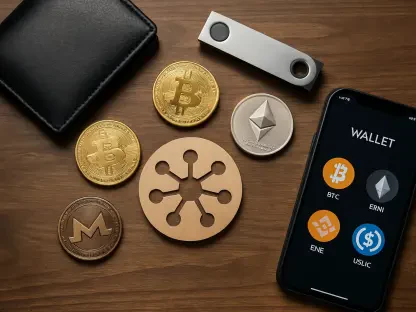
Working in parallel to the refinement of user-facing applications is the quiet integration of Web3 infrastructure, a decentralized technological layer that is fundamentally rewiring the back-end of global finance. This technology facilitates near-instantaneous transaction settlements, dramatically reducing the delays associated with traditional banking systems. By operating on a distributed ledger, it enhances transparency and traceability while diminishing reliance on conventional intermediaries, which often introduce friction and additional costs. A powerful application of this infrastructure is the emergence of crypto cards. These innovative financial instruments serve as a critical bridge between the burgeoning digital asset economy and mainstream commerce. They empower consumers to utilize cryptocurrencies for everyday purchases, from online shopping to transactions at physical points of sale, and even for cash withdrawals at ATMs. This effectively transforms digital assets from a speculative investment into a practical, spendable currency for daily use.
Enhancing the Everyday Financial Experience
Frictionless Transactions as the New Standard
Beyond the world of decentralized technology, a wave of innovation is focused on refining and enhancing the core financial experiences that define daily life. Features that were once considered premium add-ons are now standard consumer expectations. Contactless payment technology is ubiquitous, allowing for quick and secure transactions with a simple tap. Simultaneously, automated expense tracking and the generation of digital receipts have eliminated much of the manual effort involved in personal and business financial management. Instant peer-to-peer (P2P) transfers have made splitting a bill or sending money to a friend an effortless, real-time event. The collective impact of these advancements is a significant reduction in the friction and time traditionally associated with managing money. The goal is to make financial interactions so smooth and integrated into daily activities that they become almost invisible, allowing consumers to focus on their lives rather than the mechanics of payment.
A Decisive Shift Toward Global Usability
As the world becomes increasingly interconnected, payment tools are being re-engineered to operate seamlessly across international borders, moving decisively away from location-bound financial systems. For a globally mobile population, the ability to manage finances in multiple currencies without incurring exorbitant fees is no longer a luxury but a necessity. Modern payment platforms are designed with this in mind, offering transparent fee structures and dynamic currency conversion that adapts to the user’s location. This focus on global usability ensures that whether a consumer is traveling, working remotely, or engaging in international e-commerce, their financial tools function reliably and predictably. The underlying principle is that a person’s ability to access and use their money should not be constrained by geography. This shift represents a fundamental rethinking of financial services, prioritizing a borderless experience that matches the reality of a modern, interconnected world.
The New Era of Financial Empowerment
The culmination of these technological advancements placed unprecedented control and freedom into the hands of consumers. The primary benefit realized was the near-total elimination of friction in both everyday transactions and complex international financial management, creating a system where payments simply worked without conscious effort. This evolution empowered individuals with a diverse range of choices, allowing them to select not only their preferred payment method but also the specific assets they wished to use and the exact timing of each transfer. Ultimately, the most successful innovations were those that embedded sophisticated technology within familiar, intuitive interfaces, adapting to existing consumer habits rather than imposing new ones. The future of payments was defined not by a single, monolithic solution but by a vibrant and interconnected ecosystem that championed speed, global reach, and personalization, giving people the ability to manage their value on their own terms.