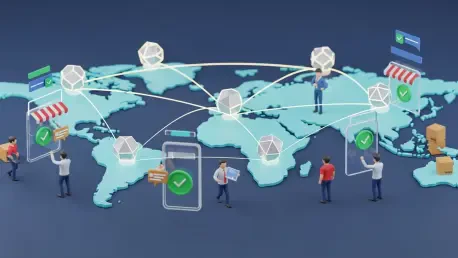

The persistent disconnect between high-speed digital consumer interfaces and the antiquated, manual settlement systems operating beneath them has created a massive bottleneck in the global economy. While a modern user can initiate a transaction with a single tap, the actual movement of value behind the scenes often involves a labyrinth of intermediaries, manual reconciliations, and settlement windows that can stretch across several business days. This friction is not merely an inconvenience; it represents a fundamental coordination failure where different participants, such as banks, logistics providers, and merchants, maintain isolated and often conflicting records of the same event. To solve this, the global economic framework is shifting toward tokenization, moving beyond its early associations with speculative digital assets to become the critical infrastructure layer for the next generation of commerce. By embedding information, functionality, and compliance rules directly into digital objects, tokenization allows assets to move across diverse platforms without losing their context or requiring constant third-party verification, effectively creating a unified language for value exchange.
The Shift to Programmable Infrastructure
The transformative power of tokenization resides in its ability to make assets inherently programmable, allowing them to function as self-executing software rather than passive records in a database. In traditional systems, any action taken on an asset—such as a dividend payment, a tax withholding, or a transfer of ownership—requires an external authority to verify conditions and update a centralized ledger. Programmable infrastructure flips this model by embedding “if-then” logic directly into the asset itself, meaning the token can be programmed to move only when specific predefined conditions are satisfied. For instance, a tokenized corporate bond can be designed to automatically distribute interest payments to current holders at precise intervals without the need for a clearinghouse to manually process the distribution. This shift moves the rules of engagement closer to the asset, removing redundant layers of administrative bureaucracy and ensuring that the logic of the transaction is as portable as the value it represents.
This move toward programmability provides a definitive solution to the “state agreement” problem that has long plagued multi-party digital workflows. When various institutions involved in a trade maintain separate versions of the truth, the resulting divergence leads to expensive operational friction, including settlement failures and time-consuming dispute resolutions. Tokenization creates a shared, verifiable reality where all participants interact with the same data object in real time, ensuring that the status of an asset is always transparent and universally recognized. By establishing this common layer of truth, businesses can eliminate the need for constant back-and-forth communication and manual data entry, which are the primary sources of error in modern finance. This architectural evolution ensures that as a transaction progresses through various stages of a supply chain or a financial market, every party involved sees the same verified state, allowing for automated reconciliation and near-instantaneous settlement cycles.
Lessons from Emerging Economies
The practical application of tokenization as a “quiet” infrastructure is most visible in Southeast Asia, where regional initiatives have successfully integrated disparate payment systems into a cohesive network. The ASEAN cross-border QR payment framework serves as a premier example of how shared standards can facilitate massive transaction volumes without requiring users to understand the underlying technical complexity. By the start of 2026, these systems have enabled tens of millions of transactions, allowing travelers and businesses to settle payments across borders instantly using their local currencies. The success of this initiative stems from its invisibility; the technology operates in the background of daily life, providing the speed and reliability of a domestic payment on an international scale. This demonstrates that for tokenization to achieve widespread adoption, it must transition from being a highlighted technical feature to a reliable utility that simplifies the user experience while handling complex settlement logic behind the scenes.
In the African context, the push for tokenization addresses a different but equally critical challenge: the lack of a unified layer for verifying ownership and collateral in rapidly expanding mobile money markets. While the continent currently leads the world in mobile money adoption, with transaction values reaching into the trillions, a significant gap remains in connecting these informal economic activities to formal financial structures. Tokenization provides the necessary framework to bridge this gap by offering a secure method for recording claims on physical assets, such as agricultural produce or mineral resources. By turning a harvest or a mining output into a verifiable digital token, small-scale producers can prove ownership and use their assets as collateral for formal loans. This development is particularly vital for integrating underserved populations into the global economy, as it transforms previously “dead” capital into liquid, recognizable value that can be traded or financed with the same ease as a digital currency.
Versatility Beyond Finance
The utility of tokenization extends far beyond the movement of money, offering a robust framework for managing digital identity and professional credentials with unprecedented security. Utilizing the W3C Verifiable Credentials standards, tokenized identity allows individuals to hold tamper-proof claims about their qualifications, residency, or age that are easily portable across different service providers. Unlike traditional digital identities that often require a central provider to vouch for every login, a tokenized credential allows the user to prove a specific fact without exposing their entire personal history. For example, a professional could prove they hold a specific license or degree to a prospective employer without sharing their full academic transcript or sensitive government identification numbers. This privacy-preserving approach not only enhances security but also streamlines administrative processes across borders, as the token carries its own proof of authenticity that can be instantly verified by any authorized party.
Building on the successes in identity management, tokenization is also revolutionizing the way physical products are tracked and managed throughout their lifecycles. By implementing digital product passports through standards like GS1 Digital Link, companies can link physical items to secure digital tokens that store comprehensive data regarding origin, maintenance history, and ownership transfers. This creates a level of object-level traceability that was previously impossible, allowing a consumer or a regulator to scan a product and see its entire journey from the factory floor to the store shelf. In the realm of the Internet of Things, this architecture allows devices to carry inherent credentials that define their maintenance status and usage rights, ensuring that data integrity remains intact even as a piece of machinery changes hands or moves between different vendor environments. These applications demonstrate that tokenization is essentially a tool for maintaining context and trust in a world where data and assets are constantly in motion.
Ensuring Trust and Compliance
The viability of tokenization as a global foundational layer depends entirely on the establishment of rigorous standards and interoperable frameworks that allow different systems to communicate. A digital token created in a vacuum has limited utility; it only becomes an economic catalyst when it can move seamlessly between institutions, custodians, and various jurisdictions. Current initiatives like Project Nexus are actively working to connect domestic instant payment systems globally, aiming for international settlements that occur in less than a minute. Similarly, institutional pilots like Singapore’s Project Guardian have spent the last few years refining how tokenized assets can be traded with legal and operational clarity. These efforts are crucial because they move the industry away from isolated “walled gardens” toward a modular ecosystem where tokens act as a common interface, allowing for a more fluid and resilient global market architecture.
To maintain long-term stability, these automated systems must incorporate auditability and regulatory compliance into their core design rather than treating them as secondary additions. The transition from manual, spreadsheet-based oversight to real-time digital monitoring represents a major shift in how regulators approach market risk. A robust tokenized system allows for compliance logic—such as anti-money laundering checks or jurisdictional restrictions—to be “baked in” to the asset itself, ensuring that rules are followed automatically and consistently. This level of transparency is essential for high-stakes sectors like artisanal mining and large-scale agriculture, where a verifiable digital record can prove the ethical sourcing of materials and the legal ownership of land. By providing an immutable and auditable trail of every transaction, tokenization helps build a foundation of trust that is necessary for the formalization of global trade and the protection of all participants in the digital economy.
A Strategic Path Forward
The evolution of tokenization from a niche technological experiment to a cornerstone of digital infrastructure has fundamentally altered how organizations approach value transfer. The transition was marked by a shift in focus from the speculative potential of digital tokens to their functional utility in solving deep-seated coordination failures. Financial institutions and enterprises that successfully navigated this change did so by integrating tokenization into their existing treasury and supply chain workflows, rather than treating it as a separate or isolated project. They recognized that the value was not in the token itself, but in the removal of the layers of friction that had historically hampered the speed of global commerce. By the conclusion of these initial implementation phases, it became clear that the most effective tokenization strategies were those that simplified the complexity of multi-party transactions while remaining almost invisible to the end user.
Looking ahead, the next logical step for market participants involves a deeper commitment to modular system design and the adoption of shared data standards. Organizations must prioritize the development of internal capabilities to manage digital keys and programmable assets with the same level of rigor they currently apply to traditional accounting. The goal was never to tokenize every possible asset, but rather to identify the specific areas where data fragmentation and manual reconciliation were creating the most significant risks. By focusing on high-friction areas such as cross-border settlements, identity verification, and supply chain traceability, the global economy has begun to build a more resilient and transparent framework. The path forward requires a continued emphasis on building interoperable systems that allow for the seamless movement of value, ensuring that the digital economy can operate with the same fluidity and trust as the physical world it supports.