
The silent overhaul of the global financial plumbing is currently moving faster than most retail participants can comprehend, marking a departure from the chaotic era of digital speculation. This transformation is not merely about the rise of digital currencies but rather about the fundamental restructuring of how value moves across borders in an increasingly automated world. While the previous decade was defined by the volatility of assets with little practical application, the current landscape of 2026 favors specialized tools designed to solve the friction inherent in legacy banking systems. XRP has emerged as a central figure in this narrative, positioned not as a mere trading token but as the primary liquidity bridge for a new class of institutional finance. As the traditional labor market undergoes a seismic shift due to the rapid integration of artificial intelligence and robotics, the importance of owning infrastructure-based assets becomes clear. Those who recognize the shift toward utility-driven value may find themselves at the forefront of a significant economic evolution.
The Evolution of Digital Asset Infrastructure
Strategic Shifts in Cross-Border Settlement: The Case for Utility
The modern financial system has long struggled with the inefficiencies of the pre-digital era, where moving funds between different jurisdictions required a complex web of correspondent banking relationships. These legacy methods often resulted in delays of several days and significant costs, which are increasingly unacceptable in an economy that demands instantaneous results. XRP was specifically engineered to address these bottlenecks by providing a neutral bridge asset that facilitates the immediate exchange of value between any two currencies. Unlike assets that focus solely on being a store of value, the Ripple ledger prioritizes transaction throughput and settlement finality, achieving in seconds what used to take nearly a week. This functional advantage has shifted the conversation from speculative trading toward deep-seated institutional utility. Financial entities are now seeking out protocols that offer predictable costs and high scalability to manage the massive flow of international capital.
Building on this foundation, the integration of the XRP Ledger into the operational frameworks of global payment providers illustrates a transition toward a more cohesive digital economy. This shift is driven by the realization that the underlying technology must be capable of handling the demands of a world where machines, rather than humans, are the primary initiators of financial transactions. As automated systems begin to manage supply chains and logistics without human intervention, the need for a low-cost, high-speed settlement layer becomes a logistical necessity. XRP serves as the lubricant for this machine-driven commerce, allowing for micro-payments and large-scale settlements to occur with the same level of efficiency. The focus has moved away from the price fluctuations seen in smaller, less stable tokens toward the long-term reliability of the network. This evolution suggests that the true value of a digital asset is now determined by its ability to integrate seamlessly into the existing and future global financial architecture.
Integration With Global Banking Systems: Redefining Liquidity
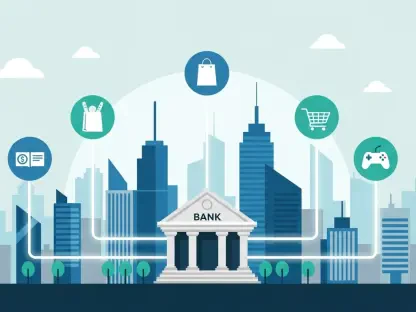
The ongoing development of central bank digital currencies has created a unique opportunity for interoperability within the private and public financial sectors. As various nations launch their own sovereign digital tokens between 2026 and 2030, the primary challenge remains the lack of a common medium to facilitate exchange between these disparate systems. XRP is positioned to solve this problem by acting as a universal translator that allows different digital currencies to interact without the need for pre-funded accounts in foreign jurisdictions. This elimination of “nostro” and “vostro” accounts frees up trillions of dollars in stagnant capital, which can then be redirected toward more productive economic activities. By providing on-demand liquidity, the XRP Ledger reduces the financial risk associated with currency fluctuations during long settlement windows. This structural efficiency is what attracts major banking institutions, as it offers a clear path toward reducing operational overhead while increasing the speed of service.
Furthermore, the adoption of Ripple’s technology by regional banks and payment hubs signifies a democratization of financial access that was previously reserved for the world’s largest institutions. Smaller players can now compete on a global scale by utilizing the same high-speed settlement tools once exclusive to the financial elite. This expansion of the network effect increases the overall value of the ledger, as each new participant adds to the liquidity pool and strengthens the ecosystem’s resilience. The transition from proof-of-concept projects to full-scale commercial implementation marks a turning point in how digital assets are perceived by conservative financial regulators. Instead of viewing these technologies as a threat to stability, they are increasingly seen as the necessary upgrades required to maintain a competitive edge in a digital-first world. This strategic alignment between innovative technology and established finance provides a solid foundation for the continued growth of utility-based assets over the coming years.
Economic Shifts and the Future of Value
Automation as a Catalyst for Digital Wealth: The Post-Labor Reality
The rapid advancement of automated systems has fundamentally altered the relationship between labor and income, necessitating a new perspective on how wealth is generated and maintained. In an economy where human effort is increasingly supplemented or replaced by algorithmic precision, the traditional models of career-based wealth accumulation are becoming less reliable for the general population. This shift has led many economists to explore the concept of universal basic income and other distributed wealth models, where digital assets play a central role in the delivery of value. XRP, with its high-speed distribution capabilities and low transactional friction, is uniquely suited to serve as the backbone for such large-scale economic programs. The ability to move value instantly and at a negligible cost allows for the efficient management of social safety nets and the distribution of resources in a world where productivity is driven by software rather than physical work.
This transition naturally leads to a scenario where the ownership of the underlying infrastructure becomes more valuable than the labor once performed within it. As the economy moves toward a state of total automation, the demand for reliable, scalable, and programmable money will likely reach unprecedented levels. Utility-driven assets like XRP represent a stake in the global financial grid, much like owning shares in a telecommunications network or a power utility. For the individual investor, this means moving beyond the mindset of quick profits and toward a strategy of long-term participation in the essential systems of the future. The narrative of wealth creation has shifted from what one can do to what one owns within the digital architecture that facilitates the movement of global commerce. By securing a position in these foundational technologies early, individuals may be able to hedge against the volatility of a changing labor market and find stability in the automated economic systems of the future.
Strategic Positioning for the Next Decade: Planning for Scale
Developing a comprehensive strategy for asset accumulation requires a deep understanding of the technical milestones that will drive the next phase of market expansion. Between 2026 and 2028, the introduction of advanced smart contract capabilities and sidechains on the XRP Ledger is expected to unlock new use cases that go far beyond simple payments. These enhancements will allow for the tokenization of real-world assets, such as real estate and commodities, further integrating the ledger into the core of the global economy. As these features go live, the utility of the network will expand, attracting a broader range of developers and institutional users who require secure and efficient platforms for complex financial agreements. This technological growth provides the necessary framework for the extreme price targets discussed by market pundits, as the value of the network becomes tied to the total volume of assets managed on top of it.
Success in this evolving market depended on the ability to distinguish between temporary trends and permanent shifts in the global financial structure. Investors who focused on the underlying mechanics of the Ripple ecosystem were better prepared for the institutional adoption that characterized the mid-2020s. The transition from a speculative mindset to one centered on infrastructure-building proved to be the most effective way to navigate the complexities of the digital asset space. By identifying the synergy between technological scalability and the needs of a global, automated economy, participants were able to position themselves ahead of the curve. The historical data suggested that those who maintained a disciplined approach to accumulation during the early phases of network integration realized the greatest benefits as the system reached maturity. In summary, the strategic acquisition of XRP was less about gambling on market swings and more about securing a functional component of the future world’s financial operating system.
The trajectory of the global economy pointed toward a future where digital utility assets served as the primary conduits for all forms of value exchange. Financial institutions successfully integrated the XRP Ledger into their core settlement processes, providing the necessary speed and liquidity to support a world driven by automated systems. This fundamental restructuring of the financial landscape offered a clear path for those looking to preserve and grow wealth outside of traditional labor markets. The strategic importance of holding infrastructure-based assets became undeniable as the world transitioned into a fully digital era. Investors who prioritized long-term utility over short-term speculation established a firm foundation for financial security. Moving forward, the focus remained on the continued expansion of the network and its ability to adapt to new economic demands. Ensuring a deep understanding of these technical shifts provided the necessary insight to navigate the next decade of financial innovation. Reevaluating one’s portfolio to include a significant stake in utility-driven protocols was the primary recommendation for those seeking to benefit from this global transformation.