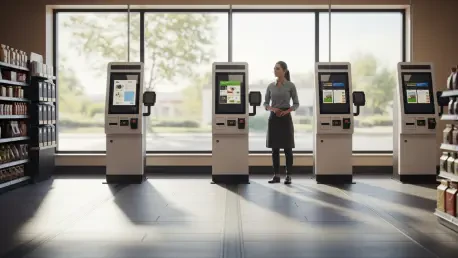

The transition from manual labor to automated systems in the retail sector reached a pivotal turning point when Rhode Island established a first-of-its-kind legal mandate for supermarkets. Governor Dan McKee signed legislation that requires a specific ratio of human supervisors to self-checkout machines, signaling a shift away from the completely unmonitored model. This movement was heavily supported by the United Food and Commercial Workers (UFCW) Local 328, which sought to protect workers and shoppers alike. The “Affordable Groceries and Good Jobs Campaign” emerged as a central framework to ensure that technological advancements do not erode job security or community service standards.
The Evolution of Retail Checkout Systems and Legal Precedents
The shift toward automation has historically been driven by the desire to streamline operations and reduce overhead, yet this progress often overlooked the social and legal complexities of the retail floor. Major grocery retailers initially embraced self-service kiosks as a panacea for long queues, but the State of Rhode Island recently redefined these boundaries. By involving key stakeholders like the UFCW, the state created a legal precedent that prioritizes the workforce over unchecked automation. This legislation recognizes that while technology can assist, it cannot entirely replace the nuanced oversight that human employees provide in a high-traffic environment.
The “Affordable Groceries and Good Jobs Campaign” served as the primary vehicle for this change, highlighting the tension between corporate efficiency and labor stability. This initiative was not merely about resisting technology but about finding a sustainable middle ground where grocery stores remain accessible and jobs remain viable. By implementing these standards, Rhode Island established a benchmark for how local governments can intervene to maintain a balanced marketplace.
Comparative Analysis of Automated Kiosks and Supervised Staffing
Operational Efficiency and the 1:3 Staffing Ratio
Under the current legal framework, stores must maintain a staffing ratio of one dedicated employee for every three kiosks. This requirement for “exclusive focus” is a significant departure from standard retail practices where staff are often expected to multitask across several departments simultaneously. While traditional automated systems were marketed as a way to reduce labor costs, the Rhode Island mandate enforces a structured presence to manage the flow of traffic and troubleshoot technical errors in real-time.
As the 2027 implementation date approaches, grocery managers are tasked with rethinking their operational planning to meet these strict ratios. Unsupervised kiosks might offer higher throughput in theory, but in practice, technical glitches frequently cause bottlenecks that human monitors can resolve quickly. The shift toward a supervised model aims to harmonize the speed of digital scanning with the reliability of human intervention, ensuring that the checkout process remains fluid during peak shopping hours.
Shrinkage Control and Economic Impact Metrics
Financial sustainability is at the heart of this legislative push, particularly regarding the issue of retail “shrink,” which includes both theft and scanning errors. In 2022, retailers in Rhode Island reported financial losses totaling approximately $244 million due to unmitigated shoplifting and mistakes at unmonitored self-checkout lanes. By comparing the cost of hiring a dedicated monitor to the massive financial toll of unmitigated theft, the argument for human oversight becomes economically compelling for large-scale operations.
Human oversight provides a layer of security that automated cameras and weight sensors often fail to achieve. While kiosks can flag weight discrepancies, they cannot discern intent or catch sophisticated bypass techniques as effectively as a trained staff member. Therefore, the investment in a 1:3 staffing ratio acts as a preventative measure that may ultimately save retailers more money than it costs in wages.
User Accessibility and Service Quality
The human element also plays a crucial role in maintaining user accessibility across different customer demographics. While tech-savvy younger shoppers might navigate digital interfaces with ease, many senior citizens frequently experience frustration with automated systems that lack immediate, intuitive support. Human monitors alleviate the “undue burden” placed on floor staff who are otherwise forced to leave their primary duties to troubleshoot machine errors or assist with heavy items.
Customer satisfaction tends to remain higher when a staff member is readily available to provide manual assistance or correct scanning glitches before they escalate into significant delays. This contrast is most evident when comparing fully self-service zones with supervised kiosks; the latter provides a safety net that ensures quality service is not sacrificed for the sake of modernization.
Compliance Obstacles and Enforcement Realities in Grocery Retail
The path to compliance is paved with significant financial risks, including daily fines of up to $500 per violation for those who fail to meet the staffing standards. These penalties were specifically structured to mirror the wages of a high-earning retail clerk, ensuring that it remains more cost-effective for stores to hire staff than to ignore the law. Retailers do have some breathing room during off-peak windows from 8:00 p.m. to 8:00 a.m., but peak hours present intense logistical hurdles.
Managers now face the difficult task of navigating persistent staffing shortages while meeting the strict legal requirements for dedicated kiosk supervision. The requirement for workers to have an “exclusive duty” means they cannot be pulled away for other tasks, creating a rigid staffing environment that challenges traditional retail flexibility. Successfully managing these peak-hour demands requires a level of precision in scheduling that many grocery stores are still struggling to master.
Strategic Recommendations for Hybrid Checkout Environments
States such as California, New York, and Washington looked toward the Rhode Island model as a potential blueprint for their own legislative sessions throughout the current year. By integrating technology like electronic shelf labels with mandated human oversight, retailers created a balanced environment that protected profits and preserved high-quality jobs. The legal shift in Rhode Island suggested that the future of grocery retail was not found in total automation, but in a hybrid approach that valued human labor alongside digital convenience. Ultimately, this strategy offered a path forward that prioritized both operational efficiency and the long-term welfare of the community.