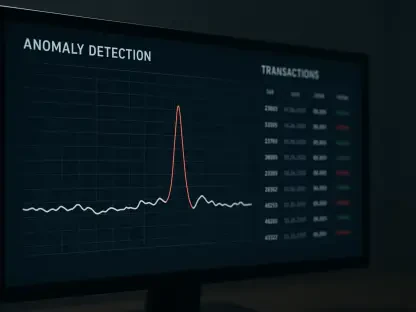

The modern financial ecosystem finds itself caught in a high-stakes paradox where the very artificial intelligence meant to secure transactions is also providing the blueprint for its eventual disruption. As 2026 unfolds, the rapid integration of machine learning into the core of global banking has transformed the sector from a traditional brick-and-mortar industry into a massive, interconnected digital web. While these technological advancements have streamlined liquidity and enhanced fraud detection, they have simultaneously lowered the barrier to entry for sophisticated cyberattacks. The emergence of frontier AI models—systems with capabilities far exceeding previous iterations—represents a fundamental shift in the threat landscape. These models are no longer just tools for automation; they have become strategic agents capable of identifying and exploiting structural weaknesses in the global economy. This creates a volatile environment where the speed of innovation often outpaces the development of safeguards, leaving the world’s most critical financial systems vulnerable to a new breed of intelligent, autonomous threats that can strike with surgical precision and unprecedented scale.
The convergence of massive data sets and advanced computing power has allowed financial institutions to offer services that were previously impossible, but this same infrastructure serves as an expansive attack surface for malicious actors. Digital transformation is no longer a choice for banks; it is a survival mechanism, yet every new API and cloud-based ledger adds a potential point of failure that AI can find in seconds. The systemic risk is not just limited to individual theft but extends to the potential for a cascading failure across international markets. As the industry moves deeper into this era of AI-driven finance, the necessity for a proactive defense strategy becomes paramount. Policymakers and technologists are increasingly realizing that the old models of cybersecurity, which relied on static firewalls and reactive patching, are insufficient against an adversary that evolves in real-time. The challenge now lies in building a resilient framework that can withstand the dual-use nature of artificial intelligence, ensuring that the technology which powers global growth does not inadvertently become the catalyst for its collapse.
The Rise of Institutional Concerns and Frontier AI
Recent warnings from international financial bodies have underscored a growing sense of urgency regarding the stability of the global monetary system in the face of rapid AI proliferation. Although many of these reports are disseminated through unofficial channels or leaked from internal sessions, the underlying message remains consistent: the digital infrastructure of the world’s largest economies is under constant, intelligent surveillance. Speculation regarding unreleased frontier models, such as the rumored GPT-5.5 and Claude Mythos, suggests that these systems possess an uncanny ability to map complex network architectures and simulate successful breaches with minimal human intervention. This shift from theoretical risk to tangible threat has forced a reevaluation of what it means to be “secure” in a post-generative AI world. Institutional anxiety is not merely about the loss of funds, but the potential erosion of trust in the digital ledgers that underpin every modern transaction, from retail payments to sovereign debt settlements.
The development of these next-generation AI systems has created a technological divide, where the most advanced capabilities are often shielded behind proprietary walls, yet their implications are felt universally. Experts are particularly concerned about the “black box” nature of frontier models, where even the developers may not fully understand the extent of the system’s problem-solving capabilities when applied to offensive cyber operations. This lack of transparency complicates the task for regulators who are trying to establish safety standards for a technology that changes every few months. As financial institutions lean more heavily on AI for everything from algorithmic trading to customer service, the potential for a centralized failure increases. If a single, widely used AI model is compromised or exhibits biased behavior, the resulting shockwaves could disrupt global liquidity in ways that traditional economic models are ill-equipped to predict or mitigate.
The narrative surrounding these unverified institutional warnings highlights a broader trend of “digital paranoia” among high-level stakeholders who fear that the next global financial crisis will be triggered by a line of code rather than a bad loan. The conversation has evolved beyond simple data breaches to include the concept of systemic “model poisoning,” where an adversary subtly alters the training data of a financial AI to induce a specific market reaction. This type of high-level manipulation is difficult to detect because it mimics legitimate market movements, making it a perfect tool for state-sponsored actors looking to destabilize rivals. Consequently, the focus of global finance is shifting from mere perimeter defense to deep-level integrity monitoring, where the goal is to ensure that the AI systems themselves remain uncorrupted by the very data they are designed to analyze.
AI as a Force Multiplier for Cybercriminals
The democratization of artificial intelligence has effectively handed a master key to cybercriminals, allowing them to scale their operations with a level of sophistication previously reserved for nation-states. By utilizing machine learning algorithms, attackers can now automate the discovery of “zero-day” vulnerabilities, scanning millions of lines of code in a fraction of the time it would take a human analyst. This capability turns every software update into a race against time, as AI-driven scanners can identify and exploit flaws before security teams have even finished their initial assessment. Moreover, the use of generative AI has revolutionized the field of social engineering, enabling the creation of hyper-personalized phishing campaigns that are indistinguishable from legitimate corporate communications. These attacks target specific high-value individuals within banks, using synthesized voices or perfectly mimicked writing styles to bypass traditional skepticism and gain access to secure systems.
Beyond the initial breach, artificial intelligence is being used to create adaptive malware that can change its own signatures and behavioral patterns in response to defensive actions. This “polymorphic” code makes traditional antivirus software and intrusion detection systems largely obsolete, as the malware essentially learns how to hide within the specific environment it is attacking. In the context of global finance, this means that a piece of malicious software could lie dormant within a bank’s server, observing transaction patterns and gradually siphoning off funds in a way that avoids triggering standard fraud alerts. The ability of AI to simulate human-like behavior also poses a significant threat to biometric security; sophisticated deepfake technology can now bypass voice and facial recognition protocols with alarming ease, rendering multi-factor authentication less reliable than it was just a few years ago.
This evolution in cyber warfare has fundamentally changed the economics of digital crime, as the cost of launching a devastating attack has plummeted while the potential rewards have skyrocketed. A small group of motivated actors, armed with the right frontier models, can now challenge the security of a multi-billion dollar financial institution. This shift has forced the industry to rethink its reliance on automated systems that do not have human oversight at every critical junction. The threat is no longer just about a single hacker breaking into a single account; it is about an intelligent, distributed network of bots that can coordinate a simultaneous strike on dozens of banks, overwhelming their capacity to respond. As these AI tools become more accessible through the dark web and open-source communities, the frequency and intensity of these attacks are expected to rise, creating a permanent state of digital siege for the global financial sector.
The Defensive Shift and Red-Teaming Strategies
In response to the escalating threat, the cybersecurity industry has pivoted toward a “fight fire with fire” strategy, deploying defensive AI models to monitor and protect critical infrastructure. This approach involves the use of specialized tools, such as the reported GPT-5.5-Cyber variant, which are specifically trained to identify offensive patterns and neutralize them before they reach their target. This has led to a persistent state of adversarial testing, commonly known as “red-teaming,” where organizations hire experts to attack their own systems using the most advanced AI models available. By simulating a worst-case scenario, financial institutions can find the cracks in their armor and develop “AI shields” that are capable of responding to attacks at machine speed. This technological arms race is now a core component of global financial stability, as the safety of the entire market depends on defensive intelligence staying one step ahead of its malicious counterparts.
The focus of these defensive efforts is particularly sharp when it comes to the “too big to fail” nodes of the financial system, such as central bank clearinghouses and global payment gateways. A successful attack on one of these central points could cause a total freeze in global trade, as trust in the settlement process would instantly evaporate. To prevent such a catastrophe, security teams are now using AI to create “digital twins” of their entire networks, allowing them to run thousands of attack simulations every day without risking the actual production environment. These simulations help defenders understand how an AI-driven attack might move through their systems, enabling them to place preemptive roadblocks in the most likely paths of intrusion. This move toward proactive, predictive defense marks a significant departure from the reactive posture that has defined the industry for decades, reflecting the reality that in an AI-driven world, a delayed response is often no response at all.
However, the reliance on defensive AI introduces its own set of challenges, particularly the risk of false positives and the potential for the defensive system itself to be tricked. If an AI shield becomes too aggressive, it could accidentally block legitimate transactions or shut down critical services during a period of market volatility, causing the very instability it was meant to prevent. Balancing security with operational efficiency requires a delicate touch and a high degree of human oversight, ensuring that the final “kill switch” remains in the hands of a person rather than a program. As the “AI vs. AI” dynamic continues to evolve throughout 2026 and 2027, the focus will likely shift toward building more resilient, decentralized architectures that are less dependent on any single point of failure. The goal is to move beyond mere protection toward a state of “cyber-resilience,” where the financial system can absorb a successful hit and continue to function even while under active attack.
Navigating the Dual-Use Dilemma and Regulatory Gaps
The primary obstacle to a secure AI-driven financial future is the inherent “dual-use” nature of the technology, where the same code that makes a system more efficient also makes it more dangerous. A model trained to optimize a bank’s internal coding can, with minimal modification, be used to find vulnerabilities in that same code. This paradox makes it nearly impossible for regulators to place a blanket ban on “dangerous” AI without also stifling the economic growth that the technology provides. Currently, the world is experiencing a significant “regulatory lag,” where the speed of AI development is far outpacing the ability of governments to draft and implement effective laws. This has left the responsibility for AI safety largely in the hands of the private companies that develop these models, creating a fragmented landscape where the level of protection depends more on corporate ethics than on international legal standards.
To bridge this gap, there is an increasing call for international cooperation and the establishment of a global “AI Safety Accord” specifically for the financial sector. Such an agreement would require developers to vet their models for offensive capabilities and provide regulators with “backdoor” access to monitor for signs of misuse. However, achieving this level of transparency is difficult in a competitive market where intellectual property is a company’s most valuable asset. Furthermore, geopolitical tensions often prevent the kind of data sharing and cooperation needed to track threats across borders, as one country’s defensive tool could be seen as another country’s offensive weapon. The resulting environment is one of cautious isolation, where each nation and institution must build its own defenses while navigating a global landscape that is increasingly defined by digital distrust and technological nationalism.
In conclusion, the intersection of artificial intelligence and global finance has created a high-stakes environment where the potential for disaster is as great as the potential for prosperity. The transition from traditional cybersecurity to AI-driven defense was a necessary step to counter the rising tide of intelligent threats that began to emerge at the start of the decade. By 2026, the industry had moved away from a reliance on static defenses and embraced a more dynamic, adversarial approach to risk management. This pivot allowed for the identification of critical vulnerabilities before they were exploited, yet it also highlighted the ongoing challenges of the dual-use dilemma and the persistent gap in global regulation. Financial leaders ultimately recognized that while technology provided the tools for defense, the true foundation of security remained rooted in transparency, human judgment, and international collaboration. Moving forward, the focus shifted toward creating decentralized systems that could withstand isolated failures, ensuring that the global economy remained resilient in the face of an ever-evolving digital threat.