
A customer’s risk profile can shift radically after onboarding due to changes in beneficial ownership or new exposures to international sanctions. In the current landscape of 2026, the global financial system is grappling with a crisis of fragmentation that has left institutions vulnerable to increasingly sophisticated criminal enterprises. While the tools for detection have never been more advanced, the organizational frameworks through which they operate remain stubbornly disconnected. This systemic gap between the fluid nature of financial crime and the compartmentalized reality of institutional defense mechanisms creates dangerous blind spots. Criminal networks now move with ease across diverse jurisdictions and product lines, exploiting the fact that most bank departments still operate in isolation. The fundamental challenge lies not in the quality of individual compliance technologies, but in the lack of a cohesive narrative that links identity verification, transaction monitoring, and sanctions screening into a single, unified view of risk. As illicit actors become more adept at finding the seams between these departmental mandates, the necessity for an integrated architecture has transformed from a theoretical goal into an urgent operational requirement for maintaining the integrity of the global markets.
Structural Impediments: The Silo Problem in Modern Institutions
Financial institutions have historically maintained a rigid separation between their compliance functions, often treating fraud prevention, Anti-Money Laundering efforts, and initial onboarding as entirely independent workstreams. This organizational structure creates what industry experts call a “wrong hands” problem, where critical data points are trapped within a specific team’s digital ecosystem. For example, a transaction monitoring system might flag a series of unusual wire transfers that appear suspicious from a behavioral standpoint, but if that system does not share data with the fraud unit, the broader pattern of account takeover or professional money laundering remains invisible. These internal boundaries prevent a holistic understanding of the customer journey, leaving investigators to make decisions based on fragments of information rather than a complete picture. Because each department often relies on its own proprietary software and database, the institution effectively creates multiple, competing versions of a customer’s risk identity, which only serves to aid those seeking to hide illicit activities within the noise of high-volume financial traffic.
The persistence of these silos is often reinforced by diverging performance metrics and cultural barriers within the leadership of large banks and fintech firms. While a fraud department might be evaluated based on the immediate capital it protects or the speed with which it resolves customer disputes, an AML team is typically measured by the quality of its regulatory filings and its adherence to complex legal timelines. These differing goals naturally reduce the incentive for cross-departmental collaboration, as each unit prioritizes its own specific mandate over the collective security of the organization. To effectively address the fragmentation crisis, executive leadership must transition away from these isolated success metrics and redefine institutional health based on total risk visibility. This requires a fundamental shift in how personnel are incentivized, moving toward a culture where data sharing and inter-departmental cooperation are the primary drivers of compliance effectiveness. Without this cultural realignment, even the most advanced technological solutions will struggle to bridge the gaps created by a fragmented organizational chart.
Dynamic Risk Evolution: Bridging the Onboarding and Monitoring Gap
A major point of failure in current compliance frameworks is the tendency to treat Know Your Customer protocols as a one-time hurdle to be cleared during the account opening process. In a world where financial relationships can span decades, viewing identity verification as a static, point-in-time event is a recipe for disaster. Risk is inherently dynamic; a corporate entity that appears low-risk today may undergo a change in ultimate beneficial ownership tomorrow, or its primary geographic footprint may shift into a jurisdiction newly targeted by international sanctions. When onboarding data is not continuously integrated with real-time transactional monitoring, the institution is forced to rely on an obsolete snapshot of the customer that no longer reflects reality. This disconnect allows emerging threats to persist for months or even years before being detected during a manual periodic review. The modern landscape demands that the transition from a “new lead” to an “active account” be handled not as a handoff between two departments, but as a continuous cycle of data enrichment.
Closing the gap between onboarding and ongoing monitoring requires a shift toward automated risk updates that trigger whenever a significant change in the customer’s profile is detected. This approach ensures that the initial due diligence performed at the start of the relationship serves as a living baseline rather than a dead document. By linking the internal systems that handle account opening with the real-time engines that monitor global sanctions and adverse media, firms can create a responsive defense mechanism that adjusts a customer’s risk score in the moment. For instance, if a client’s shell company is linked to a newly identified high-risk individual in an external registry, that information should immediately flow into the transaction monitoring logic to prioritize reviews of that client’s recent wire transfers. This level of connectivity transforms compliance from a reactive, bureaucratic process into a proactive shield, ensuring that the institution is always operating with the most current understanding of its exposure to financial crime and regulatory repercussions.
Data Integrity: Establishing a Single Source of Truth
The internal proliferation of data across various compliance systems is perhaps the most significant yet invisible obstacle to effective risk management in 2026. Within a single large-scale financial institution, a single customer may be represented by different data sets across multiple legacy platforms, leading to a scenario where different departments assign entirely different risk scores to the same individual. This lack of a single source of truth means that no single investigator has access to the comprehensive picture of a customer’s global activity, which directly compromises the institution’s ability to detect sophisticated laundering schemes. Internal data fragmentation is often a more pressing security risk than the administrative challenge of meeting diverse international regulations, as it prevents the bank from seeing the “signal” of criminal activity through the “noise” of disconnected alerts. Solving this requires a unified data architecture that centralizes risk information and ensures that every department is working from the same verified set of customer attributes.
Establishing this unified architecture involves moving beyond the mere collection of data toward a model of entity resolution and data normalization. When an institution can confidently link accounts, transactions, and ownership structures across its various business lines and geographic branches, it gains the ability to see patterns that would otherwise remain hidden. This centralized intelligence allows for a more consistent application of risk appetites and ensures that a high-risk signal in one part of the business is immediately visible to all other relevant teams. Furthermore, a single source of truth dramatically improves the efficiency of the compliance staff by eliminating the need for manual data reconciliation between different systems. Instead of spending hours trying to verify which risk score is the most accurate, investigators can focus their expertise on analyzing the actual behavior of the customer. This transition to a cohesive data environment is the essential prerequisite for any successful modernization effort, providing the bedrock upon which more advanced analytical tools can be built.
Perpetual Assessment: The Shift to Continuous Risk Recalculation
The industry is rapidly coalescing around the concept of Perpetual Client Risk Assessment as the necessary replacement for traditional periodic reviews. Historically, banks would review high-risk clients every year and low-risk clients every three to five years, but this cadence is no longer sufficient to keep pace with the speed of the digital economy. Perpetual assessment utilizes automated feeds and behavioral analytics to recalculate a client’s risk score daily or even hourly based on incoming data signals. Whether it is a change in a corporate registry, an unusual spike in transaction volume, or the appearance of a client’s name in a global news report, the system responds instantly to the new information. This model shifts the compliance posture from a reactive, calendar-based schedule to a proactive, event-driven strategy. It ensures that the institution’s resources are always focused on the most current threats, rather than being wasted on routine reviews of accounts that have shown no signs of change or suspicious activity.
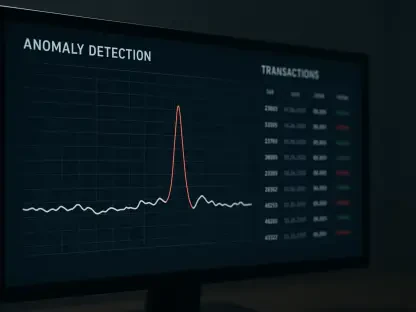
The implementation of continuous risk assessment also allows for the development of highly specific behavioral baselines that are tailored to particular customer segments. Rather than judging a transaction against an abstract, one-size-fits-all threshold, a perpetual assessment engine compares the activity against the customer’s own historical patterns and the typical behavior of their peers. This contextual intelligence is only possible when the initial onboarding data and the ongoing monitoring data are in constant dialogue. If a small business that typically handles local retail transactions suddenly receives a large international wire from a high-risk jurisdiction, the system can instantly flag this as an anomaly because it understands the baseline established during the KYC process. This level of precision significantly reduces the number of false positives that plague traditional systems, allowing compliance teams to spend their time on the rare, high-value alerts that truly indicate criminal intent. By embracing this dynamic model, financial institutions can create a more resilient and efficient defense that adapts to the shifting tactics of money launderers.
The Intelligence Foundation: Why Integration Must Precede Artificial Intelligence
There is a growing consensus in 2026 that while Artificial Intelligence offers transformative potential for financial compliance, it cannot function as a standalone solution for a fragmented system. Many organizations have attempted to “layer” AI on top of disconnected data sets, only to find that the technology produces unreliable results or “hallucinated” confidence in its risk assessments. AI models are only as effective as the data they are trained on; if the input is incomplete, inconsistent, or trapped in separate silos, the resulting insights will be fundamentally flawed. A model that only analyzes transaction data without the context of the customer’s stated occupation, geographic ties, and beneficial ownership will inevitably miss the subtle micro-shifts in behavior that signal the beginning of a laundering scheme. Therefore, the strategic mandate for any institution is to prioritize the integration of its data environment before attempting to implement complex machine learning algorithms. Integration provides the comprehensive “view” that AI needs to actually improve the quality of detection.
Once a unified data foundation is established, AI can serve as a powerful quality facilitator that enhances the capabilities of the human workforce. Rather than replacing investigators, the technology acts as a high-speed filter that identifies complex relationships and patterns that are too subtle for the human eye to catch across millions of daily transactions. For instance, AI can be used to identify “mule networks” where dozens of seemingly unrelated accounts are moving small amounts of money in a coordinated fashion—a pattern that is almost impossible to detect when looking at individual accounts in isolation. By surfacing these sophisticated threats and providing the underlying evidence in a clear, digestible format, AI allows compliance teams to operate with a much higher level of precision. The synergy between a connected data architecture and advanced analytics creates a defensive system that is both scalable and accurate, ensuring that the institution can keep pace with the high-velocity world of modern finance without sacrificing the quality of its risk management.
Strategic Modernization: Efficiency as a Core Security Metric
The move toward a unified compliance framework is increasingly recognized not just as a security necessity, but as a primary driver of operational efficiency. In the past, institutions often believed that adding more specialist tools and personnel was the only way to improve their defensive posture, resulting in a bloated architecture that was both expensive and difficult to manage. However, experience has shown that a firm operating ten “best-in-class” but siloed tools is often less secure than a firm with a smaller number of integrated platforms that share a common data lake. Connectivity allows for the automation of repetitive tasks, such as data entry and basic background checks, which currently consume a significant portion of a compliance team’s time. By streamlining these workflows, institutions can reallocate their most expensive and valuable resources—their human investigators—toward the high-level analysis of truly complex criminal threats. This shift improves the overall ROI of the compliance department while simultaneously strengthening the institution’s protection against illicit actors.
Furthermore, a unified approach provides a single, defensible audit trail that is invaluable when dealing with modern regulatory bodies. In 2026, regulators are no longer satisfied with a “check-the-box” approach to compliance; they demand that institutions be able to explain the specific reasoning behind their risk decisions and demonstrate how data flows through their systems. Fragmentation makes this transparency almost impossible, as the evidence for a particular decision might be scattered across three different platforms. An integrated architecture ensures that every signal, from the initial KYC check to the latest transaction alert, is recorded in a consistent format that can be easily retrieved during an audit. This level of traceability not only reduces the risk of heavy fines and legal repercussions but also builds trust with supervisory authorities. By viewing efficiency and connectivity as central components of their security strategy, financial institutions can future-proof their operations and ensure they are prepared for the evolving challenges of the global financial landscape.
Building a Resilient Future for Global Compliance
The industry reached a critical realization where the historical reliance on disconnected defensive layers proved inadequate against the agility of modern financial crime networks. Throughout the recent progress of this decade, institutions discovered that the most successful criminal operations flourished specifically because they could navigate the gaps between isolated departmental mandates. In response, the most forward-thinking organizations shifted their focus away from simply acquiring new technology toward the much more difficult task of structural and data integration. This transition was marked by a move toward perpetual risk assessment and a commitment to establishing a single source of truth across all business lines. By prioritizing the connectivity of their systems, these firms successfully reduced the noise of false positives and provided their investigators with the contextual intelligence needed to identify organized laundering schemes that were previously invisible. The results of these efforts demonstrated that a unified risk picture was the only viable path for maintaining institutional integrity in a borderless digital economy.
The transition toward a connected risk framework was ultimately defined by a renewed emphasis on human expertise supported by high-quality, integrated data. Leaders in the sector recognized that while automation could handle the vast majority of routine checks, the most dangerous threats still required the nuanced judgment of experienced compliance professionals. This realization led to the widespread adoption of unified dashboards that empowered personnel to see the full customer journey in a single view, significantly enhancing their ability to make informed, ethical decisions. Regulators supported this shift, increasingly demanding the level of transparency and explainability that only a unified system could provide. As the industry moved past the fragmentation crisis, the focus turned to the long-term sustainability of these integrated systems, ensuring they remained flexible enough to adapt to future criminal tactics. The successful move toward connectivity not only protected individual institutions but also contributed to a more resilient and transparent global financial ecosystem, proving that the end of fragmentation was a necessary evolution for the modern age.