
The sudden detention of Zhao Long, the chairman of HCR Co., Ltd., has sent shockwaves throughout the Shanghai Stock Exchange’s STAR Market, signaling a decisive shift in how regulators approach high-level corporate misconduct. It is a stark departure from the celebratory atmosphere that defined the company’s public debut exactly six years ago, which happened to fall on the same calendar day as this recent arrest. At that time, HCR was viewed as a pioneering force in the data analytics and market research sector, a tech-driven darling that promised to leverage big data for transformative industrial insights. However, recent findings from the China Securities Regulatory Commission have painted a much darker picture, suggesting that the firm’s entire trajectory as a public entity was founded upon a sophisticated and systemic architecture of financial deception. This case is no longer just a matter of administrative oversight; it has evolved into a high-stakes criminal investigation that challenges the integrity of the entire secondary market. As authorities move from imposing fines to taking individuals into custody, the message to the corporate world is clear: the era of relative leniency for financial misreporting is over. The investigation highlights a meticulously planned “fraud assembly line” that operated with clinical precision, ensuring that the company’s books always appeared healthy regardless of its actual operational performance. This watershed moment serves as a warning for investors and executives alike about the deepening scrutiny surrounding information disclosure in a rapidly maturing regulatory environment that prioritizes transparency above all else.
A Legacy of Fabricated Success
Financial Manipulation: The Role of Beijing Xintang Puhua Technology
The core of the investigation centers on the activities of a key subsidiary, Beijing Xintang Puhua Technology, which served as the primary vehicle for HCR’s financial distortions. By engaging in a series of hollow transactions that lacked any genuine commercial substance, the company was able to manufacture an illusion of growth and profitability. These deceptive practices involved booking revenue prematurely and documenting services that were never actually rendered to clients. Such aggressive accounting tactics were designed to mislead regulators and provide a false sense of security to the investing public. The complexity of these schemes suggests a high degree of internal coordination, as the “fraud assembly line” required multiple layers of approval to bypass standard audit protocols. This was not a localized failure but a fundamental component of the corporate strategy intended to maintain the appearance of market leadership.
The investigative report details how these fabricated transactions were integrated into the broader corporate balance sheet to obscure the true financial health of the organization. By cycling funds through various shell entities and inflating the value of internal contracts, HCR created a circular flow of capital that appeared as legitimate business income. This method allowed the company to meet the high performance expectations associated with the STAR Market, where growth metrics are under constant scrutiny. However, the lack of real-world cash flow eventually caught the attention of forensic auditors, who noted that the reported profits did not align with the company’s tax filings or its operational expenditures. The revelation of this discrepancy has now forced a complete re-evaluation of every financial statement issued by the firm since its initial public offering, casting doubt on the validity of its entire business model and its historical market valuation.
Profit Inflation: The Scale of Deceptive Bookkeeping
The magnitude of the profit overstatement at HCR is unprecedented for a company of its size, with investigations revealing that a significant portion of its reported income was entirely non-existent. Prior to its listing, the firm allegedly inflated its profits to meet the stringent requirements of the exchange, a move that set the stage for years of continued manipulation. By the time the 2020 fiscal year concluded, over 60% of the company’s reported profits were found to be fabricated through the same “fraud assembly line” techniques used in previous years. This was not a minor adjustment or a difference in accounting opinion; it was a deliberate effort to mask a business that was struggling to find its footing in a competitive data analytics landscape. Even as real-world losses began to mount, management chose to “dress up” the books further, hoping to buy enough time to achieve a genuine turnaround that never materialized.
The systematic nature of this inflation meant that the company was effectively operating two sets of books—one for internal management and another for public consumption. This deceptive practice allowed the leadership to maintain high share prices and secure additional financing under false pretenses. For example, when the business experienced a natural downturn in market demand for its core services, the accounting department was instructed to invent new contracts with fictional clients to offset the decline. This created a dangerous feedback loop where the need to cover up previous lies necessitated even larger and more daring fabrications in subsequent quarters. The cumulative effect of these actions has left a massive hole in the company’s equity, leaving shareholders to deal with the fallout of a valuation that was built on nothing more than creative bookkeeping and a complete disregard for ethical standards.
Shifting from Fines to Prison Time
Criminal Liability: The Legal Turning Point
The transition from administrative penalties to criminal detention for Zhao Long marks a significant escalation in the regulatory response to securities fraud. Historically, many cases of financial misreporting were settled with monetary fines and public reprimands, which some critics argued were merely the “cost of doing business.” However, the severity of the HCR case has triggered a more robust legal mechanism involving the criminal prosecution of the individuals responsible for the deception. The legal system is now focusing on the intentional non-disclosure and illegal disclosure of critical financial information that led to massive investor losses. This shift suggests that authorities are no longer satisfied with corporate-level accountability and are now targeting the specific decision-makers who orchestrated the fraud to ensure that there is a personal price to pay for such activities.
Legal experts specialized in the capital markets note that inflating profits by more than 30% typically crosses the threshold into criminal territory within this jurisdiction. Given that HCR’s inflation rates were documented to be double or even triple that benchmark in certain reporting periods, the case for criminal negligence and fraud is particularly strong. The prosecution is expected to argue that the deception was not a byproduct of poor management but a calculated criminal enterprise designed to defraud the public market. This approach is intended to serve as a powerful deterrent, signaling to the entire financial community that the protection of market integrity is a matter of national security. By treating these violations as crimes rather than mere regulatory infractions, the state is reinforcing the principle that the duty of disclosure is a non-negotiable obligation for any entity wishing to access public capital.
Personal Consequences: The End of Professional Careers
The potential sentencing for the HCR leadership reflects the gravity of the crimes alleged, with legal analysts predicting prison terms ranging from five to ten years for the most senior executives. Such sentences are typically accompanied by substantial personal fines and a permanent ban from participating in the securities market in any capacity. For individuals like Zhao Long, who spent decades building a reputation as a visionary in the tech industry, these consequences represent a total collapse of their professional and social standing. The “lifetime ban” is a particularly potent tool used by regulators to purge the industry of bad actors, ensuring that those who have demonstrated a fundamental lack of integrity can never again hold a position of fiduciary responsibility. This effectively ends their careers, as they are prohibited from serving as directors, officers, or even consultants for public companies.
Beyond the legal penalties, the social and reputational fallout of such a high-profile arrest is immense. The exposure of the “fraud assembly line” has turned former business partners and associates into witnesses for the prosecution, as many seek to distance themselves from the scandal. The once-celebrated executive team is now facing a future of legal battles and the likely seizure of personal assets acquired through the proceeds of the fraudulent activity. This case serves as a cautionary tale about the perils of prioritizing short-term market perception over long-term operational reality. The personal liberty of corporate leaders is now directly tied to the accuracy of their financial disclosures, a reality that is fundamentally changing the risk calculus for boards of directors across all sectors. The era of hiding behind a corporate veil is rapidly closing as the legal system demands individual accountability for collective failures.
Corporate Restructuring Amidst Suspicion
Strategic Divestitures: The Xintang Puhua Fire Sale
A major red flag in the timeline of HCR’s downfall was the sudden and highly suspicious “fire sale” of its primary subsidiary, Beijing Xintang Puhua Technology. Shortly after the initial regulatory inquiries began, the company sold the unit for a fraction of its original acquisition cost, a move that many observers interpreted as an attempt to destroy evidence or distance the parent company from the fraud. The details of the transaction were equally troubling; the buyer appeared to be a newly formed entity with no physical office, no employees, and a residential address for its corporate registration. Such “paper companies” are frequently used in money laundering or asset stripping schemes, raising further questions about the legitimacy of the divestiture. This move did little to appease regulators and instead intensified the investigation into whether management was attempting to obstruct justice.
The sale of Xintang Puhua also highlighted a broader pattern of asset mismanagement that characterized HCR’s final years of operation. By offloading a subsidiary that had been the engine of its reported growth, the company essentially admitted that its previous valuations were hollow. This divestiture left the parent company with a hollowed-out balance sheet and a lack of core operational capabilities, making any hope of a legitimate recovery almost impossible. Investors viewed the sale as the final confirmation that the company’s leadership was more interested in self-preservation than in protecting shareholder value. The transaction is now being scrutinized as a potential case of asset misappropriation, with investigators looking into whether any of the sale proceeds were diverted to private accounts held by the executives who were already planning their exit from the firm.
Leadership Transitions: The Erosion of Investor Confidence
In a desperate attempt to stabilize the company’s plummeting reputation, HCR appointed a new president with a background in artificial intelligence and high-performance computing resources. The goal of this leadership change was to pivot the company’s narrative away from market research and toward the burgeoning field of AI, hoping to capitalize on the massive investor interest in that sector. However, this strategic shift was viewed with extreme skepticism by the market, especially when it was revealed that several high-ranking executives had been selling off their personal shares just days before the chairman’s detention. This well-timed exit by insiders suggested that the leadership knew the arrest was imminent and chose to cash out at the expense of the general public. Such actions have completely eroded what remained of investor confidence, making the new president’s task of restructuring nearly impossible.
The internal culture at HCR appears to have been one of secrecy and self-interest, where the top tier of management operated independently of the board’s oversight. Even as the new leadership promised a “new era” of transparency and innovation, the shadow of the previous administration’s crimes continued to loom large. The share dumping by insiders served as a final betrayal to the 20,000 shareholders who had held onto their positions in the hope of a recovery. This lack of alignment between management and shareholders is a classic indicator of a failed corporate governance structure. In the wake of these events, the company has found it difficult to attract new talent or secure the necessary partnerships to keep its AI initiatives afloat. The focus has shifted from growth to survival, as the company remains mired in litigation and regulatory audits that drain its remaining resources.
The Economic and Regulatory Fallout
Market Volatility: Impact on Shareholders and the STAR Market
The market reaction to the news of the chairman’s detention was immediate and devastating, resulting in a precipitous drop in HCR’s stock price that wiped out nearly half of its market capitalization in a single trading session. This volatility has had a profound impact on individual and institutional investors alike, many of whom saw their portfolios decimated by the sudden collapse. Despite the company occasionally reporting modest increases in revenue from its remaining business lines, the sheer scale of the historical losses and the weight of the ongoing criminal proceedings have made the stock virtually uninvestable. For the 20,000 shareholders currently holding HCR stock, the prospect of a recovery is increasingly dim as the company’s primary assets remain under investigation or have been sold off under questionable circumstances.
This incident has also raised broader concerns about the health and oversight of the STAR Market, which was designed to be a high-tech incubator for the nation’s most promising firms. The discovery of a “fraud assembly line” at one of its featured companies has forced the exchange to reconsider its listing requirements and its ongoing monitoring processes. There is now a push for more frequent and more intrusive audits of tech firms, whose complex business models can sometimes hide a lack of commercial substance. The fallout from the HCR scandal is likely to result in a “flight to quality,” where investors move their capital toward established firms with long track records of transparent reporting. This shift could make it more difficult for legitimate startups to raise capital, as the entire sector now carries the stigma of the HCR deception. The market’s trust has been broken, and rebuilding it will require years of consistent, honest performance from all participants.
Strategic Pathways for Restoring Market Integrity
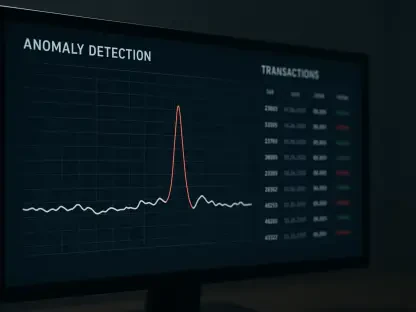
Stakeholders prioritized the implementation of more rigorous internal audit controls to prevent the recurrence of such systemic failures across the broader financial landscape. They emphasized that forensic accounting teams were deployed earlier in the acquisition process to verify the commercial substance of all third-party transactions involving subsidiaries. Regulatory bodies also fast-tracked the adoption of real-time monitoring systems that flagged anomalies in revenue booking before they escalated into multi-year fraud cycles. Investors learned that diversifying portfolios away from companies with opaque subsidiary structures was a necessary defense mechanism to mitigate the risks of concentrated corporate deception. Leadership training programs focused on the legal ramifications of non-disclosure, ensuring that executive boards understood that their personal liberty remained at stake for any breach of fiduciary duty.
These measures established a new baseline for corporate transparency, moving the industry toward a model where data integrity outperformed short-term profit projections. The collective response to the HCR scandal ultimately shaped a more resilient financial ecosystem that favored long-term stability over the illusions of rapid, unearned growth. Independent directors were granted more power to investigate management decisions, and whistle-blower protections were enhanced to encourage the reporting of “fraud assembly lines” before they could take root. These actions collectively reinforced the idea that a healthy market depends on the absolute accuracy of information. By transforming this crisis into a catalyst for reform, the industry ensured that future growth was built on a foundation of reality rather than the manufactured successes of the past.