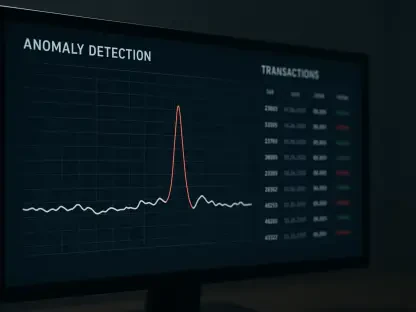

Criminal networks have evolved beyond simple transfers, now utilizing a complex web of intermediary accounts to systematically obscure the origin of fraudulent proceeds. This strategic shift has rendered the traditional focus on the initial recipient of stolen funds largely obsolete in the current financial ecosystem. When a bank only monitors the “first hop,” it essentially ignores the downstream movement where the real laundering occurs. In 2026, the velocity of automated clearing systems has accelerated to the point where funds can move through five different accounts within minutes. This rapid movement is not accidental; it is a calculated effort to outpace the manual investigation cycles of compliance teams. Consequently, the industry is witnessing a transition where the initial fraud is merely the catalyst for a much larger, automated engine of capital dispersion. To remain effective, defensive strategies must adapt to view these transactions as interconnected nodes rather than isolated events, ensuring that the investigative scope extends deep into the network’s architecture.
Recruitment Strategies: The Human and Technical Element
The acquisition of accounts to serve as these intermediary nodes involves a sophisticated mix of human manipulation and technical exploitation. On one end of the spectrum, criminal organizations target vulnerable individuals through deceptive job advertisements that promise high returns for simple administrative tasks, such as processing payments from home. These “unwitting” mules often believe they are working for legitimate startups or logistics firms, unaware that their personal banking infrastructure is being used to facilitate global money laundering. On the other end, “active” mules knowingly lease their accounts to syndicates in exchange for a percentage of the throughput, often viewing the activity as a low-risk side hustle. This human element is incredibly difficult to detect because the accounts themselves are often long-standing, legitimate profiles with a history of standard consumer behavior. This established trust with the financial institution provides the perfect cover for the first few stages of fund movement.
Beyond the manipulation of real people, criminal networks increasingly rely on purely technological means to expand their footprint of available accounts. This is frequently achieved through the sophisticated use of synthetic identities, which combine real social security numbers with fabricated names and addresses to pass initial automated screening processes. In other instances, credential harvesting through advanced phishing campaigns allows attackers to take over existing, “clean” accounts belonging to unsuspecting customers. Once control is established, these accounts are repurposed to act as relay points within a larger mule network. The challenge for banks in 2026 is that these accounts do not show the typical signs of fraudulent creation; they have been seasoned over time, making them indistinguishable from legitimate user profiles during the initial stages of a transaction. This hybrid approach of human and technical acquisition creates a diverse and resilient infrastructure that is difficult to dismantle using traditional methods.
Network Architecture: Understanding the Layering Process
The movement of illicit funds is rarely a linear path from the victim to the perpetrator; it follows a fragmented pattern specifically designed to exploit the jurisdictional and procedural gaps between financial institutions. Once the first hop receives the stolen funds, the money is immediately subdivided and sent to multiple second-hop accounts. This layering process is critical because it significantly increases the workload for investigators, who must now track several different threads simultaneously. Research indicates that the most critical phase of this cycle occurs between the second and fifth hops, where the funds are most vulnerable to detection but also closest to the point of final extraction. If a bank’s visibility ends at the first recipient, they lose the ability to see the consolidation points where these fragmented funds are gathered back together. These consolidation accounts are the real nerve centers of the operation, yet they remain largely invisible to institutions that operate in isolation.
Moreover, the deliberate fragmentation of funds serves to keep individual transaction amounts below the internal reporting thresholds that typically trigger a high-priority manual review. For example, a single stolen payment of fifty thousand dollars might be broken down into twenty smaller transfers of twenty-five hundred dollars each. To an automated system, these smaller amounts appear as routine consumer behavior, especially if the recipient accounts have a history of similar activity. However, when viewed as a collective, the pattern reveals a highly coordinated effort to bypass risk controls. This “smurfing” technique is further complicated by the use of cross-border transfers and the integration of alternative payment platforms, which add layers of complexity to the digital trail. By the time the funds reach the fourth or fifth hop, the connection to the original crime is so diluted that the money can be withdrawn at an ATM or spent on high-value goods without raising any red flags in the banking system.
Identifying Indicators: Behavioral and Technical Red Flags
To effectively counter these multi-hop strategies, financial institutions must shift their focus toward detecting transaction velocity and behavioral anomalies rather than relying on static thresholds. A primary indicator of mule activity is the “rapid pass-through” phenomenon, where funds enter an account and are transferred out almost immediately, often within seconds or minutes. This behavior is highly characteristic of an account that is being managed by an automated script or a professional mule handler. In a legitimate personal account, money typically sits for a period before being used for expenses or savings. When an account that has been dormant for months suddenly processes a high volume of incoming and outgoing transfers with a near-zero ending balance, it serves as a glaring signal of repurposing. In 2026, real-time monitoring of these velocity patterns is no longer optional; it is the baseline requirement for identifying the middle stages of a laundering chain before the cash-out occurs.
Technical identifiers also provide a wealth of information that can link seemingly unrelated accounts within a larger network. Security teams often find that multiple accounts, supposedly belonging to different individuals in different cities, are all being accessed from the same IP address or the same physical device ID. These shared digital footprints are a smoking gun for coordinated mule activity, indicating that a single “herder” is managing a cluster of accounts. Furthermore, the use of specialized browsers or virtual private networks to mask the true location of the account holder is another high-risk signal. When these technical red flags are combined with a sudden change in the economic purpose of an account—such as a personal account suddenly behaving like a commercial payment processor—the probability of mule involvement becomes nearly certain. Success in this area requires the ability to aggregate these signals in real time, moving beyond simple transaction filtering to a more holistic assessment of the entity’s digital behavior.
Strategic Integration: The Convergence of Fraud and Anti-Money Laundering
The traditional separation between fraud departments and anti-money laundering teams has historically been a significant advantage for criminal networks. Fraud teams typically focus on the “theft” event and the immediate recovery of funds, while AML teams focus on long-term patterns and regulatory reporting. This siloed approach often means that the intelligence gathered by one team is not shared with the other, leading to missed opportunities to stop a mule chain in its tracks. The movement toward “FRAML” integration represents a fundamental change in this defensive posture. By unifying these two disciplines, banks can create a single, comprehensive view of the customer lifecycle. This allows the institution to link the initial fraudulent transfer directly to the subsequent laundering steps, providing a much clearer picture of the criminal infrastructure. When data flows freely between these functions, the bank can react with much greater speed and precision.
Furthermore, moving from an alert-centric model to an entity-centric model is essential for disrupting the multi-hop process. In an alert-centric model, investigators spend their time reviewing thousands of individual, isolated transactions, many of which are false positives. In contrast, an entity-centric approach looks at the relationships between accounts and the overall behavior of the customer over time. This methodology allows investigators to identify clusters of accounts that are working in concert, even if the individual transactions appear harmless. By focusing on the “entity” behind the transactions, banks can identify the masterminds of the mule network rather than just the low-level participants. This shift in strategy is supported by the adoption of more collaborative data-sharing agreements between different financial institutions, which help to bridge the “blind spots” that occur when money moves from one bank to another, ensuring the trail never goes cold.
Future-State Defense: Actionable Insights for Network Disruption
The implementation of graph analytics emerged as the most significant breakthrough in the industry’s ability to visualize and dismantle multi-hop networks. Unlike traditional databases that struggled to find connections between disparate data points, graph technology mapped the complex relationships between thousands of accounts in real time. This allowed security teams to identify “convergence points” where multiple chains of stolen funds met before being extracted. By focusing on these hubs rather than the individual spokes, financial institutions were able to disrupt the criminal infrastructure with far greater efficiency. This technological leap shifted the advantage back to the defenders, as it stripped away the anonymity that criminals relied on when fragmenting their transactions. The ability to see the entire network as a single, living organism transformed the investigative process from a reactive hunt into a proactive, strategic operation that targeted the most critical nodes of the organization.
The successful disruption of money mule networks eventually required a commitment to continuous monitoring rather than relying on point-in-time checks. Organizations that moved away from static onboarding “snapshots” and instead embraced a dynamic risk scoring model saw a dramatic decrease in successful laundering attempts. This evolution involved the integration of diverse data sets, including device telemetry, behavioral biometrics, and cross-institutional intelligence, to create a persistent profile of account health. By the conclusion of this strategic shift, the industry established a new standard where the “hop” count no longer limited the visibility of the investigator. The transition toward a unified, intelligence-led defense ensured that the flow of illicit capital was identified and frozen long before it reached its final destination. Ultimately, the focus on the network’s architecture, rather than the individual transaction, proved to be the most effective deterrent against the sophisticated syndicates of the modern era.