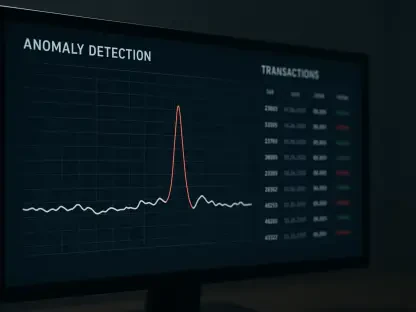

Significant enforcement actions, such as the £44 million fine against Nationwide and the £29 million penalty for Starling, underscore the high cost of systemic compliance failures. These penalties represent a fundamental shift in how global regulators view the obligations of financial institutions and fintechs alike. In the current landscape of 2026, the era of regulatory leniency has effectively ended, replaced by a stringent expectation for real-time, auditable risk management. Compliance is no longer a static gatekeeping exercise performed once during a customer’s journey but a continuous responsibility that demands sophisticated technological integration. Firms that continue to rely on antiquated, manual processes or disconnected digital tools find themselves increasingly vulnerable to both sophisticated financial crime and aggressive supervisory oversight. The challenge lies in transforming these legacy frameworks into dynamic, unified systems capable of providing a holistic view of client activity. As financial crime grows more complex, the necessity for a seamless and integrated approach to the entire client lifecycle has become the primary benchmark for institutional health and operational integrity.
Overcoming the Weakness: Disconnected Systems
The Dangers: Fragmented Point Solutions and Data Silos
Many organizations currently operate within a digital environment characterized by a patchwork of disconnected software tools, often referred to as point solutions. These tools were typically implemented in isolation to address specific regulatory needs, such as initial Know Your Customer checks, sanctions screening, or transaction monitoring. However, this fragmented approach creates significant data silos where critical information remains trapped within individual departments or systems. When these disparate components fail to communicate, the resulting lack of interoperability prevents the formation of a comprehensive risk profile. Consequently, an institution might identify a red flag in one system that never correlates with information stored in another, leaving dangerous blind spots that money launderers can easily exploit. Furthermore, the manual effort required to bridge these gaps is not only labor-intensive but also prone to human error, which significantly heightens the risk of non-compliance and regulatory scrutiny in an increasingly demanding environment.
The Solution: Transitioning to a Unified Source of Truth
The industry-wide transition toward unified platforms represents a strategic shift intended to consolidate all stages of the client lifecycle into a singular, auditable environment. By integrating identity verification, ultimate beneficial owner mapping, and ongoing monitoring into a cohesive framework, these platforms establish a single source of truth for every customer interaction. This centralized architecture allows for straight-through processing, which can accelerate the onboarding process and reduce the time to revenue by up to 80% without sacrificing compliance standards. Modern solutions enable firms to automate complex document collection and verification tasks, ensuring that the initial data capture is both accurate and comprehensive. This level of integration ensures that every piece of information collected at the start of a relationship is immediately available to inform subsequent risk assessments, creating a seamless flow of data that supports more informed and efficient decision-making for the compliance team.
Driving Efficiency: Active Risk Management
Proactive Strategy: Moving From Static to Event-Driven Monitoring
A fundamental evolution in modern anti-money laundering strategy is the departure from traditional, calendar-based reviews toward a more responsive, event-driven monitoring model. Historically, firms reviewed client files on fixed schedules, such as every one, three, or five years, depending on the initial risk rating assigned during onboarding. However, this static approach is increasingly viewed as insufficient by regulators because a client’s risk profile can change dramatically between these arbitrary milestones. An event-driven system eliminates this lag by utilizing trigger events to initiate an immediate review the moment relevant information changes. For instance, if a client’s name appears on a new sanctions list, if their residency changes to a high-risk jurisdiction, or if a corporate document expires, the system automatically flags the file for reassessment. This ensures that compliance resources are always allocated in direct proportion to the actual, real-time risk presented by the customer base, rather than adhering to an outdated schedule.
Strategic Outcomes: Ensuring Long-Term Resilience and Compliance
In the final analysis, the successful transition toward unified lifecycle management was defined by the realization that compliance must be a dynamic and data-centric endeavor. To navigate the regulatory complexities of 2026, firms adopted integrated stacks that replaced fragmented point solutions with a single, auditable narrative. These institutions moved beyond the limitations of calendar-based reviews and instead embraced event-driven monitoring fueled by high-quality commercial intelligence. This strategic shift not only mitigated the risks associated with multi-million dollar penalties but also streamlined operations, significantly reducing false positives and accelerating time to revenue. Leaders in the financial sector recognized that regulatory expectations had reached a new plateau where evidence of active risk management was the only acceptable standard. Ultimately, the focus shifted from meeting requirements to building a resilient compliance culture. By prioritizing data integrity and system cohesion, organizations secured their reputations and established a sustainable path.