
The global financial landscape has transformed into a hyper-connected network where data flows seamlessly between traditional institutions and agile fintech challengers at an unprecedented velocity. By the midpoint of 2026, the volume of API calls within the open finance ecosystem reached levels that were previously considered impossible for the existing digital backbone to sustain. This surge is driven by a fundamental shift in how capital is managed, moving away from closed-loop systems toward a modular architecture that prioritizes accessibility and user control. However, as these digital bridges expand, the specialized infrastructure required to mitigate systemic risks has not kept pace with the sheer scale of transactions. Financial regulators are facing a critical juncture where the benefits of interoperability are being weighed against the escalating threat of sophisticated cyber attacks. The current trajectory suggests that the safety net remains fragmented and dangerously thin.
The Velocity of Financial Interconnectivity
Rapid Proliferation of API-Driven Ecosystems
The integration of ISO 20022 standards across major banking networks has accelerated the adoption of standardized messaging, yet it has also exposed new surfaces for potential exploitation. Throughout 2026, developers have utilized these protocols to create specialized financial tools that aggregate data from multiple accounts and investment portfolios into unified dashboards. This transition to an open environment has allowed small-scale fintech startups to compete with global conglomerates by leveraging high-fidelity data streams. Nevertheless, the rapid deployment of these services often bypasses rigorous stress-testing phases, leading to a scenario where speed is prioritized over structural stability. As more entities connect to the central hub, the risk of a cascading failure increases, as a single point of compromise in a secondary provider could jeopardize the security of millions of records within the primary banking layer.
Shifting Consumer Demand for Real-Time Access
The appetite for instant gratification has fundamentally altered the expectations of retail and institutional clients alike, who now demand real-time settlement and absolute transparency in every transaction. The rise of embedded finance within non-financial platforms, such as e-commerce giants and social media networks, has further blurred the lines between traditional banking and daily digital interactions. In the current market of 2026, users view their bank as a background utility that must function flawlessly across every device they own. This cultural shift has forced legacy institutions to modernize their core systems at a breakneck pace, often relying on middleware to bridge the gap between ancient databases and modern cloud applications. While this strategy provides a temporary fix, it adds layers of complexity, making it increasingly difficult for risk management teams to monitor and audit the entire data lifecycle in a comprehensive manner.
Vulnerabilities in the Current Security Paradigm
Bridging the Gap Between Innovation and Safety
The core challenge lies in the fact that security frameworks are frequently reactive, addressing yesterday’s vulnerabilities rather than anticipating the threats of an AI-enhanced cybercrime landscape. During 2026, there was a significant uptick in synthetic identity fraud, where sophisticated algorithms were used to exploit automated onboarding processes. These attacks highlighted a systemic weakness: the reliance on traditional verification methods that are easily bypassed by deepfake technology and generative AI models. Furthermore, the decentralized nature of open finance means that no single entity holds responsibility for the entire chain of trust, creating regulatory gray areas. Efforts to harmonize global compliance standards have been slow, leaving a patchwork of regional laws that vary in their requirements. This lack of a unified defense strategy has left the global risk infrastructure struggling to contain localized breaches before they escalate.
Strategic Pathways for Long-Term Resilience
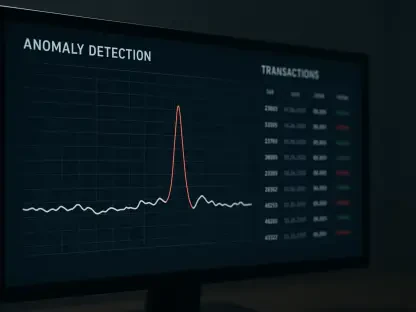
To address these systemic imbalances, industry leaders prioritized the implementation of zero-trust architectures and hardware-based security modules as mandatory components of the financial stack. They moved beyond simple password protection toward continuous biometric authentication and behavioral analytics that monitored transactions for anomalies in real-time. Organizations also invested in decentralized identity solutions, which empowered individuals to control their own cryptographic keys and reduced the concentration of sensitive data. Regulators responded by establishing sandboxes that required innovators to prove the resilience of their risk-mitigation strategies before receiving licenses. These measures were not merely defensive but served as a catalyst for a more robust form of innovation that valued sustainability over market share gains. By aligning security development with financial expansion, the sector constructed a durable foundation that protected assets and stability.